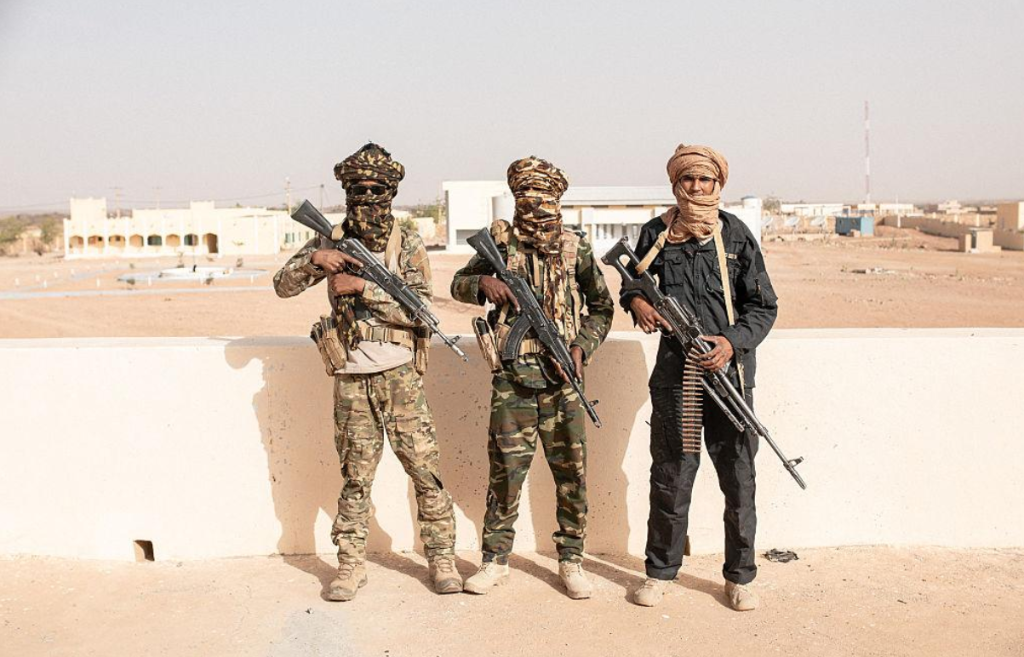

The fall of Kidal in October 2026 marked a turning point not just on Mali’s war map, but inside the rebel alliances that had long shaped the Sahel’s shadow conflicts. Instead of meeting Malian troops head-on, the National Movement for the Liberation of the Azawad (MNLA) withdrew from the city days before Bamako’s army rolled in. The retreat was framed as a strategic move to preserve fighters and equipment, but the abrupt shift exposed a deeper vulnerability: the rebels were now exposed, their traditional safe haven gone, and their 2015 peace deal with Bamako officially dead.
What drove the Azawad rebels to look beyond Mali’s borders
The loss of Kidal removed the last major urban redoubt in the north, leaving the MNLA and allied factions with no secure rear base to regroup, train, or stage attacks. Military pressure from Malian forces, backed by international partners, had tightened around the remaining rebel-held pockets along the Algerian frontier. Faced with this squeeze, rebel leaders initiated discreet outreach to external backers who could supply funds, weapons, or at least a safe corridor through the Sahara.
Among the first stops was Benghazi in eastern Libya, a city under the influence of Field Marshal Khalifa Haftar. A small MNLA delegation met with local commanders, including Saddam Haftar, the field marshal’s son, to discuss possible supply routes and transit arrangements. While no immediate arms transfers were confirmed, the meetings signaled a formal shift: the rebels were no longer banking solely on internal resources or negotiations—they were building an external lifeline.
Why Libya became a go-to hub for Sahel insurgents
Eastern Libya, despite its fractured governance, offers two critical advantages to Sahelian armed groups. First, geography: the southern deserts of Libya border northern Mali and Niger, and routes used for smuggling fuel, weapons, and fighters are already well established. Second, the Haftar-aligned administration in Benghazi has shown openness to pragmatic deals with non-state actors, especially when it serves its own anti-Islamist agenda or regional influence. For the MNLA, which has always relied on cross-border mobility, Libya’s porous frontiers provide a tactical escape route and a potential rear staging area.
This growing Libya–MNLA interface does not come without risks. Rival factions in southern Libya, government-aligned units, and rival smuggling networks all compete for control of the same routes. Any rebel attempt to permanently embed itself risks triggering local clashes or drawing counter-movements by Libyan security forces. Still, the rebels appear willing to accept those hazards in exchange for survival.
How the UAE’s financial networks entered the equation
Parallel to the Libyan outreach, the MNLA initiated contacts with Abu Dhabi, seeking both financial support and diplomatic cover. The Emirates have quietly expanded their footprint across the Sahel and Sahara over the past decade, investing in ports, transport corridors, and financial hubs from Djibouti to Mauritania. Their strategy often involves channeling funds through local business networks and humanitarian fronts, making it harder to trace direct links to armed groups.
For Abu Dhabi, engaging the MNLA is not just about Mali—it’s part of a broader chessboard. The Emirates view northern Mali as a potential pressure point against Algeria, with which they share deepening geopolitical rifts over regional security and governance models. Algerian officials have long regarded Sahel stability as a core national interest, and any Emirati-backed logistical corridor to rebel factions would be seen as a direct challenge to Algerian influence. The risk of escalation is palpable: Algiers has already intensified dialogue with Bamako and Niamey to preempt such moves.
Algeria’s counter-move: shoring up the Sahel’s southern flank
As the rebels pivoted eastward and southward, Algeria responded by recalibrating its own regional diplomacy. After years of strained relations with Bamako—stemming from the collapse of the Algiers peace process—Algeria has re-engaged Mali’s transitional government on three fronts: border security coordination, counter-trafficking operations, and joint economic corridors. The goal is to reassert Algerian primacy in Sahel security governance and deny space for external patrons to embed themselves.
This realignment extends to Niger as well. Algiers and Niamey have restored high-level dialogue, focusing on joint patrols along the Tamanrasset–Agadez route and cross-border infrastructure projects. By locking Niger into a tighter security bloc, Algeria effectively reduces the maneuvering room for any foreign power trying to exploit Nigerien territory as a transit hub for Malian rebels. The message to Abu Dhabi and Tripoli is clear: Algeria will not tolerate external interference that threatens the integrity of its southern borderlands.
The fragile balance ahead: logistics, loyalties, and shifting sands
The Sahel-Saharan theatre now sits at the nexus of three competing dynamics: rebel survival strategies, Emirati financial networks, and Algerian counter-alliances. The next phase hinges on two critical variables. Will the MNLA secure sustainable external support, or will logistical bottlenecks in Libya’s south and UAE-linked funding streams prove too unreliable? And, crucially, can Algeria, Mali, and Niger maintain cohesion long enough to seal the borders and starve the rebels of resupply?
The answer may well determine whether northern Mali remains a contested warzone or edges toward a shaky stabilization—one where the rebels’ new foreign alliances either collapse under pressure or evolve into a durable but clandestine shadow state.