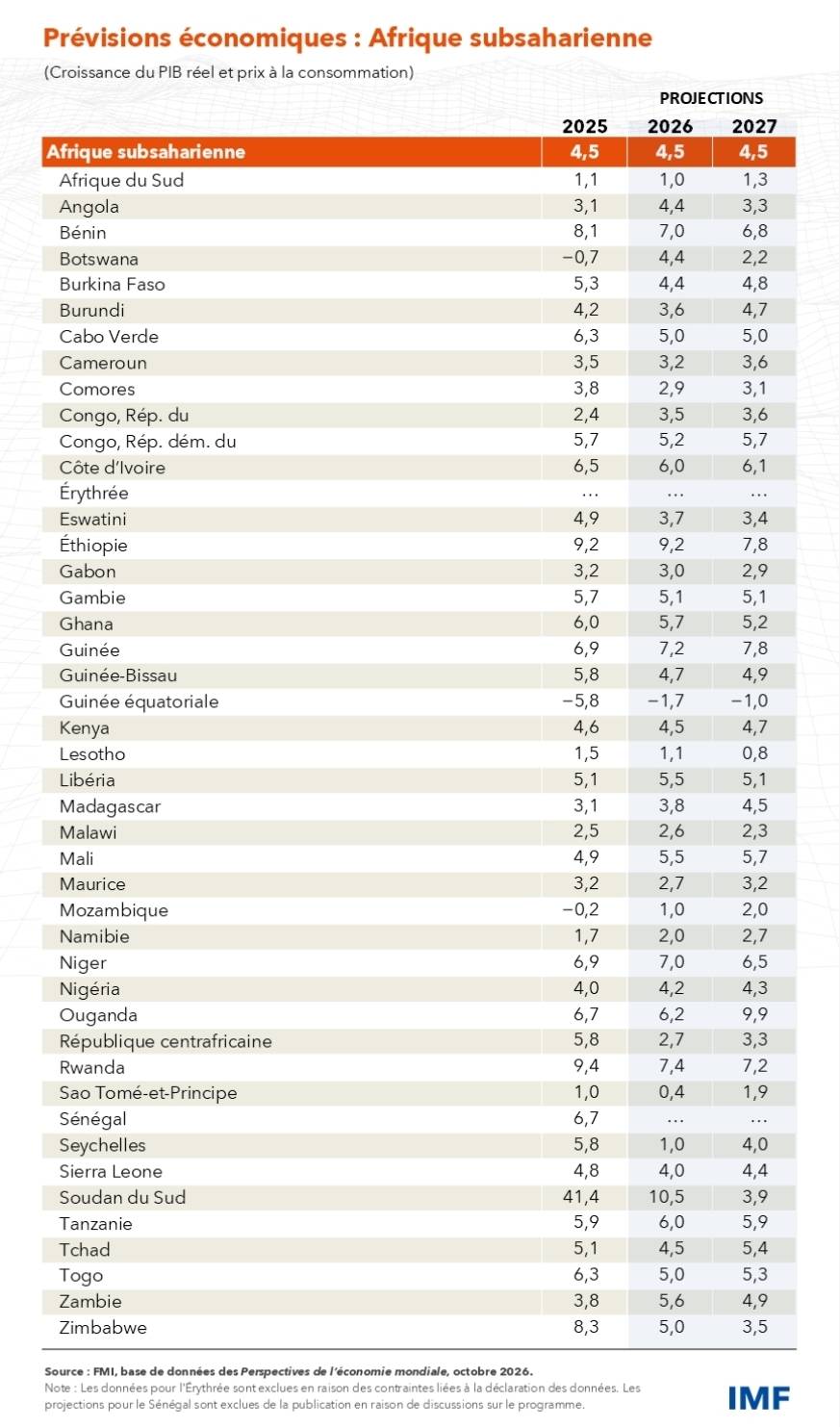

The Republic of Benin is carving out a reputation as one of Sub-Saharan Africa’s fastest-growing economies, with the International Monetary Fund (IMF) projecting real GDP growth of 7 % for 2026 and 6.8 % for 2027. In a region where the average expansion is forecast at just 4.5 % annually, Benin’s trajectory places it squarely among the continent’s standout performers and a rare West African leader in economic momentum.
From robust GDP forecasts to continental leadership
Benin’s recent growth spurt follows an estimated 8.1 % expansion in 2025, a figure that already exceeded regional averages. According to the IMF’s October 2026 outlook, the country is on track to maintain this strong pace despite persistent global economic headwinds. The sustained acceleration contrasts sharply with the sluggish 4.5 % growth projected for Sub-Saharan Africa over the same period, underscoring Benin’s ability to buck broader trends.
Why Benin outperforms its West African neighbors
The IMF data places Benin among the top three fastest-growing economies in Sub-Saharan Africa for 2026 and the only West African nation in that exclusive group. This achievement reflects deliberate policy choices, targeted investments, and ongoing modernization of key productive sectors. Economists highlight three pillars supporting the country’s performance:
Agricultural productivity gains, particularly in staple crops like maize and cassava
Expansion of port and logistics infrastructure, reinforcing Benin’s role as a regional trade hub
Increased private-sector participation in digital and manufacturing value chains
Macroeconomic success must translate into tangible benefits
While the GDP numbers are impressive, experts caution that high growth alone does not guarantee widespread prosperity. Key challenges remain:
Bridging the gap between macroeconomic gains and household-level income growth
Creating quality employment opportunities, especially for Benin’s burgeoning youth population
Reducing income inequality, which remains elevated in rural areas
Strengthening resilience to external shocks such as volatile commodity prices
Addressing these issues will require deeper economic diversification, vocational training programs, and policies that actively support small and medium-sized enterprises (SMEs). The government’s focus on industrialization particularly in agro-processing could help generate higher-value jobs and reduce poverty.
The signal sent to regional investors
Benin’s ranking offers more than statistical bragging rights; it serves as a powerful signal to foreign investors and regional partners. By demonstrating consistent outperformance, the country positions itself as a stable alternative in an often volatile West African landscape. Analysts note that sectors like renewable energy, digital finance, and light manufacturing have already begun to attract increased capital inflows.
Long-term credibility hinges on sustained progress
To cement its reputation as a West African economic model, Benin must do more than maintain high growth rates. The true test will be its ability to:
Weather external shocks, including climate-related disruptions and global demand fluctuations
Ensure that growth translates into measurable improvements in living standards
Foster inclusive economic policies that reduce regional disparities
Enhance transparency and governance to build long-term investor confidence
If successful, Benin could set a new benchmark for balanced development in the region one where economic expansion goes hand-in-hand with social progress. For now, the IMF’s projections offer a promising foundation, but the work of turning numbers into real-world opportunity has only just begun.