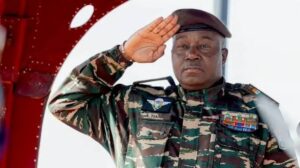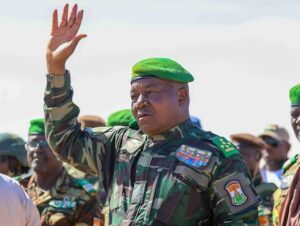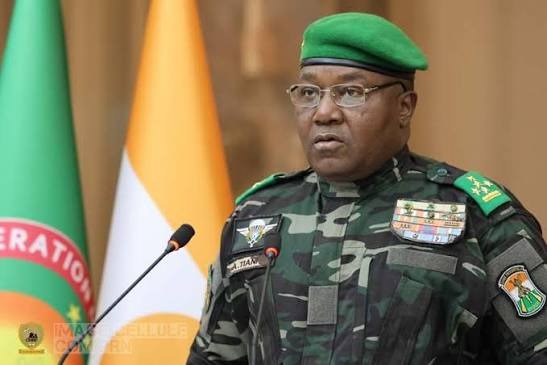

The decision to freeze Niger’s fuel prices wasn’t just a populist move—it exposed the unraveling confidence within the National Council for the Safeguarding of the Homeland (CNSP). When the junta-backed President Abdourahamane Tiani reversed a planned price hike, he didn’t just placate public discontent; he revealed that his regime’s first major concession came at the cost of its own internal stability. This wasn’t a win for citizens—it was a sign that the military leadership’s grip on power was far more fragile than its public statements suggested.
Behind the decision: a leadership trapped between fiscal needs and social unrest
At first glance, suspending fuel price increases appeared to be a concession to protect household budgets. In reality, it highlighted a critical moment of weakness in the junta’s decision-making process. While the Council for the Refoundation and the Ministry of Petroleum had advocated for a “measured” adjustment to ease the strain on public finances, General Tiani’s last-minute reversal signaled a deeper fracture within the transitional government. The shift wasn’t just about economics—it was about fear. The regime, already sensitive to signs of instability, feared that any price hike might trigger broader unrest, turning isolated grievances into a nationwide conflagration.
The junta’s initial confidence in its ability to control public sentiment through forceful rhetoric has eroded. Since the escalation of tensions in August, when the government barely avoided a destabilization crisis, the military leadership has shifted from defiance to survival mode. Every decision now comes with a calculated risk—one that prioritizes short-term stability over long-term viability. The reversal on fuel prices was its first tactical retreat, and it won’t be the last.
Fuel price freeze: a policy that masks deeper economic fissures
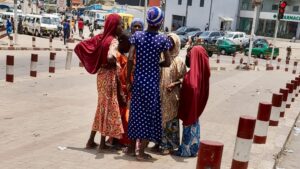
The decision to block fuel price increases was sold as a safeguard for citizens, but its ripple effects tell a different story. By freezing prices while demand and supply distortions persist, the government has created conditions for a parallel market to thrive. Official gas stations remain understocked in several regions, pushing prices higher in the informal sector—a cycle that worsens inflationary pressures while doing nothing to address underlying supply chain inefficiencies.
Meanwhile, the promised audit of the petroleum sector, once a cornerstone of economic transparency, has quietly disappeared from the agenda. The shuffling of leadership at the Ministry of Petroleum and the National Oil Company (SONIDEP) points to something far more concerning than routine restructuring. It suggests a pattern of clan-based maneuvering, where strategic resources are increasingly controlled by narrow networks rather than institutional competence. This opacity isn’t just bad governance—it’s a ticking time bomb for economic stability.
The illusion of control: why temporary fixes won’t solve structural problems
Freezing fuel prices may have bought the junta some time, but it hasn’t resolved the fundamental pressures weighing on Niger’s economy. The coming months will bring a convergence of crises—from a looming agro-pastoral deficit to the unsustainable cost of fuel subsidies—that the regime is ill-equipped to manage. Instead of confronting these challenges through structural reforms, the military leadership has chosen the path of least resistance: delay, distraction, and deflection.
Each concession, no matter how small, weakens the regime’s credibility further. The public isn’t fooled by symbolic gestures; they see a government scrambling to maintain order while avoiding the hard choices that could restore fiscal health. Without meaningful reform, the fuel price freeze will only postpone the inevitable—a deeper economic and social crisis that will demand far greater sacrifices than the ones the junta is trying to prevent today.
What’s next for Niger’s beleaguered military regime?
The junta’s decision to freeze fuel prices was a rare admission of vulnerability. But in the long run, it may prove to be a fatal miscalculation. By avoiding tough decisions today, the regime is ensuring that tomorrow’s reckoning will be even more brutal. Whether it’s through increased unrest, a collapse of public trust, or an irreversible economic spiral, the consequences of these delayed reforms will define Niger’s future—one way or another.