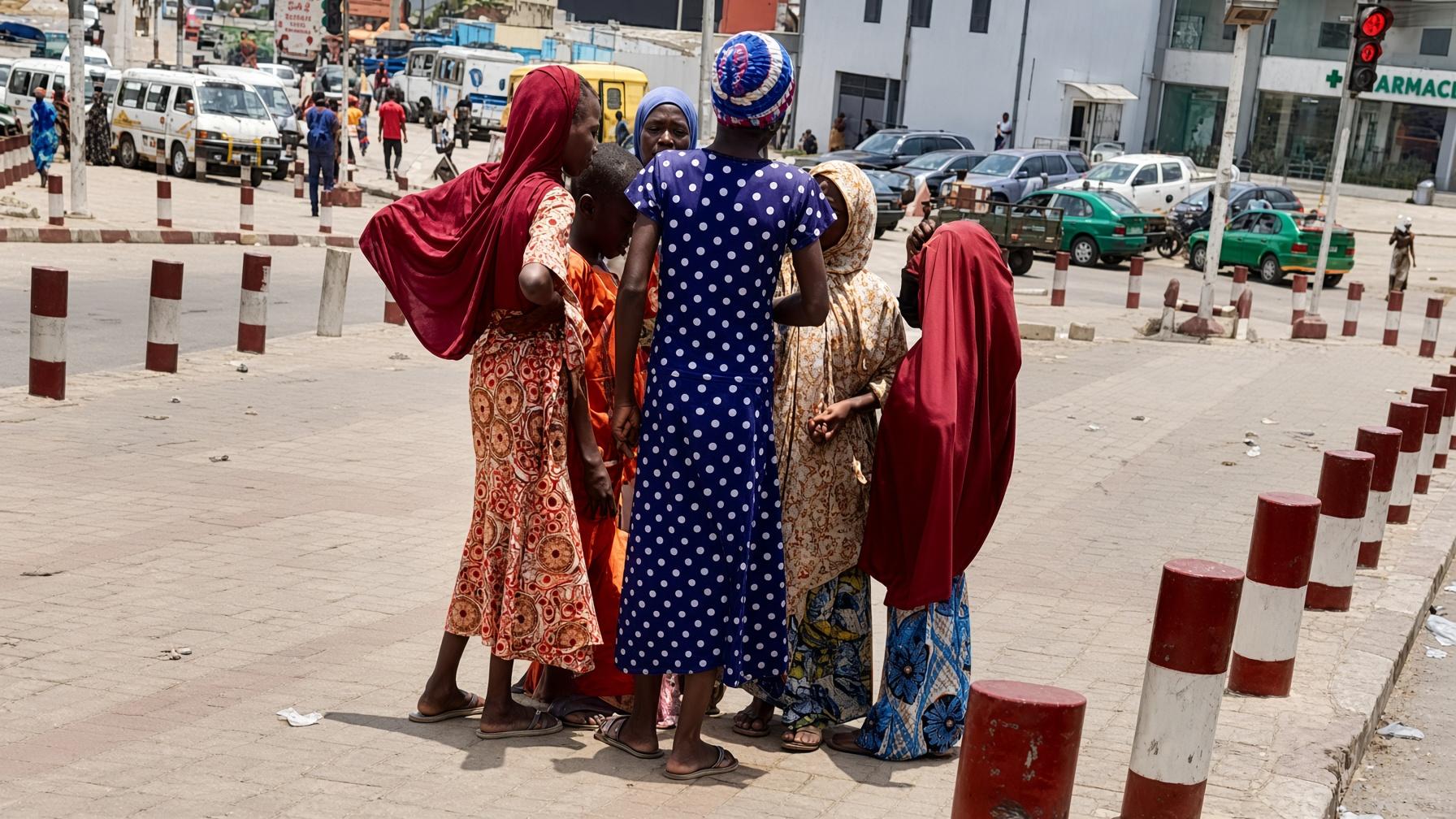

Behind the daily commute in Bamako lies a stark reality: children as young as five, elderly individuals, and people with disabilities weave through traffic, hands outstretched. This is not an isolated scene but a systemic urban crisis, one that exposes the deep cracks in Mali’s governance structure. Despite repeated pledges from transition authorities, the scourge of street begging has not merely persisted—it has evolved into a self-sustaining cycle that mirrors the nation’s broader institutional collapse.
The unraveling of urban social fabric
In the heart of Bamako, street begging is no longer an occasional sight—it has become a defining feature of city life. Traffic intersections, public buildings, and religious sites serve as impromptu stages for this daily ritual. Among the most visible are young children, many of whom are talibés, sent by unregulated Quranic teachers, or minors left entirely to fend for themselves. Their presence is a stark reminder of how fragile the social safety net has become.
Efforts to address this crisis have amounted to little more than symbolic gestures. Campaigns led by the Ministry of Women, Child Protection, and Family Affairs to remove children from the streets often feel like futile attempts. Without sustainable shelters, consistent funding, or long-term reintegration programs, those rescued are frequently back on the streets within hours. The cycle of poverty and neglect continues unbroken.
Root causes: governance breakdown and systemic neglect
The explosion of street begging in Mali is not a random misfortune—it is the predictable outcome of decades of policy failures and institutional decay. At its core, this crisis stems from three interconnected failures:
- Collapse of essential social services: Years of underfunding in education and welfare systems have pushed millions of families to the brink. With public schools overcrowded, under-resourced, and often inaccessible, many parents see no alternative but to send their children to the streets in search of survival. The promise of free and mandatory education remains unfulfilled.
- Unregulated religious education systems: The proliferation of informal Quranic schools (médersas) operates in a legal gray area. While some provide genuine religious instruction, others exploit children, using them as labor for forced begging. Authorities, often hesitant to intervene due to cultural sensitivities, fail to enforce existing laws or prosecute offenders. The result is a parallel system that thrives on exploitation.
- Misallocation of public resources: Mali’s budget priorities reveal a stark imbalance. While security spending and institutional maintenance consume a disproportionate share of funds, human development and poverty alleviation receive minimal attention. Corruption and bureaucratic inefficiencies further divert critical resources away from those who need them most.
A powder keg for future insecurity
The consequences of this governance failure extend far beyond urban decay. Tens of thousands of children and vulnerable adults, abandoned by the state and exposed to extreme poverty, are increasingly vulnerable to recruitment by criminal networks and armed groups. These groups prey on the hopeless, offering false promises of protection and income—only to deepen their exploitation.
By treating street begging as a mere nuisance rather than a symptom of systemic collapse, authorities risk fueling a much larger crisis. The broken social contract between the government and its most vulnerable citizens is evident in every outstretched hand on Bamako’s streets. Without bold reforms, Mali’s youth will remain trapped in a cycle of poverty, begging for survival instead of building a future.
What needs to change?
A lasting solution demands more than temporary fixes—it requires a fundamental shift in governance priorities:
- Investing in free, quality education to reduce child exploitation and street begging.
- Enforcing laws against forced child begging in Quranic schools and ensuring accountability for violators.
- Reallocating public funds to strengthen social safety nets, healthcare, and youth employment programs.
- Improving transparency and efficiency in social programs to ensure aid reaches those in need.