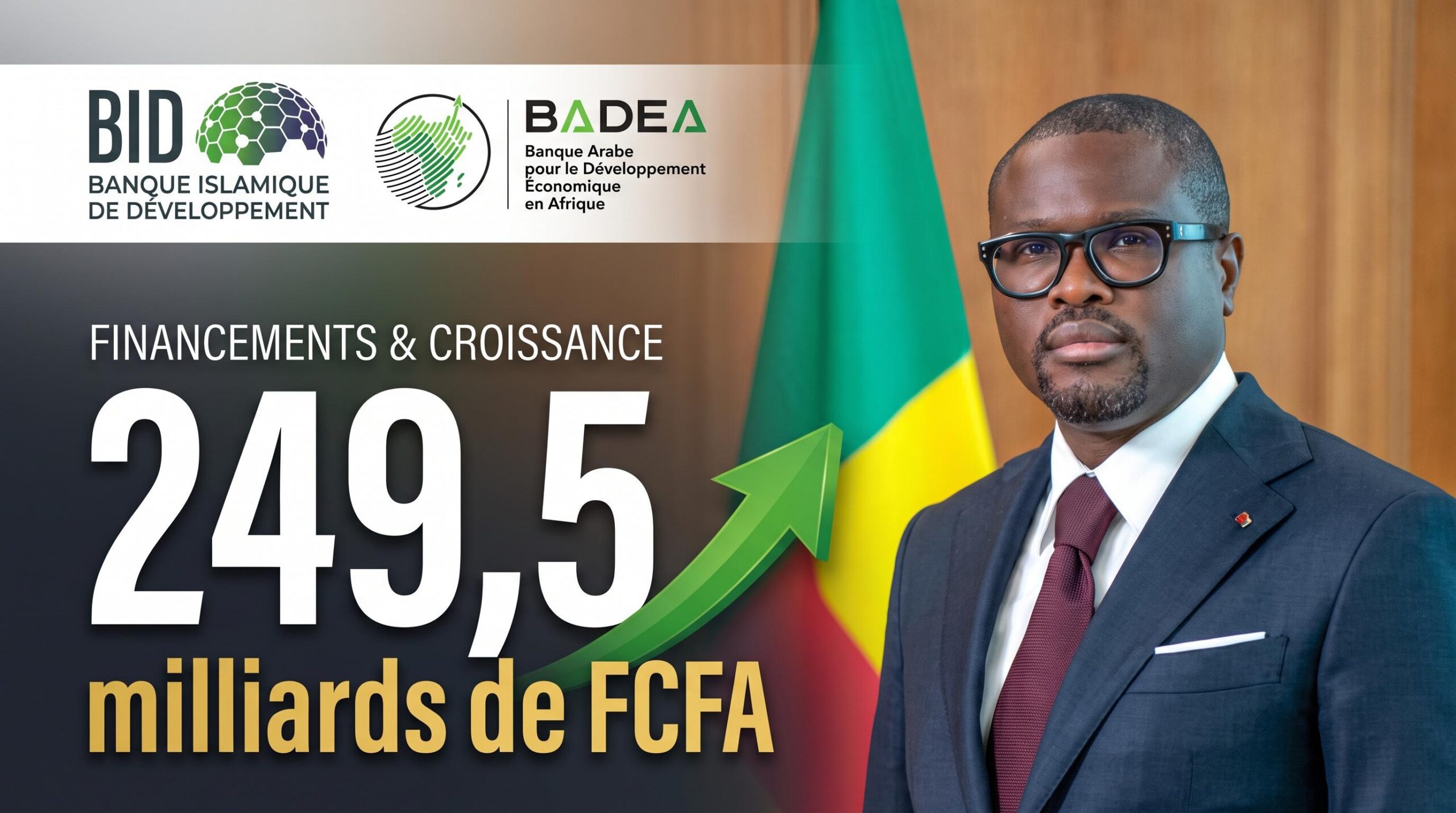

How Benin secured $460 million in new financing deals
The Government of Benin has quietly executed a strategic financial maneuver, finalizing three landmark funding agreements worth a combined 249.5 billion FCFA ($460 million) during the World Bank and IMF Annual Meetings in Bangkok. This behind-the-scenes financial diplomacy reveals deeper insights into Benin’s evolving debt management strategy and its success in maintaining a favorable credit profile despite global financial headwinds.
The strategic calculus behind new infrastructure financing
These agreements with the Islamic Development Bank and the Arab Bank for Economic Development in Africa weren’t just about securing capital—they represented a carefully calculated move to maintain Benin’s financial credibility while funding critical growth initiatives. The deals come at a time when African nations face increasing scrutiny over sovereign borrowing practices and debt sustainability.
What makes this funding round particularly noteworthy is its structure. Rather than relying on a single financing source, Benin diversified its approach by tapping into both Islamic development finance and Arab development bank instruments. This strategy serves a dual purpose: it reduces dependency on traditional lenders while demonstrating to other potential investors that Benin can successfully navigate different financial ecosystems.
The shift from debt accumulation to strategic borrowing
Benin’s financial team has been working systematically to transform what was once seen as debt vulnerability into a strategic lever for development. The 249.5 billion FCFA injection represents more than just new liabilities—it’s part of a broader plan to channel investments into high-impact infrastructure while maintaining strict fiscal discipline.
This approach contradicts the simplistic narrative that equates all borrowing with economic fragility. When deployed strategically, sovereign debt becomes a tool for:
- Expanding productive capacity through critical infrastructure
- Reducing logistical bottlenecks that stifle trade and commerce
- Creating enabling environments that attract private investment
- Generating long-term revenue streams through improved service delivery
The invisible architecture of Benin’s improved credit standing
The country’s ability to secure these favorable terms didn’t happen overnight. Behind this financial success lies years of structural reforms that have gradually reshaped Benin’s fiscal landscape:
- Revenue mobilization breakthroughs: Systematic improvements in tax administration have steadily increased the government’s resource envelope
- Expenditure rationalization: Targeted cuts in non-essential spending have freed up capital for priority investments
- Debt management sophistication: Sophisticated debt instruments and proactive refinancing have reduced borrowing costs
- Transparency enhancements: Improved financial reporting has built trust with international lenders
The International Monetary Fund’s April 2026 assessment confirmed these improvements, noting that Benin’s budget deficit narrowed from 7.2% of GDP in 2021 to just 3.1% in 2024—even as infrastructure spending accelerated. What’s particularly impressive is that this fiscal consolidation occurred while the country integrated previously off-balance-sheet liabilities into its official debt calculations, demonstrating a commitment to complete financial transparency.
Infrastructure as the bridge between debt and development
The key question now is how effectively Benin will translate these financial resources into tangible benefits for its citizens. The infrastructure projects funded through these agreements have the potential to:
- Unlock economic corridors: New road and transport networks that connect previously isolated regions to domestic and international markets
- Power economic zones: Energy infrastructure developments that can support industrial growth in strategic locations
- Improve living standards: Enhanced access to clean water, reliable electricity, and healthcare services
- Create economic multipliers: Construction phases that generate immediate employment and supply chain opportunities
However, the success of this financing round will ultimately depend on execution excellence. Benin’s track record in project management and financial oversight will be under scrutiny as these ambitious infrastructure programs move from paper to reality.
The delicate balance between growth and fiscal health
Benin’s financial diplomacy has mastered the art of leveraging debt for development while maintaining a disciplined approach to fiscal management. The country now faces the challenge of ensuring that:
- Project selection aligns with national development priorities
- Implementation timelines are realistic and efficiently managed
- Procurement processes are transparent and competitive
- Benefits reach all regions and social groups
This requires more than just technical capacity—it demands sustained political commitment to long-term fiscal sustainability. The international community will be watching closely to see whether Benin can deliver on its promise to transform borrowed capital into lasting economic and social value.
Looking beyond the numbers: the real test of financial wisdom
The narrative around African sovereign debt has too often focused solely on headline figures and risk ratings. But Benin’s experience suggests a more nuanced story—one where strategic borrowing, disciplined execution, and transparent governance combine to create a foundation for sustainable growth.
As these new financing agreements begin to flow into Benin’s economy, the true measure of success won’t be found in balance sheet metrics alone. Instead, it will be determined by whether ordinary citizens feel the impact in their daily lives—through shorter commutes to work, reliable electricity in their homes, better schools for their children, and new economic opportunities in their communities.
If Benin succeeds in translating these financial resources into tangible improvements in living standards, it will serve as a compelling case study for other developing nations seeking to balance the imperative of infrastructure development with the need for fiscal prudence. The next 24 months will reveal whether this latest financial maneuver proves to be a masterstroke of economic statecraft or merely another chapter in the country’s ongoing journey toward sustainable prosperity.