
Hidden truth: the army’s reluctant acknowledgment
An terse military statement issued by Mali’s general staff on October 14, 2026, acknowledged ‘a tragic incident’ during an operation that resulted in deaths and injuries. Yet the communiqué was deliberately vague: no location, no date, no casualty figures, no identities of the victims—only a promise that investigations would follow.
This reluctance to disclose basic details is not new. Military spokespeople have repeatedly framed operations as successes while sidestepping questions about civilian harm. The October 14 statement did not even confirm whether the incident occurred in the same area where eight people were killed two days earlier in Zanakoro, Ségou region, following reported airstrikes that turned a baptism celebration into a scene of devastation.
Zanakoro’s grim toll and unanswered questions
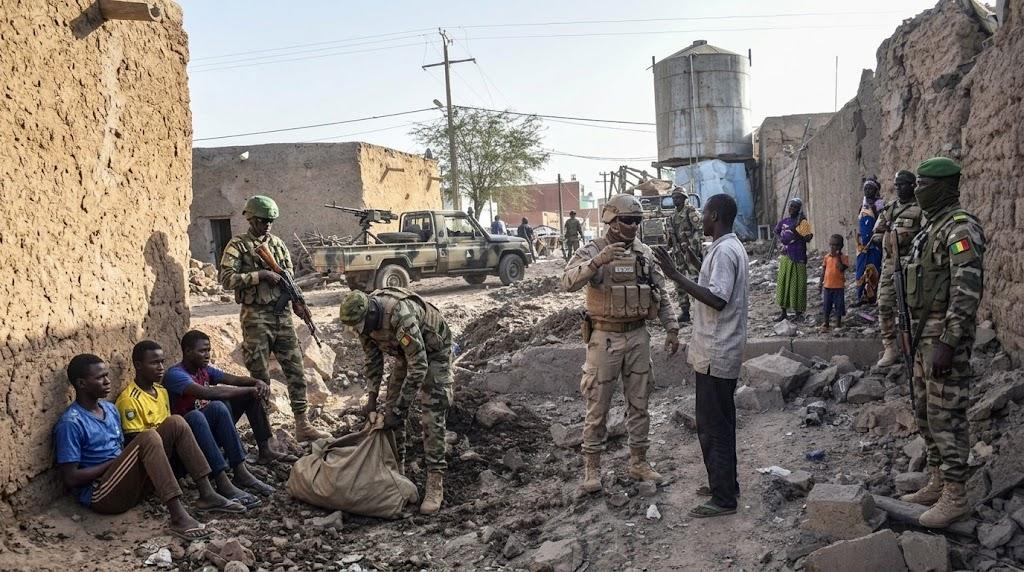
According to accounts from local residents, community leaders, and survivors, the October 12 strikes hit civilians returning from a baptism ceremony. Eight were killed, including a pregnant woman and three girls under ten; at least ten others were seriously wounded. Homes were damaged, families fled into the bush, and no official investigation has yet verified these claims.
The military’s October 14 communiqué did not name Zanakoro, leaving observers to wonder: is the army referring to the same event? Without a clear link or transparent accounting, families in mourning cannot even begin to reconcile their losses with the army’s version of events.
The long shadow of documented abuses
Human rights organizations have for years recorded patterns of violence linked to joint Malian-Russian operations. A September 29, 2026 report by Amnesty International documented seven incidents between June 2023 and December 2025 along the Mauritanian border, involving 34 civilians allegedly killed—some executed, some burned—and numerous cases of torture, arbitrary detention, enforced disappearances, looting, and property destruction.
Peul, Tuareg, and Arab communities were disproportionately affected. One recurring allegation is that civilians were targeted based on mere suspicion of ties to armed groups, with little or no evidence.
Amnesty International concluded that several incidents may amount to war crimes and urged Mali to conduct independent probes and hold perpetrators accountable. These findings do not automatically apply to the October 12 or 14 events, but they underscore systemic risks when transparency and oversight are absent.
The Africa Corps question
Since Wagner’s gradual withdrawal, Africa Corps—Russia’s new deployment—has taken over front-line support. Yet the pattern of accusations persists. On July 31, 2026, Human Rights Watch reported that eight civilians, including three children, died in airstrikes attributed to Africa Corps in Kyrnia, Mopti region, on June 15, 2026. Witnesses said the bombs landed near a market and the village head’s residence, raising concerns that the strikes were indiscriminate and failed to distinguish combatants from non-combatants.
The authorities have not publicly addressed these allegations. Africa Corps’s arrival has not brought measurable safeguards for civilians, fueling suspicions that operational conduct may remain unchanged.
Why transparency is not optional
International humanitarian law demands that parties to a conflict take constant care to spare civilians. Attacks must be directed only at military objectives and must not be indiscriminate or disproportionate. When civilians are harmed, the parties must promptly and impartially investigate, share credible findings, and provide redress where violations are established.
The October 14 communiqué falls short of these obligations. It acknowledges deaths and injuries but offers no basis for assessing whether the operation respected the principles of distinction, proportionality, and precaution. For affected families, the lack of clarity compounds their trauma and deepens distrust in military communications.
Unknown location, unknown victims, unknown path to justice
The army has yet to answer basic questions: Where did the incident occur? When? How many people were killed or injured? Were the victims civilians? Has an investigation begun, and have families been notified?
A clear link to the Zanakoro strikes would help clarify the timeline and responsibility, yet the army has not provided that link. Without verifiable details, the official narrative risks being dismissed as evasive, further eroding public confidence in the institutions charged with protecting lives.
A turning point, not a conclusion
Mali faces real security threats, but the fight against terrorism can never justify violations of fundamental rights. The current opacity surrounding military operations only fuels suspicion, hampers reconciliation, and leaves victims without closure.
The October 14 acknowledgment could have been a step toward accountability. Instead, by withholding facts, it risks becoming another missed opportunity to restore trust between civilians and the security forces meant to defend them. For justice to prevail, the veil of secrecy must lift—and soon.