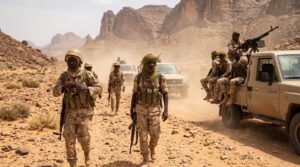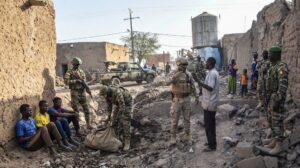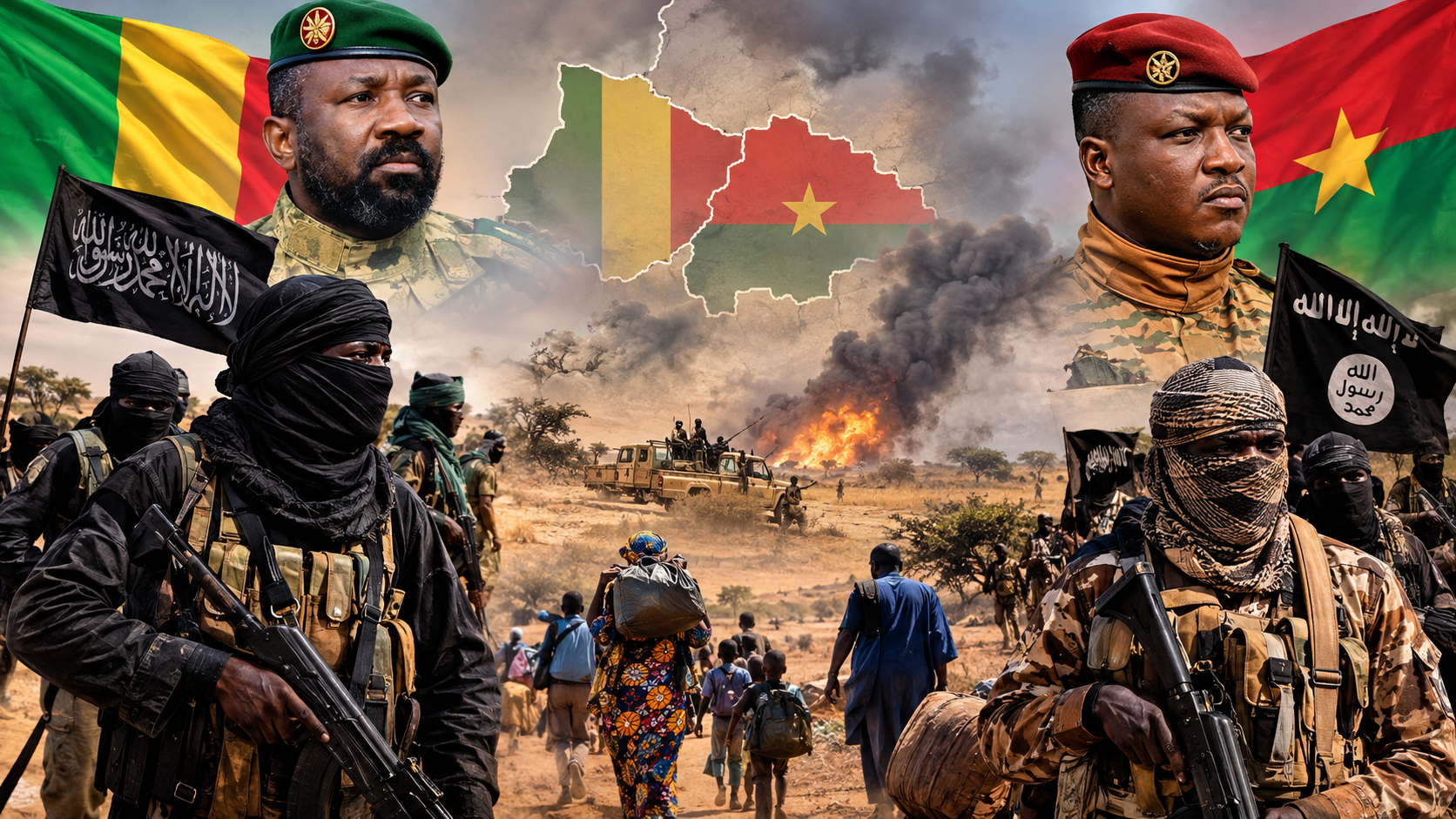

The vast, lawless stretch of land where Mali and Burkina Faso meet has become a flashpoint in the Sahel’s escalating jihadist conflict, where the rivalry between two militant factions JNIM and EIS has escalated into sustained violence. This sustained escalation reveals a troubling truth: despite the military juntas’ insistence on reclaiming territory and restoring order, their inability to assert control has left swathes of the border in the hands of armed groups, enabling a cycle of violence that defies both national and regional security strategies.
Jihadist factions clash as juntas struggle to assert authority
The fighting between the Jama’at Nusrat al-Islam wal Muslimeen (JNIM) affiliated with Al-Qaeda and the Islamic State in the Sahel (EIS) has intensified in recent months. Rather than consolidating territory, these clashes have fragmented it, creating a patchwork of contested zones where both groups vie for influence over local populations, trade routes, and resources. What began as sporadic skirmishes has evolved into a protracted conflict, signaling a deeper failure in counterterrorism efforts.
The inability of Mali’s and Burkina Faso’s military-led governments to curb these confrontations raises critical questions about the efficacy of their security policies. Promises of territorial recovery and sovereignty, once central to their legitimacy, now ring hollow as communities remain trapped in the crossfire, facing displacement, economic collapse, and persistent insecurity.
The hollow promise of juntas’ security strategies
Since seizing power, both juntas led by Assimi Goïta in Mali and Ibrahim Traoré in Burkina Faso have framed their rule around the restoration of stability. Yet the reality on the ground contradicts their narrative. Military operations, public declarations, and displays of force have done little to dislodge jihadist factions from their strongholds. Instead, the borderlands have become zones where armed groups operate with near impunity, dictating the terms of engagement and exploiting local grievances.
Analysts point to the structural weaknesses undermining these strategies. Poor coordination between security forces, limited intelligence capabilities, and an over-reliance on hard power have left gaps that jihadist groups readily exploit. Moreover, the absence of functioning civilian governance in many areas has further entrenched the power of armed factions, making it difficult for the state to reassert control.
The civilian toll of unchecked jihadist rivalry
For the communities caught between JNIM and EIS, the consequences are devastating. Villages are repeatedly targeted, forcing mass displacements as residents flee violence. Livelihoods are destroyed not only by the direct impact of fighting but also by the economic blockade enforced by armed groups, which disrupts trade and access to essential services. Schools close, markets shut down, and healthcare systems collapse, leaving populations in a state of perpetual vulnerability.
The humanitarian crisis unfolding in these border regions is a direct result of the juntas’ failure to adapt their approaches. While military action remains necessary, it is insufficient without comprehensive strategies that address the root causes of insurgency: poverty, marginalization, and the absence of state presence. Until these underlying issues are addressed, the cycle of violence is likely to persist, with civilians bearing the brunt of the fallout.
Beyond military might: the need for a holistic response
The rivalry between JNIM and EIS is not merely a tactical challenge it is symptomatic of a broader failure in governance and security architecture. To reverse the trend, the juntas must move beyond symbolic victories and invest in sustainable solutions. This includes strengthening intelligence networks to anticipate and mitigate conflicts between factions, re-establishing administrative presence in contested areas, and fostering trust through inclusive policies and community engagement.
International cooperation, too, will play a pivotal role. Regional and global partners must align their support with the realities on the ground, ensuring that aid and security assistance are not misused or diverted. Without coordinated efforts, the borderlands will remain a breeding ground for jihadist expansion, with long-term implications for regional stability.
The road ahead: can the juntas deliver on their promises?
The coming months will be decisive for both Mali and Burkina Faso. As jihadist factions continue to exploit the power vacuum, the juntas face mounting pressure to deliver on their promises of security and recovery. Yet history suggests that military solutions alone are unsustainable. A sustainable path forward will require not only tactical adjustments but also a fundamental rethink of how security and governance intersect in the Sahel.
For the people living in these contested borderlands, time is running out. The question is no longer whether the juntas can reclaim territory but whether they can restore a sense of safety and dignity to communities that have endured years of conflict. The answer will define not only their legacy but also the future of the Sahel.
By Moussa Samuel Coulibaly — Journalist