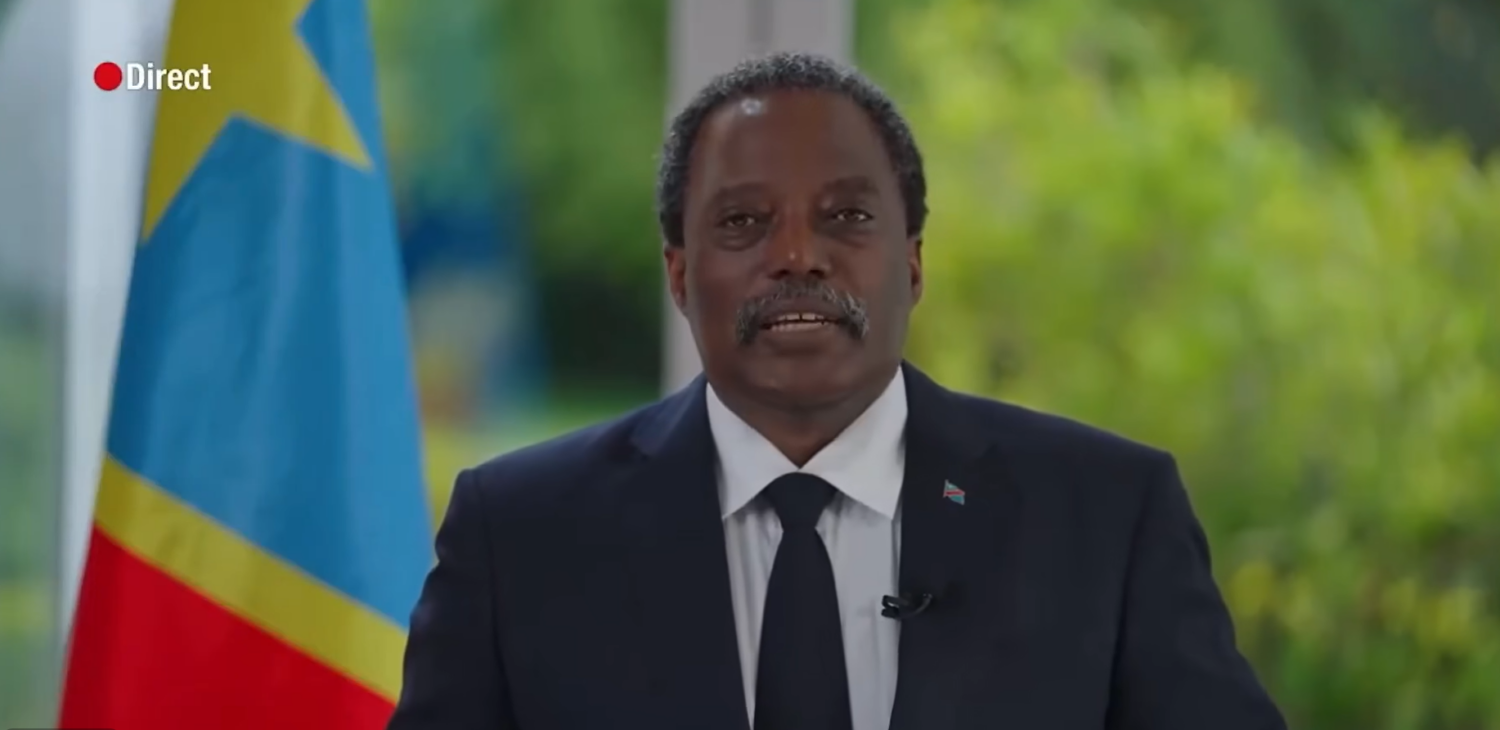

The Democratic Republic of Congo (DRC) stands at a precarious crossroads as former president Joseph Kabila, in a bold and calculated move, formally assumes leadership of the Front for the Re-foundation of the Nation (FRN) on October 12, 2026. This strategic alignment—uniting the M23 rebels and the former Congo River Alliance—serves as a political facade for a rebellion actively supported by Rwanda. The move is designed to evade international scrutiny of proxy forces aligned with Paul Kagame, yet it risks igniting a powder keg in a nation already plagued by resource predation and chronic instability.
The Kabila legacy: from rebellion to political maneuvering
In 1996, Laurent-Désiré Kabila, Joseph’s father, emerged from the shadows to lead the AFDL, a Rwanda-backed rebellion that toppled the regime of Mobutu Sese Seko. Installed as president in 1997, Laurent-Désiré soon broke away from his Rwandan allies, sparking the Second Congo War. He was assassinated in 2001, leaving behind a fractured nation and a power vacuum that his son would inherit at just 29 years old.
Joseph Kabila’s two decades in power were marked by a fragile balance between Kinshasa’s authority, armed militias in the east, and Rwanda’s regional ambitions. Now, by openly aligning with the very proxies he once opposed, Kabila is repurposing a localized insurgency into a nationwide political movement—one with the stated goal of toppling President Félix Tshisekedi.
Turning rebels into a national force: how Kabila reshapes the conflict
The M23, long dismissed as a Tutsi militia and a tool of Kigali’s influence in eastern DRC, now finds itself cloaked in the legitimacy of a former head of state. This transformation elevates the rebellion from a marginalized ethnic struggle to a movement with national political aspirations, albeit one still backed by foreign interests.
The shift underscores a deeper strategic calculation: the rebellion is no longer just a military front but a political instrument, leveraging Kabila’s legacy to unite disparate factions under a banner of opposition. By positioning himself as the figurehead of the FRN, Kabila offers the M23—and other allied groups—a veneer of respectability that was previously absent.
The DRC’s paradox: wealth beneath chaos
Geographically, the DR Congo is a continental giant, spanning over 2.3 million square kilometers—nearly 90 times the size of Rwanda. Yet its vast eastern provinces, including North Kivu and Ituri, remain the epicenter of systemic insecurity and mineral exploitation. This region is rich in gold, coltan, cobalt, zinc, and manganese—commodities critical to global supply chains, from smartphones to electric vehicles.
Despite its mineral wealth, the DRC’s eastern provinces function as an extractive battleground. Rwanda, though not a producer of these minerals, has been repeatedly accused of facilitating their smuggling through proxy forces like the M23. This predatory cycle thrives amid ongoing violence, where armed groups control mining sites and trade routes, shielding operations from scrutiny.
The result is a paradox: while international condemnation of human rights violations escalates, multinational corporations continue to source minerals from intermediaries linked to armed factions. The system thrives on the very chaos it publicly deplores.
Human cost: the silent victims of a manufactured crisis
The DRC’s eastern provinces have become a humanitarian disaster zone. Nearly 150 armed groups—from community militias to criminal syndicates and jihadist factions like the ADF-Nalu—perpetuate cycles of violence that show no sign of abating. Civilians bear the brunt of this instability, enduring mass atrocities including sexual violence and extrajudicial killings.
Joseph Kabila’s decision to lend his political weight to the FRN risks deepening this crisis. By legitimizing a rebellion with transnational backing, he may escalate a conflict that has already displaced millions, destroyed local economies, and left communities in perpetual fear. The human toll—already catastrophic—could rise further, as military escalation often precedes waves of displacement and civilian casualties.
What’s next: a nation on the edge
The stakes could not be higher. The DRC’s stability is not just a regional concern but a global one, given its critical role in the supply of strategic minerals. As Joseph Kabila navigates this high-risk alliance, the international community watches closely—though often from a distance—while local populations pay the ultimate price.
Will this gambit spark a broader conflict, or will it collapse under the weight of its own contradictions? One thing is certain: the DRC’s future—and the well-being of its people—hangs in the balance.