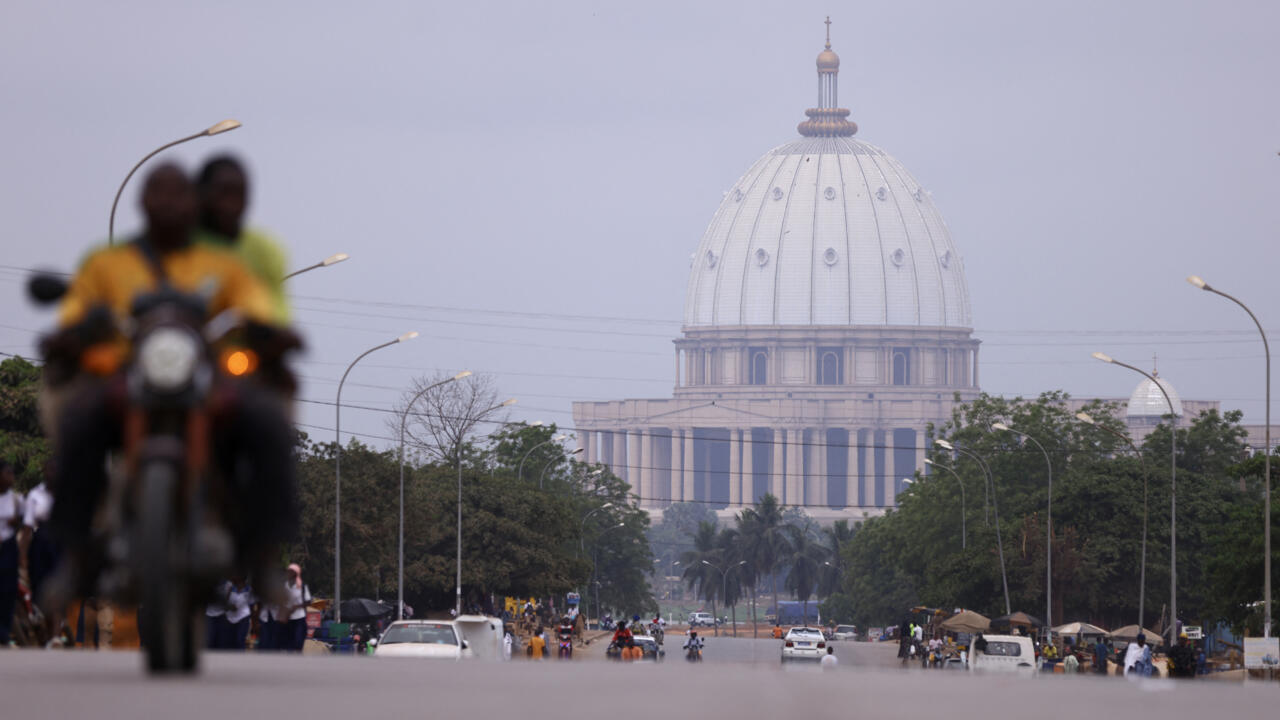

Yamoussoukro is experiencing an unprecedented real estate boom that is reshaping the landscape of Côte d’Ivoire’s political capital. What was once a tranquil city known for its iconic basilica is now a magnet for property investors, with construction sites springing up across the city. Yet while this development fuels economic optimism, it is also sparking urgent concerns among local farmers whose arable lands are steadily disappearing.
a thriving real estate market
Drone footage over Yamoussoukro reveals a city in transformation. Parcels of land once dedicated to agriculture are now subdivided into residential, commercial, and industrial lots. Property prices vary widely depending on location and size, ranging from 15 to 40 million West African CFA francs. Francis Djaha, a local real estate agent with five years of experience, reports a surge in demand: «Investors are flocking to Yamoussoukro. We’re seeing individuals building homes, businesses acquiring office space, and even agricultural investors looking for land. Some are purchasing fully constructed properties.»
The city’s appeal extends beyond its available land. «The roads are exceptionally wide, making travel effortless. Yamoussoukro is peaceful, and the infrastructure built under President Houphouët-Boigny gives it a unique edge. Strategically located at the heart of the country, Yamoussoukro offers unmatched accessibility to every region of Côte d’Ivoire,» Djaha explains.
farmers face an uncertain future
While investors celebrate the city’s growth, local farmers are growing increasingly alarmed. In villages like Séman Sanhourikro, just a few kilometers from Yamoussoukro, agricultural land is being rapidly converted into housing developments. Michel N’Goran, a village elder, voices the community’s fears: «Once these lands are subdivided, farming becomes impossible. In 30 or 50 years, we could face the same fate as the Akouès and Nanafouès communities in Abidjan—losing all cultivable land.»
The contrast is stark: high-rise buildings and gated communities now stand where cocoa, yam, and cassava fields once thrived. Local leaders worry that without intervention, Yamoussoukro’s rural outskirts could soon mirror the urban sprawl seen in Abidjan, leaving future generations without the means to sustain themselves through agriculture.
infrastructure and ambition
The national development plan aims to connect Abidjan to Yamoussoukro in just 45 minutes via a high-speed rail line. This ambitious project is expected to further enhance the city’s appeal, drawing even more investors and residents. While the economic prospects are bright, the challenge remains balancing growth with the preservation of agricultural heritage.
For now, Yamoussoukro’s real estate market continues to flourish, but the clock is ticking for the farmers whose livelihoods depend on the land.