After the Dioura bloodshed, the AES’s security gamble faces its moment of reckoning
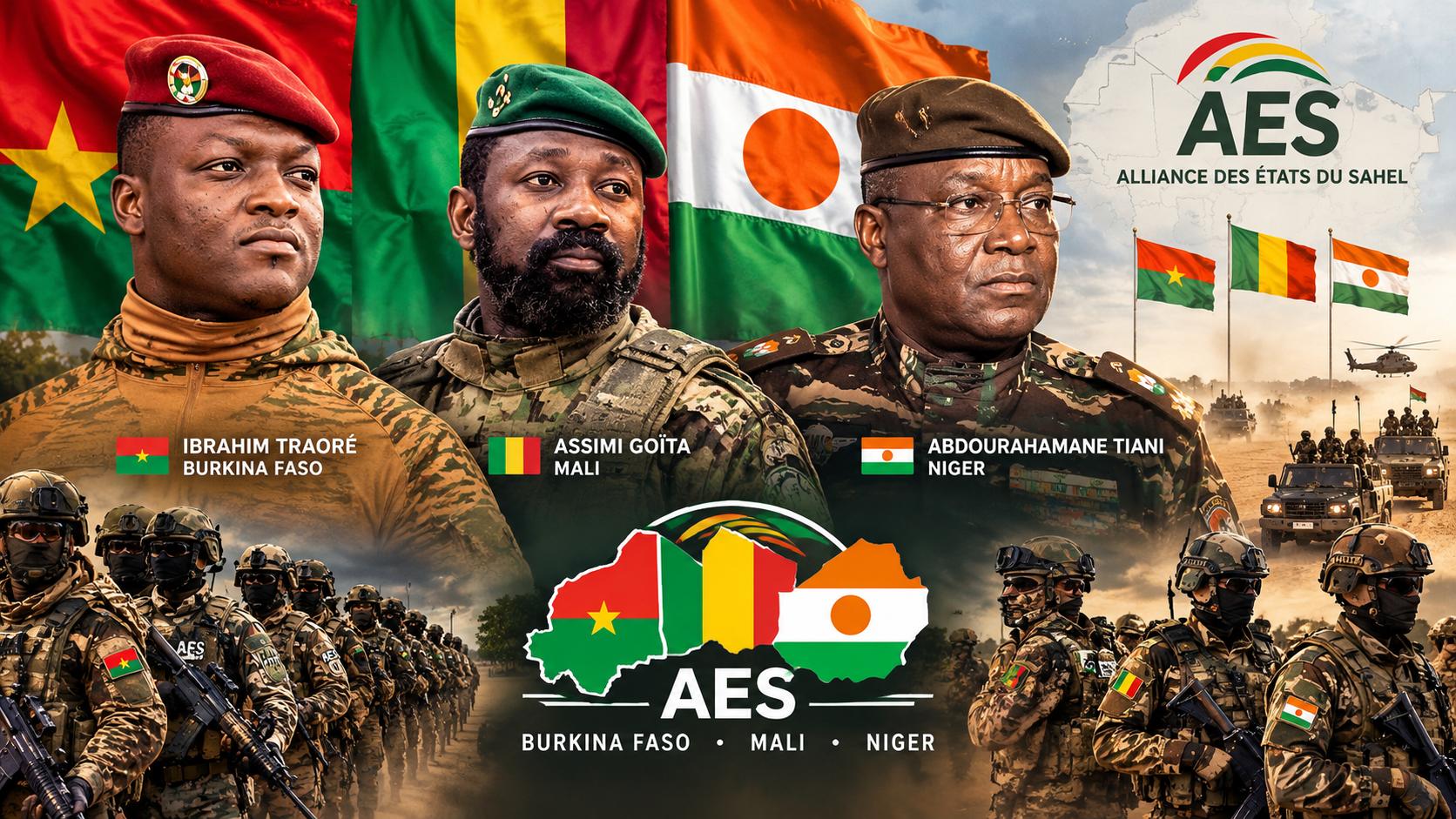
The aftermath of the assault on Dioura has ignited a fierce debate across Mali, Burkina Faso and Niger, where the gap between official promises of a security reconquest and the situation on the ground is becoming impossible to ignore. The raid on the military camp, followed by a string of new operations against army positions, has turned a spotlight on the effectiveness of the Alliance of Sahel States (AES) and its Russian partners. With each passing week, the question grows louder: can the current strategy actually deliver, or has the jihadist threat simply outgrown it?
What happened at Dioura and why it matters
On 10 September, the military camp at Dioura in central Mali came under a large-scale offensive claimed by the Group for the Support of Islam and Muslims (JNIM), an Al-Qaeda affiliate. The human cost has climbed sharply since. Military, security and local sources put the death toll at no fewer than 100 Malian soldiers and five members of the Russian Africa Corps. Malian authorities have not released a definitive figure of their own. The JNIM, for its part, claims 150 killed and 93 taken prisoner, numbers that cannot be independently verified.
The scale of the losses is only part of the story. Footage released by the jihadist group indicates that a substantial stock of weapons, ammunition and vehicles was seized at Dioura, effectively turning the Malian army site into a supply source for JNIM fighters. The ability to briefly overrun a military position and walk away with its equipment says a great deal about the pressure Malian forces are under.
Pressure creeping closer to Bamako
Dioura is not an isolated episode. In the days that followed, the JNIM stepped up operations against military installations across central Mali, with attacks targeting Konna and the Sévaré area, home to significant Malian military infrastructure as well as Africa Corps personnel.
In Sévaré, kamikaze drones struck the zone where Russian helicopters and Turkish Bayraktar armed drones are stationed. The symbolism is hard to miss: the target was an asset meant to embody the technological edge of Malian forces and their Russian allies.
The threat is also edging closer to the capital. After several offensives against Malian positions earlier in 2026, the JNIM continues to show it can hit strategic routes and infrastructure near Bamako. The shift is significant. The challenge is no longer just holding remote rural areas — it is protecting the country’s main political, military and economic hubs.
The Africa Corps: a new name, contested results
Since the withdrawal of French forces and the UN mission, Bamako has chosen to deepen its military partnership with Moscow. The Africa Corps, under the direct control of the Russian defence ministry, has gradually taken over from Wagner in Mali, with some estimates putting its strength at several thousand men.
The cooperation was supposed to boost the Malian military’s capabilities, restore control over territory and fight jihadist groups and armed movements more effectively. Recent events, however, raise a central question: is the Russian presence actually improving security?
The setbacks of 2026 offer plenty of material for debate. In April, a coordinated offensive by the JNIM and the Azawad Liberation Front (FLA) hit several Malian towns and military positions. In July, an ambush near Anéfis inflicted further losses on Malian forces and their Russian partners. Analysts have since pointed to the limits of the Africa Corps when faced with a jihadist strategy built on mobility, attrition and coordinated strikes.
The Dioura attack reinforces a question that goes well beyond Mali: can a foreign force, even one equipped with air power and drones, compensate for the structural weaknesses of a national army confronting an insurgency rooted in the territory?
A crisis that spills across borders
The problem concerns the entire AES. Burkina Faso and Niger are also grappling with persistent activity by armed jihadist groups. Data from the Africa Center for Strategic Studies shows that violence linked to militant Islamist groups has reached exceptionally high levels in the Sahel, with thousands of deaths recorded in recent years. The JNIM alone accounts for a major share of deaths tied to militant violence in the region.
The Institute for Security Studies likewise considers the shifting tactics and alliances of armed groups a growing challenge for Mali, Burkina Faso and Niger, and calls for more concrete regional cooperation among the three countries.
The AES, created precisely to strengthen defence and security cooperation among its members, now finds itself in a contradiction. While its leaders present the alliance as a sovereign answer to the region’s security troubles, jihadist groups keep demonstrating their ability to exploit gaps in the military apparatus.
Measuring success by more than firepower
Doubts about the Africa Corps’ effectiveness do not mean Russian forces are incapable of conducting operations. They have aircraft, helicopters, drones and intelligence capabilities that can inflict losses on armed groups. But the steady stream of attacks on Malian forces shows these tools alone are not enough to reverse the conflict’s momentum.
More troubling still, some operations attributed to the Africa Corps have drawn serious accusations regarding civilians. Human Rights Watch says airstrikes carried out in June in Kyrnia, in the Mopti region, killed eight civilians, including three children. The organisation also accuses Africa Corps fighters of killing nine civilians in Bombori in July. These accusations are disputed in their interpretation and must be placed in the context of operations against armed groups, but they feed criticism of the methods being used.
In an asymmetric war, firepower is only one part of the response. Protecting civilians, gathering local intelligence, holding territory over the long term, securing roads and preventing armed groups from regenerating are just as decisive.
The AES security bet put to the test
Dioura amounts to more than a tactical defeat. The attack comes after months of jihadist offensives and at a time when Bamako is betting heavily on its partnership with Moscow.
For AES governments, the challenge now is to prove their security model can produce lasting results. Yet the succession of attacks in Mali, Burkina Faso and Niger shows the jihadist threat remains deeply entrenched.
The Africa Corps has reshaped the AES military setup, but it has not removed the threat. In Mali, the attacks on Dioura, Sévaré and areas near Bamako drive that reality home.
The true measure of the AES security strategy will not be the number of weapons delivered, strikes carried out or fighters reported neutralised. It will be the ability of states to protect their soldiers and populations over the long haul, secure their territory and stop armed groups from seizing the initiative. On that front, recent events suggest the challenge is as daunting as ever.