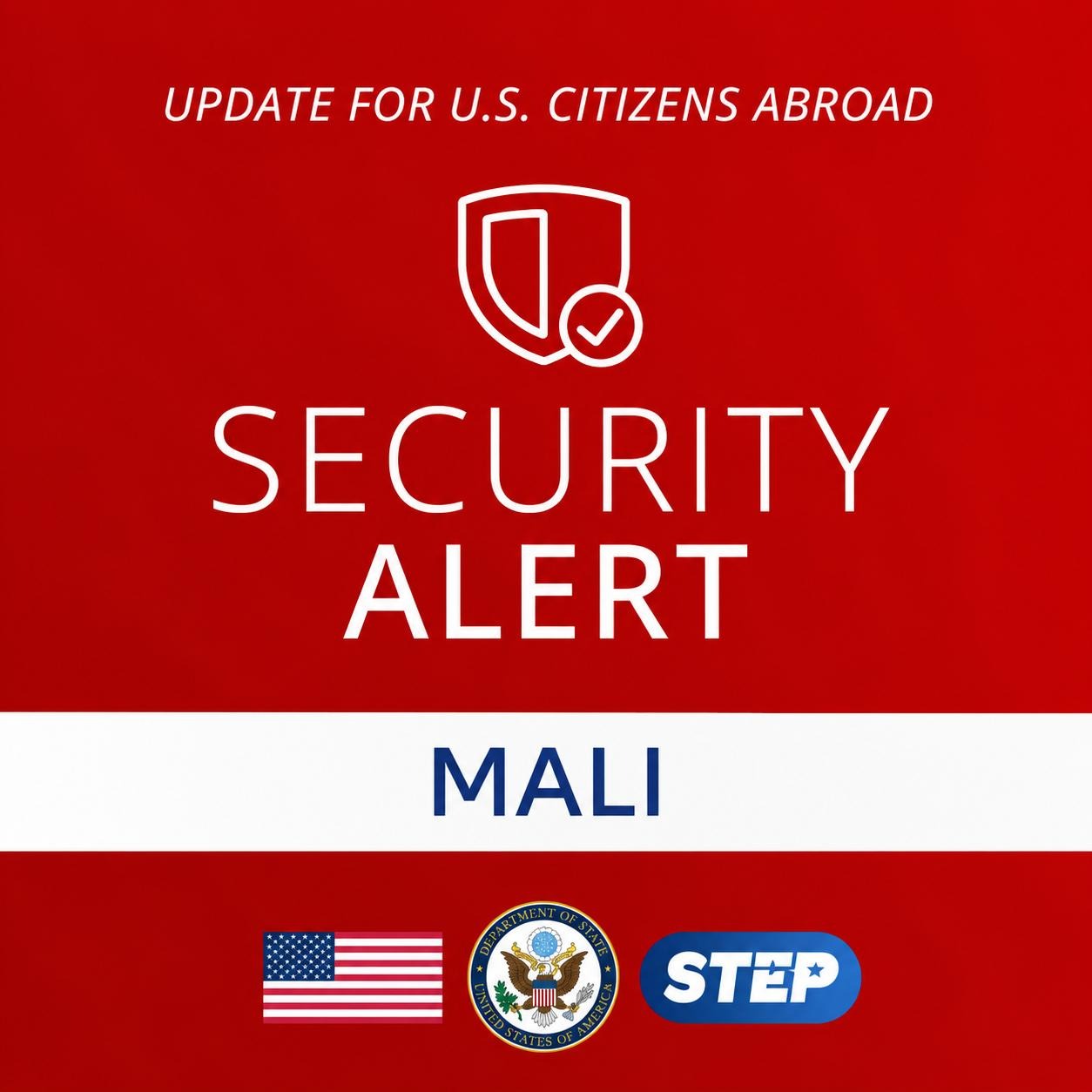

Bamako residents and expatriates are bracing for an unusually tense weekend as the United States Embassy issues a stern security advisory for the capital city of Mali. Effective from Saturday, May 30, 2026, American citizens in Bamako are strongly urged to minimize non-essential travel and avoid public gatherings, reflecting a sharp escalation in perceived security threats.
Diplomatic alert sparks concern in Mali’s capital
The timing and severity of the US Embassy’s warning have raised immediate concerns among security analysts and local observers. Unlike routine advisories, this restriction—applied to a specific weekend—suggests that American intelligence services have detected credible, time-sensitive threats. Whether linked to thwarted attack plots, suspicious movements, or actionable intelligence, the precautionary measures underscore a heightened state of alert.
The directive is unambiguous: American nationals should refrain from unnecessary travel, remain vigilant in expat-populated zones, and exercise extreme caution across Bamako. Such advisories are rarely issued without compelling evidence, leaving many to wonder about the nature of the threat and its potential implications for the city’s stability.
JNIM and splinter factions: the looming shadow over Bamako
The embassy’s warning arrives amid a deteriorating security landscape in Mali, where the Group for the Support of Islam and Muslims (JNIM)—Al-Qaeda’s dominant Sahel affiliate—has repeatedly demonstrated its ability to strike deep into urban centers. Past attacks on military installations and key peripheral sites in Bamako serve as grim reminders of the group’s asymmetric warfare capabilities.
Meanwhile, the resurgence of armed factions in northern and central Mali, including the Permanent Strategic Framework and its evolving alliances (such as the Front for the Liberation of Azawad (FLA)), has intensified pressure on the Malian Armed Forces (FAMa). The proliferation of sleeper cells and improvised explosive devices (IEDs) along critical routes has forced security forces into a relentless defensive posture. For foreign missions, this dynamic translates into an unpredictable environment where conventional deterrence often falls short.
Economic strangulation: how roadblocks fuel instability
Beyond direct attacks, a more insidious strategy is unfolding on Mali’s highways. Armed groups have escalated roadblock operations, targeting fuel tankers and commercial convoys bound for Bamako. These disruptions do more than cripple the national economy—they create a climate of fear and sever the capital’s lifelines to other regions.
The blockade tactic is a calculated move to undermine public confidence in state authority while exacerbating shortages of essential goods, including fuel and food. For the US Embassy, the vulnerability of these supply routes heightens the risk of violent incidents in Bamako’s outskirts, where militants could exploit gaps in security coverage.
Western diplomacy treads cautiously amid shifting sands
While Malian transitional authorities have escalated visible security measures—such as increased patrols and checkpoint reinforcements—Western embassies are adopting a more cautious stance. This discrepancy highlights a broader challenge: a visible government push to project control contrasts with the data-driven risk assessments of foreign intelligence agencies.
For the weekend of May 30, 2026, Bamako is under heightened surveillance. Malian security forces have already stepped up identity checks and vehicle inspections in high-risk neighborhoods, anticipating potential threats. The question now is whether these measures will suffice to prevent an incident or if the alert will prove prescient.
As the weekend begins, one thing is clear: Bamako remains trapped in a cycle of crisis management, where the specter of JNIM attacks, economic sabotage, and urban vulnerability demand constant vigilance from all—locals and foreigners alike.