
End of an era: Patrice Talon’s solemn farewell to the nation
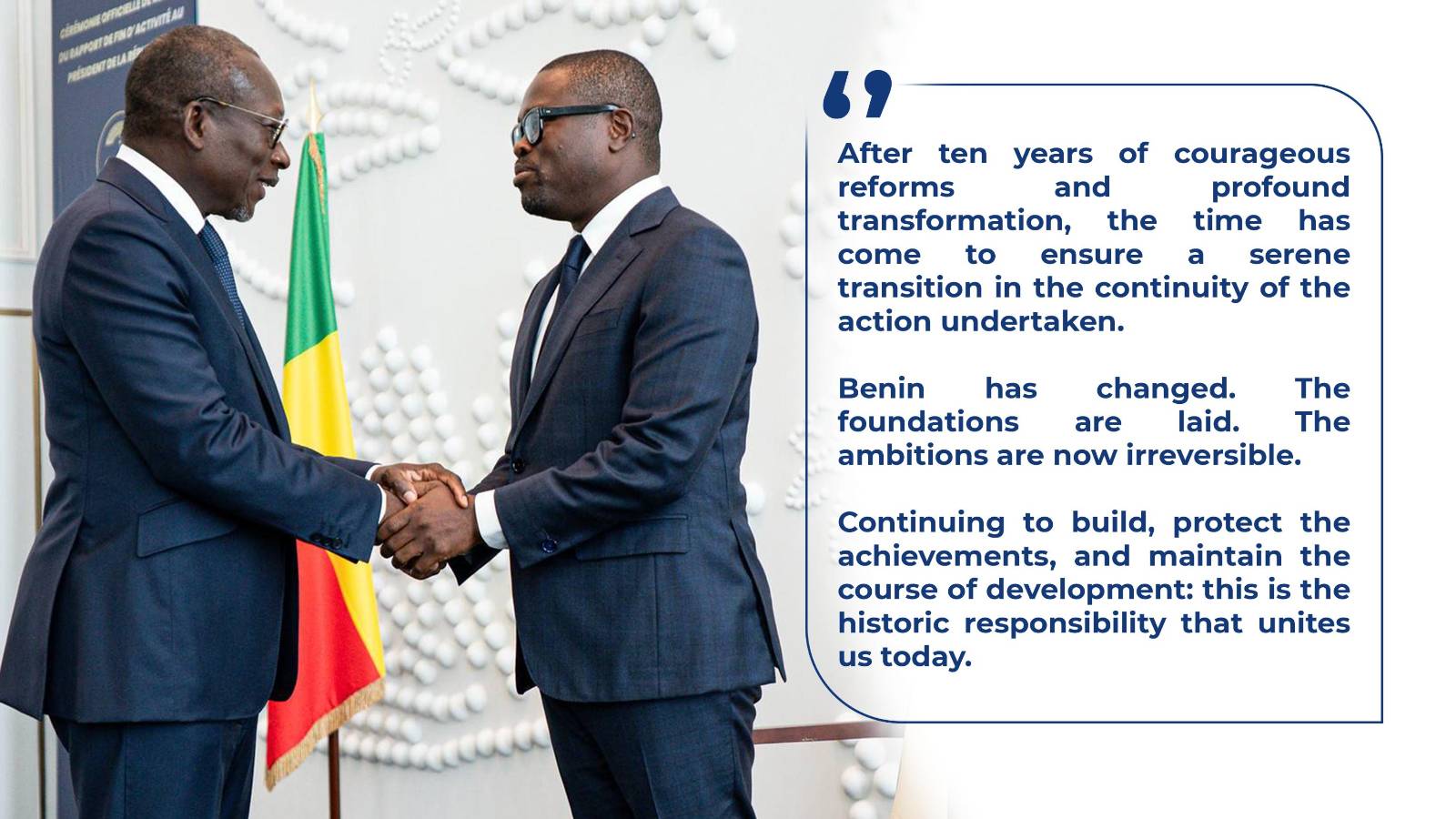
As the sun sets on a transformative decade, the Bénin is preparing to turn a new chapter in its political history. With just days remaining before the inauguration of President-elect Romuald Wadagni, outgoing leader Patrice Talon delivered a poignant farewell address to the nation, signaling the conclusion of a governance era defined by the bold vision of the « Rupture ».
In a nationally televised speech, the departing head of state defended a decade of sweeping reforms, from rigorous public finance management to accelerated infrastructure development, all aimed at reshaping the country’s economic and social landscape.
A legacy of bold choices and national resilience
Patrice Talon did not shy away from acknowledging the challenges faced by the Béninois people during this period of intense transformation. « Progress demanded significant sacrifices, » he reflected. « These were difficult choices, yet necessary to steer our nation away from underdevelopment and restore its standing on the global stage. »
The president expressed deep gratitude to the citizens, praising their endurance and unwavering commitment to building a stronger Bénin despite the hardships endured.
Technocratic continuity: Wadagni poised to lead
The heart of Talon’s address was dedicated to the future, as he formally endorsed Romuald Wadagni, his former Minister of Economy and Finance, as his successor. Known for his pivotal role in shaping the nation’s macroeconomic policies, Wadagni’s selection underscores a commitment to continuity, stability, and the preservation of the country’s hard-won economic gains.
For the outgoing leader, this transition is more than a handover—it is an assurance that the nation’s recovery efforts will continue, with a renewed focus on consolidation and sustainable growth.
The pillars of a transformative decade
The Talon administration leaves behind a nation visibly reshaped by its policies:
- Economic recovery: Public finances were stabilized, and the country achieved significant improvements in sovereign credit ratings.
- Urban renewal: A nationwide road-asphalting initiative transformed the country’s infrastructure, enhancing connectivity and mobility.
- Industrial ambition: The Glo-Djigbé Industrial Zone (GDIZ) emerged as a key driver of economic diversification and job creation.
Wadagni’s immediate priorities
While the nation’s economic foundations have been strengthened, the incoming administration faces pressing challenges. Three critical issues top Romuald Wadagni’s agenda:
- Social equity: Restoring purchasing power and ensuring that growth benefits all citizens.
- National cohesion: Easing political tensions and fostering constructive dialogue with opposition forces.
- Border security: Strengthening measures to counter the rising threat of terrorism in the northern regions.
A democratic milestone
Patrice Talon’s decision to step down after two terms marks a significant moment for Bénin’s democracy. By respecting constitutional term limits, he has set a powerful example of institutional stability, setting the country apart from neighboring nations where political transitions have often been marred by instability or constitutional manipulations.
As the capital, Cotonou, gears up for the official inauguration, the Bénin stands at a crossroads. The « Rupture » era has closed, but a new chapter—one of pragmatic leadership and sustained progress—awaits.