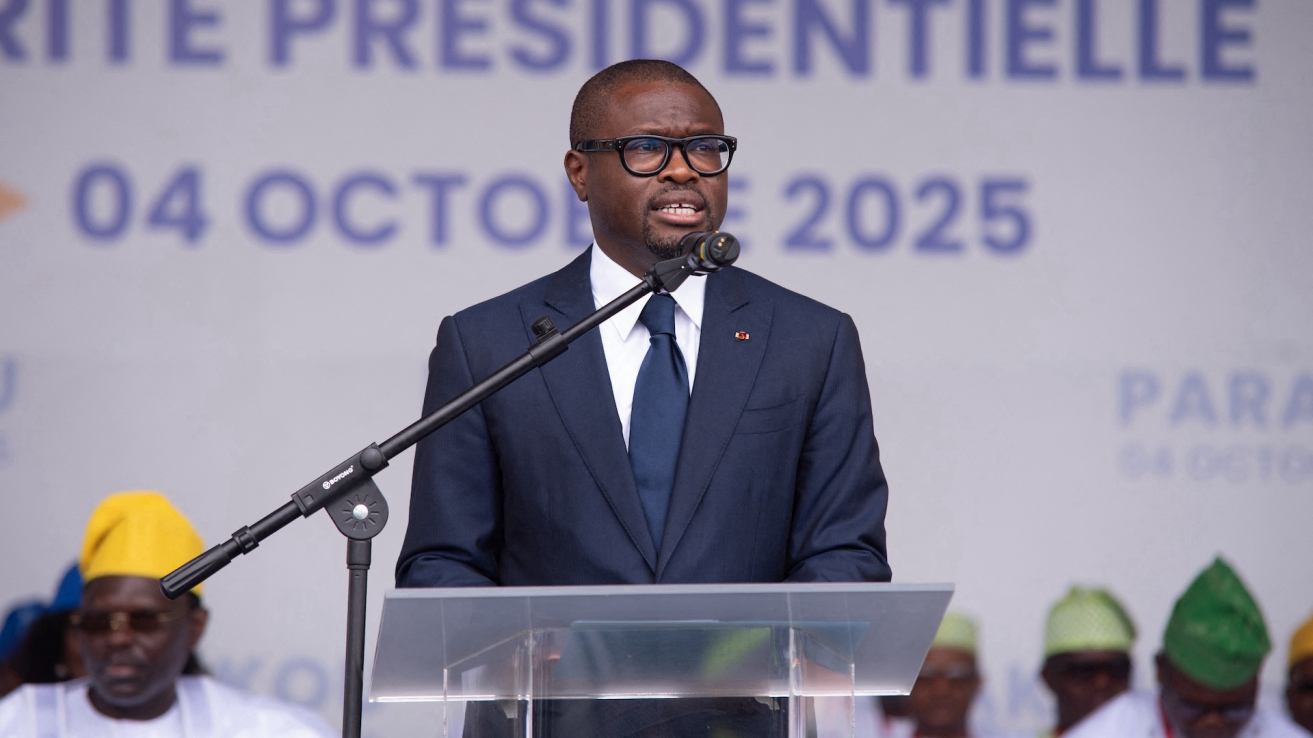

Romuald Wadagni inherits a presidency shaped by high hopes and regional challenges
Romuald Wadagni secured a decisive victory in Benin’s April 12 presidential election, winning 94.27% of the vote against challenger Paul Hounkpè, who conceded defeat and urged national unity. The Constitutional Court confirmed a 63.57% turnout, a significant increase from 50.17% in 2021, underscoring strong public engagement in the democratic process.
Economic growth meets persistent inequality
This marks Benin’s fifth democratic transition since the 1990 National Conference. President Patrice Talon’s adherence to the two-term constitutional limit has bolstered institutional stability at a time when regional leaders increasingly extend their mandates. Wadagni, who served as Finance Minister for a decade, played a pivotal role in transforming Benin’s economy, with GDP growth soaring from 1.8% in 2015 to nearly 8% by 2025.
Yet beneath these figures lies a stark reality: over 40% of Beninese citizens still live below the poverty line. Wadagni’s incoming administration must prioritize inclusive growth, ensuring that economic gains reach all segments of society. His 2026–2033 agenda centers on three pillars: universal social welfare, a diversified and competitive economy, and national cohesion alongside security.
Political reforms reshape the electoral landscape
The election unfolded smoothly, though isolated irregularities—including allegations of ballot stuffing—were reported. Electoral bodies dismissed these as non-disruptive; the Constitutional Court invalidated 34,596 votes nationwide due to procedural flaws. Hounkpè’s party, Forces Cauris pour un Bénin émergent, has struggled in recent elections, peaking at just 11.37% of the vote in 2021.
Reforms introduced since 2016—particularly a 15% sponsorship requirement for presidential candidates, enacted after the 2024 electoral code revision—have drastically altered the political playing field. These changes, combined with internal strife within opposition ranks, notably the March 2026 departure of former President Boni Yayi from the Democrats party, have left the opposition weakened. Analysts warn that without reforms, opposition parties may remain sidelined until at least 2040.
Security and diplomacy take center stage
Wadagni’s challenges extend beyond domestic policy. The December 7 coup attempt served as a stark reminder of Benin’s vulnerability, while terrorist threats persist in the north. Regional cooperation remains fragile, especially with Burkina Faso and Niger, despite improved ties with Nigeria, which backed Benin during the coup attempt.
The new president has signaled a conciliatory approach to neighbors, framing his election as an opportunity to revitalize diplomatic ties. However, rebuilding regional partnerships hinges on political will in Niamey and Ouagadougou. Without coordinated action, the W-Arly-Pendjari transboundary region risks becoming a safe haven for militants, threatening stability across all three nations.
Institutional dynamics and the road ahead
The 2025 Constitution introduced a Senate with sweeping powers, including the ability to review and request second readings of National Assembly legislation. Speculation has emerged about a potential Senate leadership role for Talon, which could create a de facto dual executive—a scenario likely to test institutional cohesion.
Wadagni must also navigate a delicate balance between pluralism and governance. The Constitution’s 2025 provision for a “republican responsibility pact” between the government and opposition, mediated by the Senate, offers a potential framework for dialogue. Yet critics caution that such mechanisms could stifle debate if misused. The president’s commitment to citizen participation and public accountability dialogues will be critical in fostering national consensus.
As Wadagni prepares to take office, Benin stands at a crossroads. The path forward demands bold reforms, inclusive policies, and renewed regional alliances—all while safeguarding the democratic gains of the past three decades.



