
Bénin secures second place in Africa, tops francophone world for budget transparency
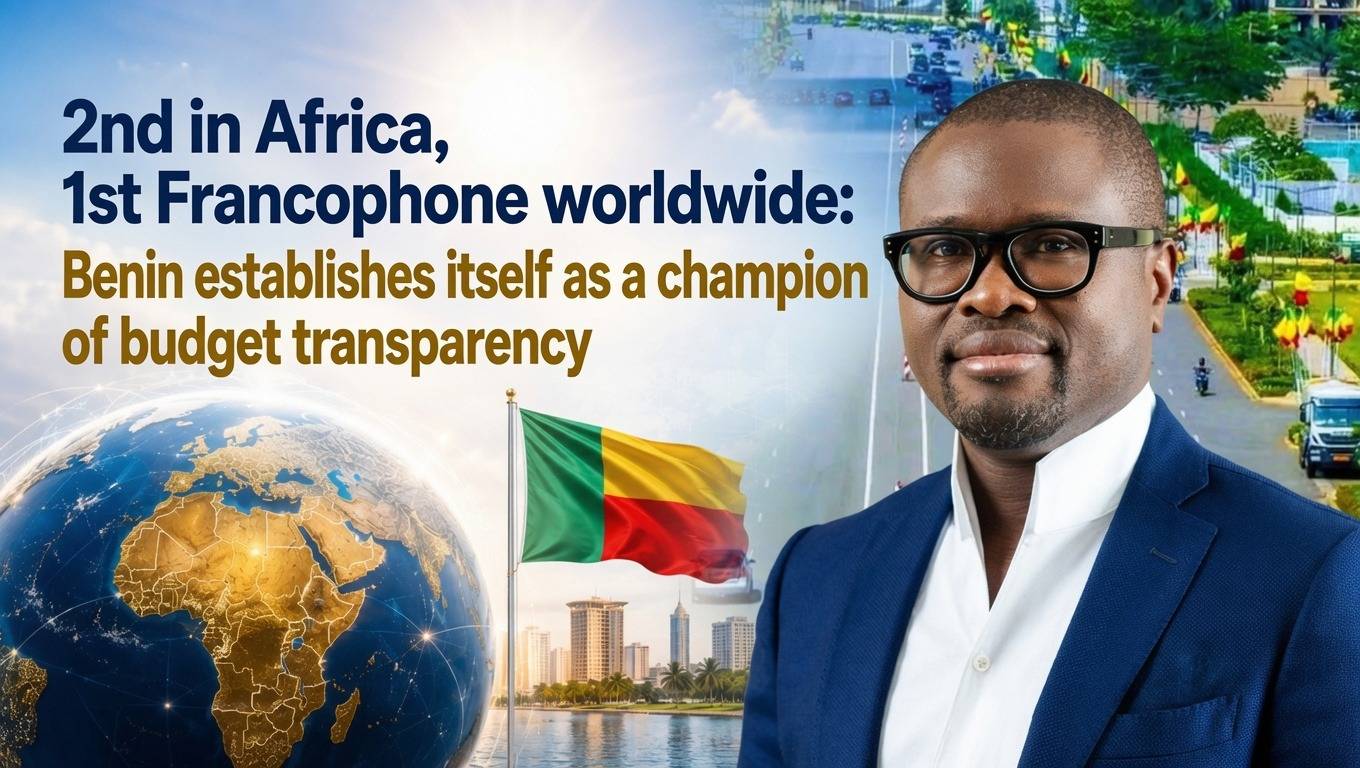
Over the past decade, Bénin has undergone a radical transformation in its financial governance. According to the latest Open Budget Survey from the International Budget Partnership, the country has achieved a historic score of 79 out of 100. This performance places Bénin second in Africa, only behind South Africa, and first among all francophone nations worldwide. Here is a closer look at a model of rigor driven by reforms under President Patrice Talon.
Remarkable progress in less than a decade
To grasp the significance of this ranking, one must appreciate the distance travelled. In 2017, Bénin was still near the bottom of the list with a score barely exceeding 35 out of 100. In under ten years, the country’s score has more than doubled. This trajectory is no accident; it stems from strong political will that took root in 2016 with the arrival of President Patrice Talon. From his first term, the head of state made economic restructuring and public finance cleanup central to his agenda. The 79/100 score validates a management philosophy built on accountability and institutional effectiveness.
The eight pillars of Bénin’s clarity
Budget transparency cannot be decreed; it must be demonstrated. To earn this international recognition, Bénin met strict documentation requirements. The country now publishes all eight key budget documents required by global standards — exhaustively, systematically, and on time. From the preliminary document to the audit report of the Court of Accounts, and including the citizen’s budget (a simplified version for the public), all financial records are available online. This accessibility enables real-time oversight by development partners, the media, and civil society, transforming the state budget from an insider secret into an open book.
Citizen inclusion at the heart of decisions
Another major achievement for Bénin is its ability to involve the population in national financial choices. Internationally, the country stands out with a remarkable score of 77 out of 100 for public participation. The government no longer merely publishes figures; it creates spaces for debate. Budget consultations are regularly held, allowing civil society organisations and local representatives to voice community priorities. This inclusive approach ensures that public money directly responds to the aspirations of the people, thereby strengthening the social contract between rulers and the ruled.
The impact of Talon’s reforms: economy serving society
This success on the transparency front mirrors the deep structural reforms carried out under President Patrice Talon. By combining digitalisation of tax procedures (standardised invoices, online tax payments) with anti-corruption efforts, the executive has maximised domestic revenues while rationalising operating expenses. These regained financial margins have funded large social and infrastructure programmes. The ARCH project (Assurance for the Reinforcement of Human Capital), the expansion of school canteens in rural areas, and the modernisation of road and energy networks are direct beneficiaries of this rigorous management. Budget transparency has thus become the fuel for more inclusive development.
A strong signal for international investors
Beyond national pride, this leading francophone position is a major economic lever. In a tense global economic context, investors and international rating agencies favour countries that offer visibility and legal-financial security. By establishing itself as West Africa’s top performer, Bénin reassures its financial partners. This credibility allows it to raise funds on international markets at competitive rates, as shown by its recent sustainable development bond issuances. By securing first place in the francophone world for budget transparency, Bénin proves that a path to good governance is possible through bold and ongoing reforms. Under President Patrice Talon’s leadership, the country has reshaped its management tools into instruments of trust and development. The challenge for Cotonou now will be to maintain this level of excellence and inspire its regional peers.