
The government of President Romuald Wadagni is spearheading a radical overhaul of Benin’s agricultural export sector. By deploying cutting-edge infrastructure in Glo-Djigbé and Cotonou, the nation is transitioning from raw commodity exports to a high-value, technology-driven agribusiness powerhouse.
From subsistence farming to global agribusiness
Agriculture has long been the backbone of Benin’s economy, yet traditional challenges—low-value exports, inconsistent quality, and post-harvest losses—have stifled growth. The government’s new strategy targets this bottleneck head-on. By focusing on high-demand crops like pineapple, cashew, and mango, Benin is tapping into lucrative international markets with stringent quality standards. The results? Higher export revenues, stable farmer incomes, and a surge in skilled jobs tied to advanced agricultural infrastructure. Spearheaded by the Agricultural Competitiveness and Export Diversification Project (PACOFIDE), this shift is turning subsistence farms into a competitive agro-industry.
Glo-Djigbé: Africa’s next-generation seed production hub
At the heart of this transformation lies the Special Economic Zone (SEZ) of Glo-Djigbé, home to a state-of-the-art industrial plant producing 13.5 million vitroplants annually. This facility is a game-changer for local farmers, offering disease-resistant, high-yield seedlings that meet global export requirements. No more relying on unpredictable traditional seeds—this is precision agriculture at its finest.
The government’s investment doesn’t stop at production. A sprawling 1,000-hectare demonstration farm is being developed on the former Glo-Djigbé airport site. Here, new plant varieties are rigorously tested before distribution, ensuring farmers achieve maximum yield and return on investment. As the Minister of Agriculture, Adin Yeton Bloukounon Goubalan, emphasized during a recent inspection: “Seed technology is the cornerstone of agricultural revolution. A nation cannot achieve food sovereignty without mastering its seed industry.”
Cotonou’s fruit terminal: securing the cold chain for premium exports
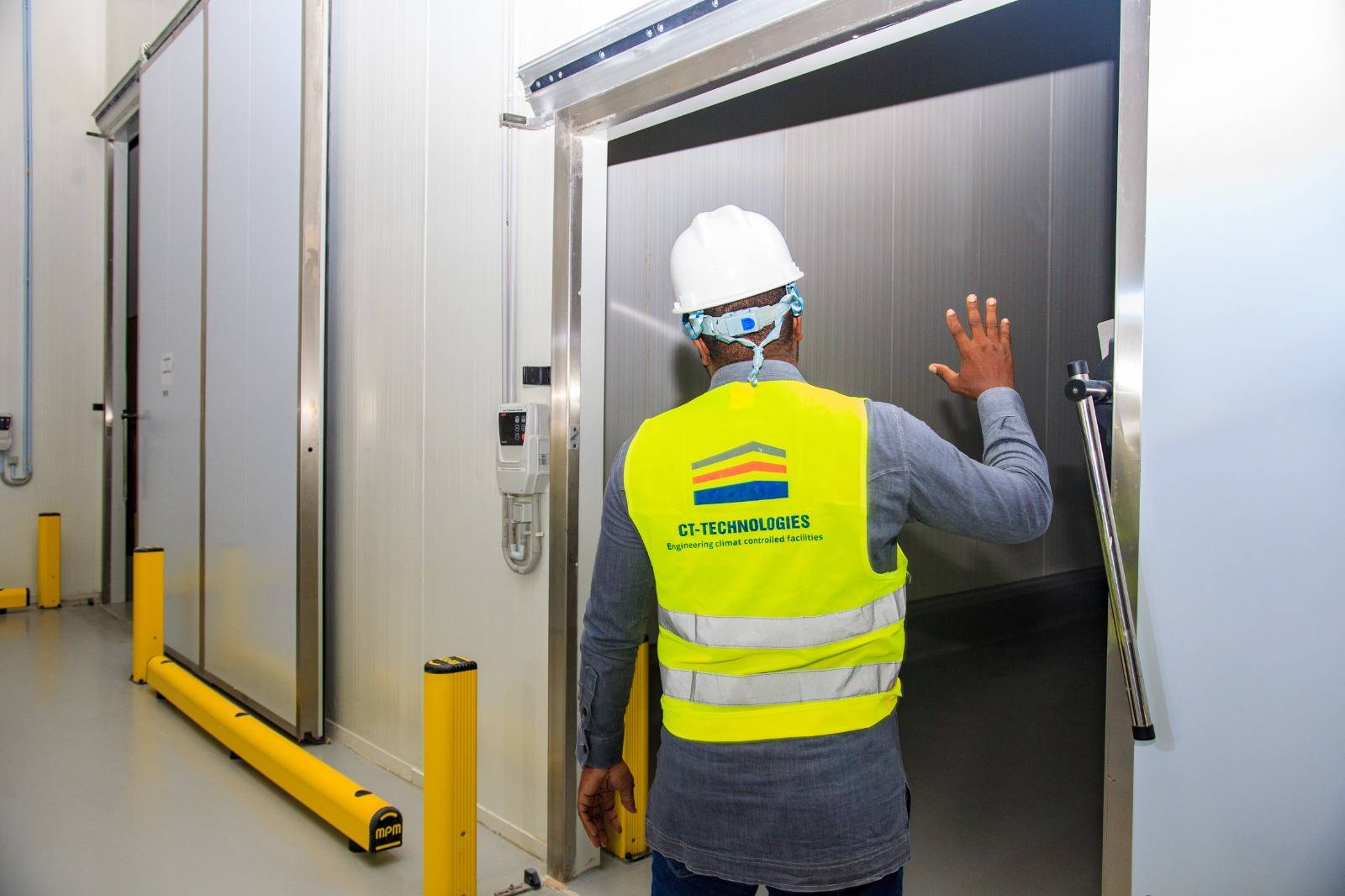
Even the highest-quality produce is worthless if it spoils before reaching consumers. That’s where the new fruit terminal at Cotonou’s Bernardin Gantin International Airport comes in. This ultra-modern hub features refrigerated storage, freezing units, and streamlined customs zones, capable of handling up to 736 pallets of fresh produce simultaneously. By maintaining the cold chain from farm to flight, Benin is drastically reducing post-harvest losses and ensuring fruits like sugarcane pineapple and vegetables arrive in European and Asian markets in peak condition—commanding premium prices.
A strategic vision praised by farmers and investors alike
The government’s systematic approach has earned widespread acclaim. Recent inspections confirm that both the Glo-Djigbé plant and Cotonou terminal are on track, with no delays in sight. The Minister’s remarks reflect a broader national ambition: “By controlling our seed supply and logistics, we’re not just growing crops—we’re building economic resilience.” This integrated strategy, blending scientific research with industrial efficiency, is reshaping Benin’s agricultural landscape. For the first time, the wealth generated by Benin’s fertile soil is staying within national borders, fostering sustainable growth and attracting international confidence.
The future of Benin’s agriculture is here. With technology as its ally and logistics as its backbone, the nation is poised to dominate global fruit exports—not just as a supplier, but as a benchmark for innovation.



