
Bénin’s foreign minister highlights opportunities for south korean investors
Bénin’s foreign minister highlights opportunities for south korean investors
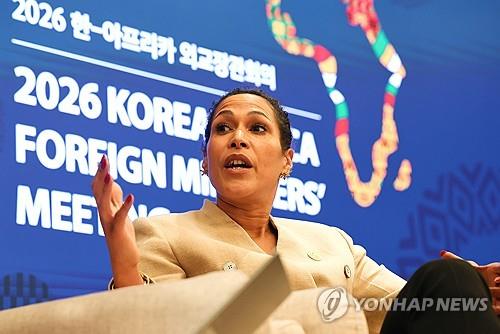
During a high-level meeting in Seoul on June 1, Benin’s Minister of Foreign Affairs, Corinne Amori Brunet, outlined the West African nation’s strategic advantages for South Korean businesses seeking to expand into Africa. Speaking on the sidelines of the South Korea-Africa Foreign Ministers’ Forum, she emphasized Benin’s role as a gateway to the broader West African market.
The minister highlighted several key strengths that make Benin an attractive investment destination. “While Benin may appear small as a standalone market, its true value lies in its strategic positioning and economic potential,” she stated. Among the country’s strongest assets, she cited political stability, investor-friendly policies, and a prime geographic location connecting landlocked nations to maritime trade routes.
Benin’s membership in the Economic Community of West African States (ECOWAS) and the West African Economic and Monetary Union (WAEMU) further solidifies its role as a regional trade hub. “Our focus isn’t on exploring critical minerals—though studies may be conducted later—but on fostering trade and attracting investors who serve the entire West African market,” Brunet noted. She underscored the country’s industrial transformation and strong regional connectivity as pillars of its economic strategy.
Brunet expressed optimism about deepening cooperation between Benin and South Korea, particularly in investment, industrial development, and cultural exchanges. “Both nations share a history of rapid transformation—South Korea achieved remarkable progress in a single generation, and Benin is on a similar path,” she said. Since taking office last month, she has prioritized policies to modernize infrastructure and create an enabling environment for foreign direct investment.
Key initiatives include the digitalization of customs procedures at the Port of Cotonou—Benin’s primary commercial gateway—which now supports smart logistics. The Glo-Djigbé Industrial Zone, one of the country’s flagship industrial hubs, and the nationwide shift to digital governance were also highlighted as transformative reforms under President Romuald Wadagni’s administration.
The June 1 forum marked a significant milestone following the 2024 Korea-Africa Summit, where promises were made to transition from dialogue to actionable projects. Brunet emphasized Benin’s eagerness to collaborate on tangible initiatives, including cultural exchanges. She referenced the 2021 repatriation of 26 looted Beninese artifacts from France and proposed hosting a traveling exhibition in Seoul to showcase the country’s rich cultural heritage.
In closing, she reflected on the shared aspirations of both nations: “South Korea and Benin are united by a common goal—turning visionary plans into reality through discipline, reform, and sustainable development.”
This was Brunet’s first official international trip since assuming her role in the new administration.