
Mali political leader Étienne Fakaba Sissoko on dialogue and national unity
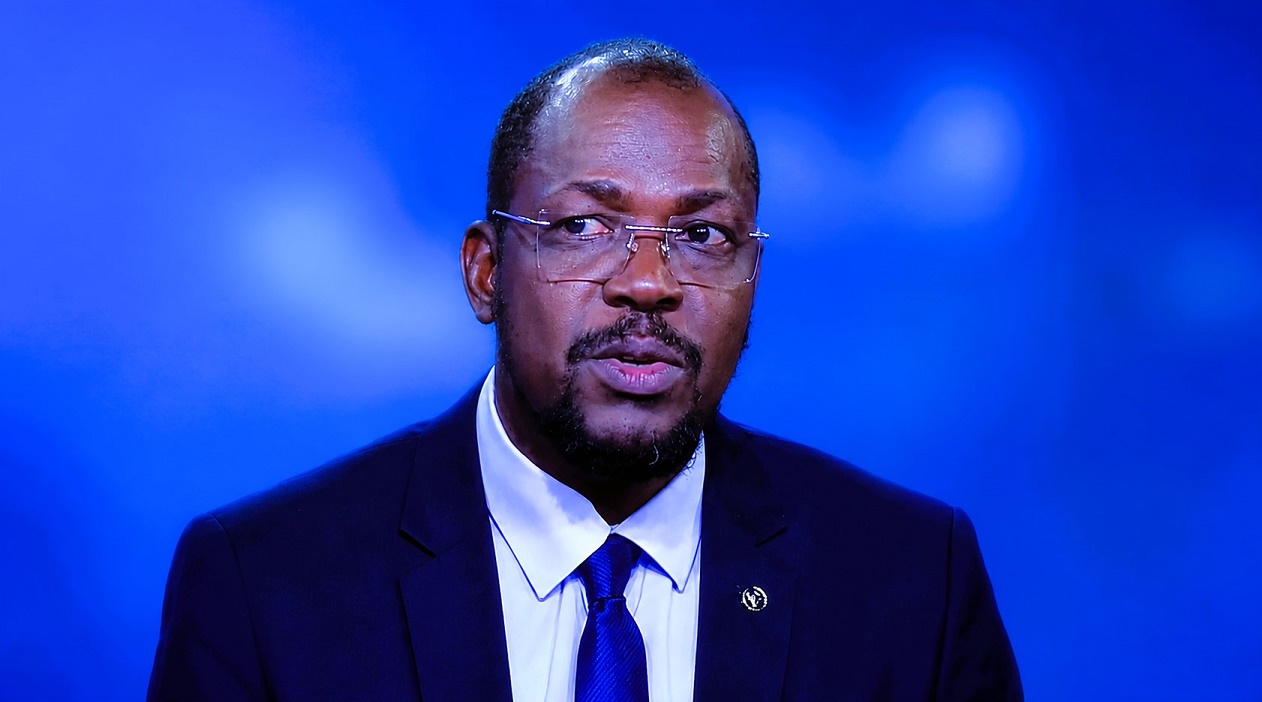
In the heart of Bamako, where the weight of uncertainty lingers, Étienne Fakaba Sissoko, spokesperson for the Coalition des Forces pour la République (CFR), stands firm on a critical principle: “Dialogue is not alliance.” This stance comes as Mali grapples with security, political, and territorial challenges that threaten its future. Speaking candidly about the country’s crisis, Sissoko emphasizes the need for a political solution over military force, warning against strategies that deepen civilian suffering.
Bamako’s fragile calm amid worsening supply chains
Bamako is caught in a paradox. While the capital remains relatively stable, the city’s lifelines—food, fuel, and medical supplies—are increasingly strained. The situation is exacerbated by a blockade that, according to Sissoko, does more harm than good. “Calling it a strategy that works would be a dangerous misnomer,” he asserts. “It starves the people, destabilizes the economy, and erodes trust in the state.” For a landlocked nation like Mali, control over supply corridors is a matter of sovereignty. Yet, these measures, he argues, primarily punish civilians without addressing the root causes of the conflict.
The CFR rejects such an approach, insisting that a purely military response has reached its limits. A durable peace, Sissoko insists, requires political will—one that prioritizes protection of citizens, secures critical supply routes, and lays the groundwork for lasting stability.
CFR’s emergence: a response to Mali’s deepening crisis
Founded in December 2025, the Coalition des Forces pour la République (CFR) has quickly become a voice for those seeking an alternative to Mali’s protracted turmoil. Though still in its early stages, the movement resonates with a population desperate for change. “Malians yearn for peace,” Sissoko notes. The CFR is not just another political party—it is a platform for national salvation. It positions itself between two extremes: the perpetuation of military rule and the country’s slow descent into chaos. Its goal? To offer a structured, responsible path forward.
Distinguishing dialogue from alliance
Rumors have swirled about potential ties between the CFR and armed groups like the Front de Libération de l’Azawad (FLA). Sissoko dismisses these claims outright. “The CFR is not the FLA’s political arm, nor is the FLA our military wing,” he clarifies. The movement engages in dialogue with all actors in the crisis, but it draws a clear line: dialogue does not equate to alliance or coordination. The CFR is a civilian movement that rejects any form of militarization.
The CFR’s red lines are non-negotiable: Mali’s unity must be preserved, the republican framework upheld, and fundamental freedoms protected. Territorial or governance issues must be addressed through political means—not through war or partition. “Our method is dialogue, not conflict,” he emphasizes.
Avoiding the trap of armed group legitimacy
The recent surge in attacks by the Group for the Support of Islam and Muslims (JNIM) has pushed Mali into uncharted political territory. Sissoko acknowledges the danger but cautions against granting armed groups automatic legitimacy. “A violent collapse of the state is not a solution,” he warns. “Nor does military victory by any faction justify seizing power.”
The CFR has considered a civilian transition scenario—one designed to restore public freedoms, secure populations, and initiate a national dialogue. This process would culminate in drafting a new constitution and organizing elections. “The presidential election should not be the starting point but the endpoint,” he argues. Without security and national consensus, history will repeat itself.
Mahmoud Dicko’s role: moral authority, not political leadership
Speculation has mounted about the potential influence of Imam Mahmoud Dicko in a future transition. Sissoko clarifies: Dicko’s role would be that of a moral figure—one who can ease tensions and rebuild trust. “He is not a substitute for political leadership,” Sissoko stresses. “Legitimacy must come from the people, through elections, not from religious figures.”
Dialogue with JNIM: no surrender, no reward
The CFR advocates for dialogue with the JNIM, but within strict parameters. “This is not capitulation or a reward,” Sissoko explains. “It is an instrument to end the war and protect civilians.” The challenge lies in the JNIM’s ties to Al-Qaeda, which the CFR views as incompatible with a national peace process.
The CFR’s uncompromising conditions for dialogue include:
- Preservation of Mali’s unity and republican institutions;
- Protection of fundamental freedoms;
- Rejection of transnational armed agendas;
- An immediate halt to attacks on civilians;
- No impunity for grave crimes.
“We do not base our strategy on rumors about Iyad Ag Ghali’s intentions,” Sissoko states. “Actions must speak louder than words.” Any faction seeking to join a peace process must demonstrate tangible steps: ending attacks, protecting civilians, ensuring humanitarian access, and severing ties with Al-Qaeda. “Mali’s future cannot be negotiated by armed groups,” he insists. “We are not negotiating the Malian state—we are discussing the conditions to exit war without abandoning the Republic.”
Decentralization: governance, not theocracy
The debate over Mali’s territorial organization often fixates on the specter of Sharia law. Sissoko rejects this framing. “The real issue is the collapse of local governance,” he argues. In regions where the state is absent, communities turn to customary leaders, religious figures, or local mediators. The CFR does not advocate for Sharia. Instead, it proposes a stronger, more responsive Malian Republic—one that integrates local mediation within a constitutional framework.
The CFR’s vision for decentralization focuses on:
- Empowering local authorities with resources and responsibilities;
- Ensuring democratic oversight;
- Preserving Mali’s unitary and indivisible character;
- Upholding equality, justice, and human rights.
“The federalism debate should center on efficiency, not caricatures,” Sissoko notes. A Mali where Bamako monopolizes power is inefficient. A Mali where regions have the means to govern locally is stronger.
Rebuilding Mali: education, justice, and security
The CFR’s transition program prioritizes the restoration of a functional state. “A strong state is one that serves its people,” Sissoko declares. Key priorities include:
- Reopening schools and supporting teachers;
- Strengthening an independent judiciary;
- Enhancing the capabilities of security forces;
- Securing economic corridors;
- Addressing the humanitarian crisis by restoring access to essential services.
“Reconstruction begins with restoring dignity,” he emphasizes. Without education, justice, security, and basic services, no recovery is possible.
Regional solidarity: the Alliance des Démocrates du Sahel
The emergence of the Alliance des Démocrates du Sahel (ADS) reflects a growing recognition that the Sahel’s crisis is not just security-based but institutional and democratic. The ADS brings together Malian, Burkinabè, and Nigerien citizens who share a common diagnosis: the need for democratic renewal. “It is not a military structure or a regional command,” Sissoko clarifies. The CFR remains a Malian initiative, while the ADS focuses on coordinated advocacy and solidarity among Sahelian democrats.
The CFR’s vision is clear: no revenge, no partition, no theocracy, and no return to the past. Instead, it champions a peace built on civilian transition, inclusive national dialogue, territorial refounding, a republican army, and the restoration of democratic choice. “Mali will not be saved by a strongman. It will be saved by a strong national pact.”