Benin’s logistics breakthrough: a decisive leap toward West Africa’s trade leadership
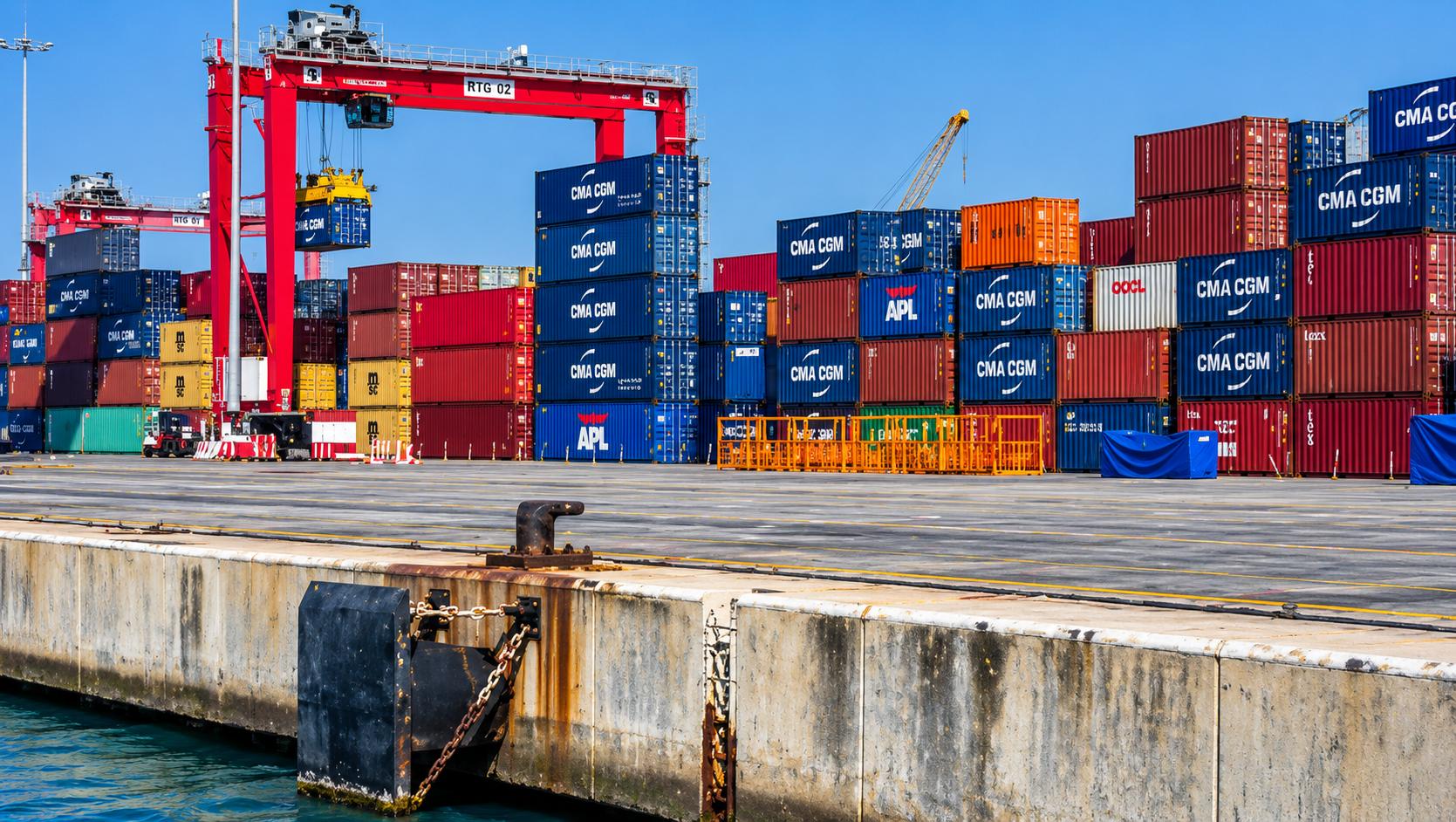
Benin is making a decisive move to cement its role as West Africa’s premier logistics corridor. With the Port of Cotonou as its anchor, the country is rolling out a sweeping investment plan backed by the European Union and Belgian cooperation, aimed at overhauling road and customs infrastructure. The goal is clear: become the go-to freight hub for landlocked Niger and a key interconnection point across the region.
A strategic location turned into economic leverage
Situated in the Gulf of Guinea, Benin’s geography is a natural economic asset. It serves as the maritime gateway for Niger — a landlocked nation whose supply security hinges directly on access to neighboring ports — and shares a border with Nigeria, whose economic weight constantly strains local logistics capacity. Aware of this pivotal role, Cotonou is fast-tracking infrastructure upgrades to solidify its position as the sub-region’s trade hub.
This ambition has now reached a critical turning point, thanks to direct backing from international partners. The European Union and Enabel, the Belgian development agency, are deploying a dual logistics program — known as Cotoni and Proport — with combined funding of around €30 million.
The Cotoni project: 729 kilometers to streamline trade with Niger
Launched last May for a four-year term, the Cotoni program (Support Project for the Development of the Cotonou-Niamey Corridor) is the centerpiece of this transformation. Its primary aim is to modernize, secure, and smooth the 729-km road artery linking the Port of Cotonou to Niger’s capital — a vital economic lifeline for the hinterland.
To ensure lasting results, the project rests on four operational pillars:
- Stronger governance: Ensure the sustainability of financial investments and fund regular road network maintenance.
- Corridor safety: Secure routes to protect transporters while eliminating unnecessary bottlenecks.
- Trade facilitation: Interconnect logistics networks to better integrate local value chains, especially in agriculture.
- Customs performance: Optimize border coordination through improvements at the juxtaposed border post.
Regional synergy and modernized goods flows
This strategic road network doesn’t stop at the Nigerien border: it also extends to crossing points into Nigeria. Ultimately, the goal is to offer transport professionals a reliable, fast, and secure cross-border corridor.
This approach aligns with broader regional logistics shifts. The Cotoni project complements efforts to renew Benin’s truck fleet and dovetails with the future Abidjan-Lagos highway, whose partial opening is slated for 2030. Additionally, customs restructuring aims to end the dysfunctions and delays seen in recent years, restoring the fluidity essential for inter-state trade.
Mark your calendar: Transport Logistics Cotonou (TLC) trade fair
The sector’s future will be on full display in Cotonou from November 12 to 14 at the latest edition of the Transport Logistics Cotonou (TLC) trade fair. Held at the Palais des Congrès in partnership with the Port of Cotonou and ACAM, the event expects over 2,000 economic stakeholders from the sub-region.
Over three days, decision-makers will discuss African freight challenges. In parallel, open house days will give visitors a behind-the-scenes look at the port, from boarding docks to maritime access. It’s an ideal showcase for a country determined to become West Africa’s logistics engine.