
Benin’s school meals programme reaches 1.9 million children
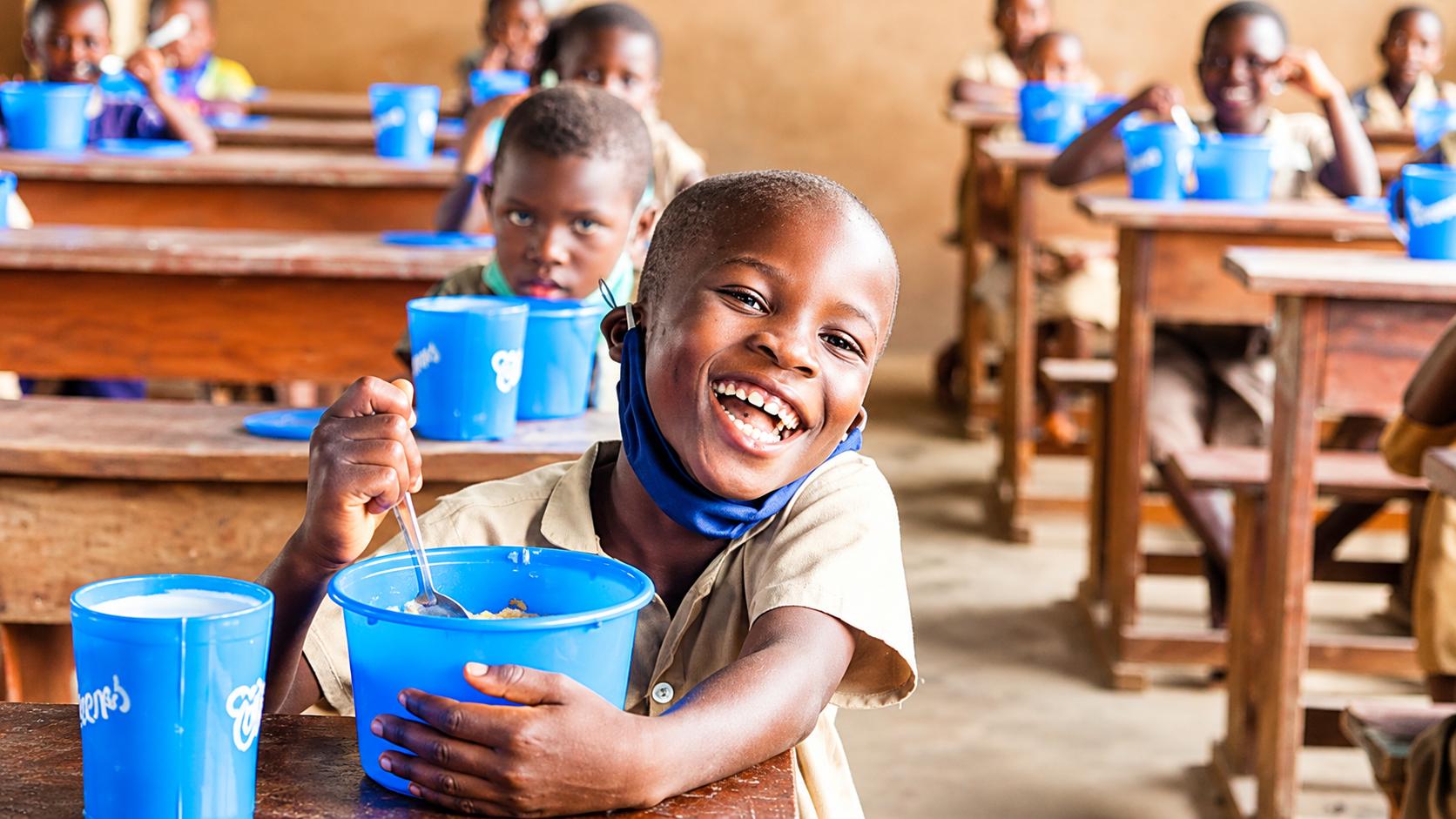
Benin’s school canteen initiative has crossed a significant threshold. For the 2026-2027 academic year, approximately 1.9 million children now receive a hot meal on every school day, up from 1.4 million the previous year. This means around 500,000 additional children have been brought into the programme in just twelve months. The expansion underscores the government’s determination to use school feeding as a powerful instrument against hunger, a support for households and a driver of local economic activity.
Half a million more children at the table
The start of the 2026-2027 school year marks a fresh milestone in the rollout of school canteens across Benin. The number of beneficiary children has now reached 1.9 million, compared with 1.4 million during the previous academic year.
This increase represents roughly 500,000 additional children who now have access to a warm meal during each school day. Beyond the figure itself, it reflects a tangible broadening of the national school feeding policy.
The distance covered is remarkable. In 2016, school canteen coverage stood at only 30%. By 2022, it had climbed to 75%, with more than 1.1 million children reached. The growth recorded in recent years therefore points to a programme that has been steadily gaining momentum.
For the Beninese government, the school canteen is far more than a simple assistance measure. It represents an investment in education, nutrition and the country’s development.
A meal that eases the burden on parents
For families, the impact is first and foremost social. In many households, providing a daily meal for a child in school is a significant expense. When the school takes charge of lunch, that burden is partly lifted.
The scheme thus allows parents to allocate their income more effectively to other essential needs. School supplies, clothing, healthcare or food for other family members: every saving made can help improve the household’s living conditions.
For the children, the stakes are just as high. A pupil who has a hot meal at school is better able to cope with the school day. The canteen helps reduce hunger during lessons and creates better conditions for concentration, participation and learning.
The rise in the number of beneficiaries is therefore a direct response to a major concern: enabling children, especially those from the most vulnerable families, to study in better conditions.
Billions of CFA francs invested in school feeding
This expansion of the programme rests on a substantial financial effort by the state. The budget allocated to school canteens rose from 1.5 billion CFA francs in 2016 to 48.7 billion CFA francs in 2022, illustrating the growing priority given to this public policy.
Under the 2025 finance law, more than 29 billion CFA francs were also earmarked to support the school canteen programme.
These amounts can be seen as a long-term social investment. By financing children’s meals, the state acts simultaneously on several factors that influence their schooling and well-being.
The goal is therefore not merely to serve meals. It is to create the conditions that allow children to stay in school, learn in better circumstances and prepare for their future.
When canteens also support local producers
The other strength of the programme lies in its economic potential. School canteens generate significant and regular demand for food products. Part of the resources mobilised can thus benefit local producers and suppliers.
Using national agricultural products creates outlets for farmers. Public spending intended to feed schoolchildren can therefore also help support producers’ incomes, energise rural activities and strengthen local economic circuits.
According to government data, purchases of foodstuffs from local producers have increased, exceeding 13 billion CFA francs in 2024.
The mechanism thus creates a virtuous circle: children are fed, families are relieved and producers have additional markets to sell their output.
An investment in Benin’s future
With 1.9 million beneficiary children for the 2026-2027 school year, the programme has entered a new phase. The 500,000 new beneficiaries recorded in a single year provide a concrete measure of the scheme’s expansion.
This progress also reinforces the ambition of ever-wider coverage of public schools. The government intends to continue its efforts to make school feeding a lasting component of Benin’s education and social policy.
The canteen now appears as a multi-dimensional tool. It fights hunger, supports parents, promotes better learning conditions and helps create outlets for local agriculture.
By investing massively in this programme, the Beninese state is not merely funding meals. It is investing in today’s children, in families and in the local economy, but above all in the human capital that will constitute Benin’s wealth tomorrow.