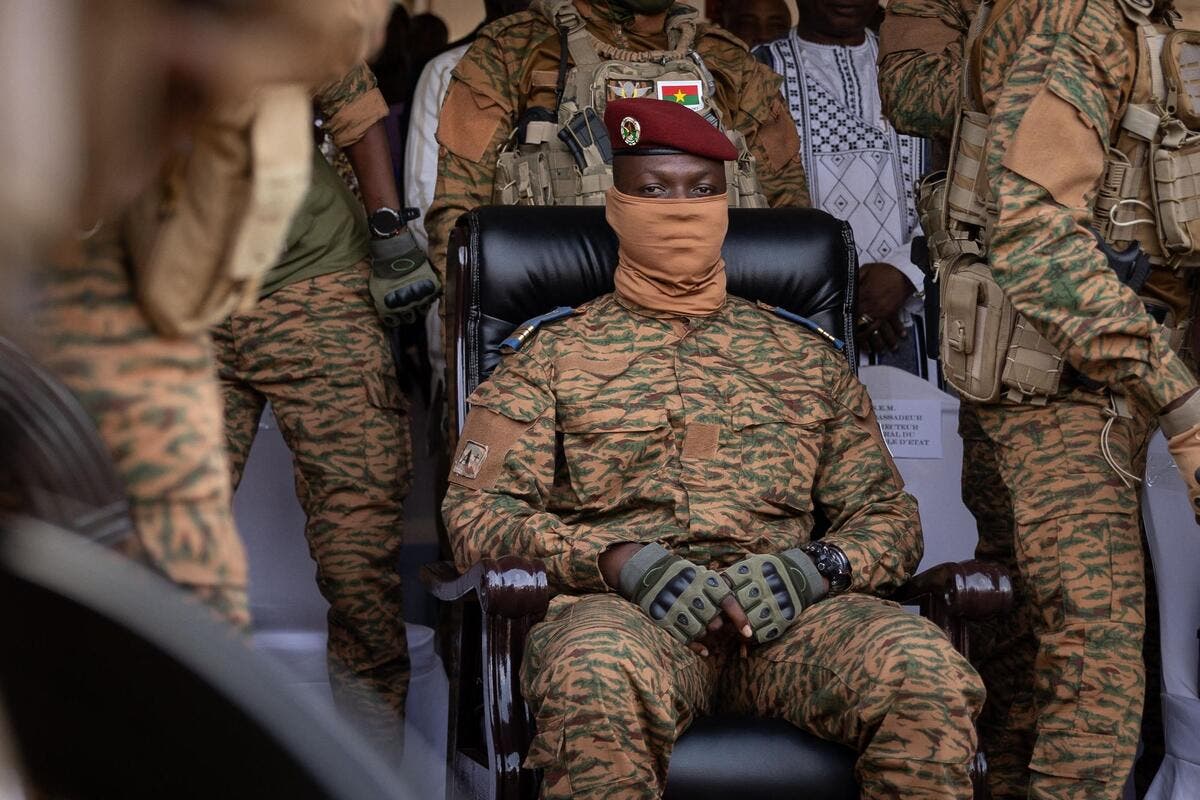

Burkina Faso severs diplomatic ties with France over ‘incessant activism’
A significant turning point has been reached in the Sahel crisis. Burkina Faso’s military regime announced on Friday, June 26, 2026, its decision to cut diplomatic relations with France. Accusing Paris of “incessant activism” against its national interests, the junta, led by Captain Ibrahim Traoré, solidifies a geopolitical separation that began with the 2022 coup.
After a period of increasingly strained relations, the military government of Burkina Faso announced its decision on Friday to sever diplomatic relations with France, accusing the European nation of persistent interference in its affairs.
The dynamic between Ouagadougou and its former colonial power has significantly deteriorated since Captain Ibrahim Traoré seized power in a coup in September 2022.
Since then, the military regime has pursued a staunchly sovereignist agenda, marked by a crackdown on dissenting voices and a clear antagonism towards Western nations, particularly France.
Ouagadougou denounces “incessant activism”
“The government of Burkina Faso informs national and international opinion of its decision to sever diplomatic relations with the French Republic, effective June 26, 2026,” an official statement read on national television Friday.
The military junta condemned what it termed “incessant activism by the current French regime against Burkina Faso’s interests, along with overt neo-colonial ambitions, actively supporting subversive networks and terrorists who bring sorrow to our nation and the wider Sahel region.”
According to the official communiqué, this decision “exclusively targets the institutional framework of diplomatic relations between the two states.” It “in no way questions the historical, human, cultural, and social bonds that unite the Burkinabè and French peoples,” the government affirmed, reiterating its “commitment to ensuring the protection of French nationals.”
Paris expresses regret and firm stance
Paris swiftly responded, expressing “regret” over what it called a “hostile and unfounded” decision by the military authorities. This move “illustrates the worrying drift of the Burkinabè authorities,” added the French Ministry of Foreign Affairs, indicating that “necessary reciprocity measures are currently under review.”
The Quai d’Orsay noted that over 2,000 French citizens are registered with the consular services in Burkina Faso, while more than 6,000 Burkinabè nationals reside in France.
This announcement comes as the landlocked Sahelian nation has been grappling with a decade of devastating jihadist violence, perpetrated by armed groups linked to Al-Qaeda and the Islamic State organization.
Earlier this week, the European Union’s Ambassador to Burkina Faso, Philippe Bronchain, was summoned to Ouagadougou following the adoption of a critical resolution by the European Parliament.
Political tightening and new alliances in the Sahel
As early as 2023, Burkina Faso demanded the recall of French Ambassador Luc Hallade, repudiated defense agreements, and secured the withdrawal of French special forces involved in counter-jihadist operations.
Several foreign media outlets, predominantly French, have also faced temporary or permanent suspension.
In retaliation, France suspended its development aid, budgetary support, and the issuance of visas for students from Burkina Faso, Mali, and Niger.
These three nations, all governed by military juntas, have departed from ECOWAS to establish the confederation of the Alliance of Sahel States (AES), fostering new military partnerships primarily with Russia, Turkey, and Iran.
Domestically, Captain Ibrahim Traoré’s junta maintains an authoritarian trajectory. Journalists, magistrates, and civil society members critical of the regime are frequently subjected to abductions or forced conscription to the front lines.
On Thursday, a further tightening of control was announced: all Burkinabè students aspiring to pursue studies abroad must now obtain prior authorization from their supervising ministry.

 Publié le 20 juin 2026
sur le même thème: Politique

Related Posts