Burkina Faso’s armor experiment: when battlefield reality challenges local innovation
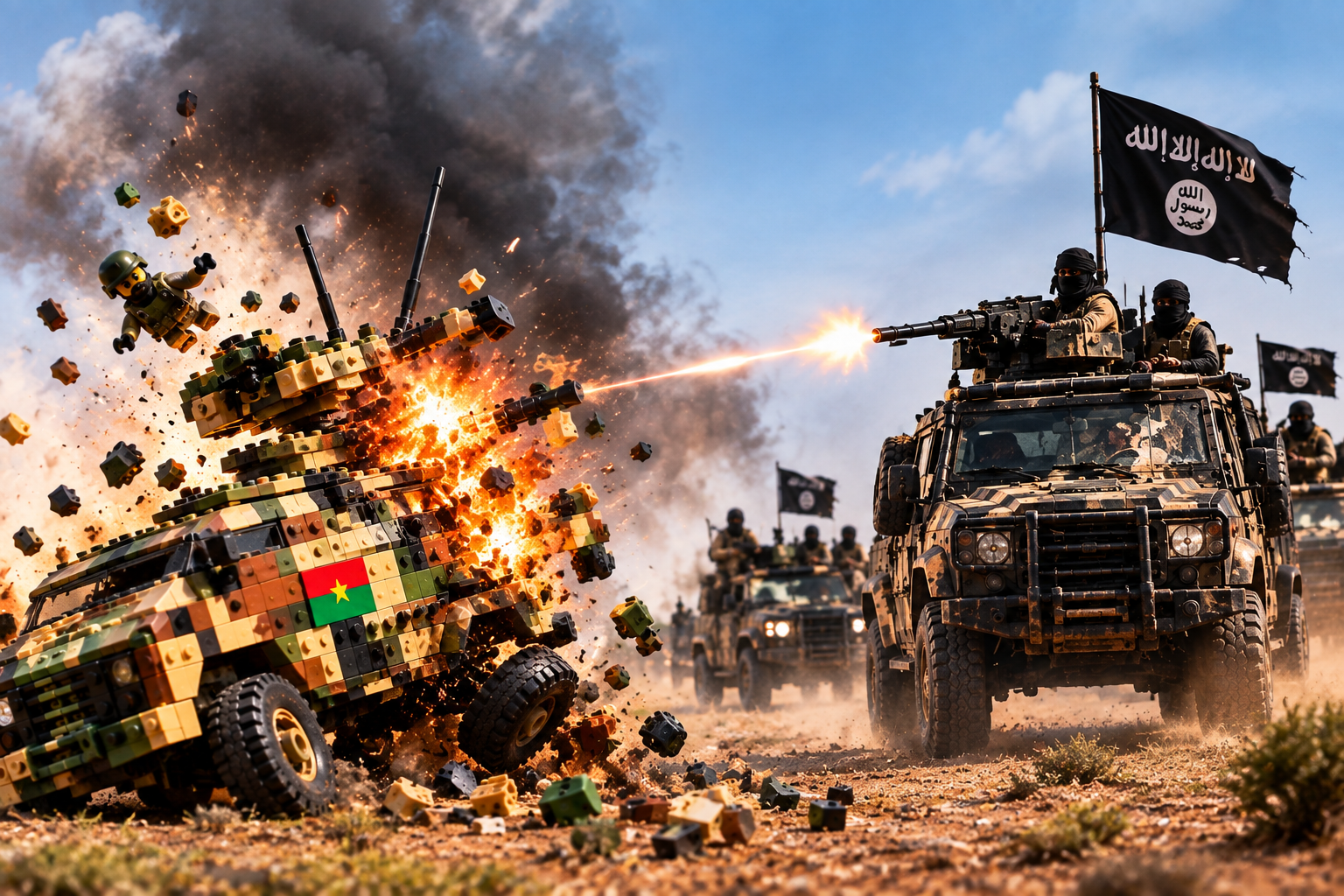
From Production Lines to Frontlines: The Critical Trial of Burkina Faso’s Homemade Armored Vehicles
On September 16, 2026, the sun rose over the savannas of northern Burkina Faso, casting long shadows over two contested positions near Mahlou and Winten in the Bam province. The claim by the Group for Support of Islam and Muslims (JNIM) of capturing these sites held by the Volunteers for the Defense of the Homeland (VDP) sent shockwaves through Ouagadougou’s corridors of power. Yet beyond the immediate geopolitical tremors, this event marked a defining moment for Burkina Faso’s much-touted industrial military ambitions.
The JNIM’s announcement, though unconfirmed by independent observers, underscores a harsh truth: the battlefield does not recognize press releases or promotional videos. For months, Burkina Faso’s government has championed its burgeoning defense industry, positioning locally assembled or manufactured armored vehicles as a cornerstone of national sovereignty. The narrative is compelling reduced reliance on foreign suppliers, economic self-sufficiency, and a tangible symbol of resilience. But symbols alone cannot hold ground against determined adversaries.
This is where the rubber meets the road. The so-called “Lego-like” armored units, meticulously assembled and showcased in staged demonstrations, now face their most critical test: operational reality. The questions are stark. Can these vehicles withstand the relentless pressures of combat? Do they offer tangible advantages over conventional alternatives? Or are they, as skeptics suggest, more about optics than firepower?
Sovereignty in Theory vs. Survival in Practice
The discrepancy between industrial ambition and battlefield necessity has never been more apparent. Since August 19, 2026, the JNIM has repeatedly targeted VDP positions, capturing key sites such as Séguénéga and Bourzanga. Each incursion reveals a troubling pattern: even when Burkinabè forces retake territory, sustaining control proves elusive. This cycle of advance, retreat, and attrition exposes fundamental vulnerabilities in Burkina Faso’s security architecture.
Central to this challenge is the performance of domestically produced armored vehicles. Government officials have consistently framed these assets as game-changers, a narrative reinforced by carefully curated media coverage. Yet the realities of Mahlou and Winten suggest a different story. If the JNIM’s claims hold weight, the message is clear: assembling a vehicle in a factory and deploying it in combat are two entirely different propositions. The former is a logistical and manufacturing feat; the latter demands resilience under fire.
Critics argue that Burkina Faso’s defense industry, while ambitious, remains unproven in the crucible of war. Questions persist about the vehicles’ structural integrity, firepower, and logistical support. Can these units reliably transport troops? Do they provide adequate protection against rocket-propelled grenades or improvised explosive devices? And perhaps most critically, can they be repaired and maintained under the harsh conditions of the Sahel’s operational theaters?
The stakes extend beyond mere equipment. Burkina Faso’s push for military self-reliance is intertwined with broader national identity and governance narratives. President Ibrahim Traoré’s administration has framed industrialization as a pathway to sovereignty, positioning it as a counterbalance to historical dependencies. Yet sovereignty, in this context, is not merely about production it is about delivering tangible security outcomes.
The Unyielding Crucible of Combat
As reports of the JNIM’s advances at Mahlou and Winten circulate, the spotlight turns to Burkina Faso’s armored units. Their performance or lack thereof will serve as the ultimate barometer of the country’s military readiness. Will these vehicles live up to the hype? Or will they reinforce the adage that no amount of national pride can substitute for combat-tested efficacy?
For the soldiers manning these vehicles, the test is visceral and immediate. Their lives depend on the machines’ ability to shield them from harm while enabling them to execute their missions. For policymakers, the stakes are strategic: the credibility of Burkina Faso’s defense strategy hangs in the balance. A failure to demonstrate tangible results risks eroding public confidence and emboldening adversaries.
Yet the implications are not confined to Burkina Faso. Across the Sahel, governments are grappling with similar challenges as they seek to balance indigenous innovation with the harsh realities of asymmetric warfare. The lessons from Mahlou and Winten could resonate far beyond the country’s borders, shaping future defense policies and investment priorities.
What remains certain is that the battlefield does not yield to rhetoric. The true measure of Burkina Faso’s armored experiment will be written in the sand and blood of the Bam province not in the conference halls of Ouagadougou.
Key Takeaways from the Burkina Faso Armor Debate
Industrial ambition meets battlefield reality: Burkina Faso’s push for locally produced armored vehicles faces its sternest test yet in the jungles and savannas of the Sahel.
Performance under fire: The vehicles’ structural integrity, firepower, and maintenance capabilities will determine whether they are assets or liabilities in combat.
Sovereignty beyond symbols: National pride in defense production must translate into tangible security outcomes to justify the investment.
Strategic implications: The outcomes at Mahlou and Winten could influence defense policies across the Sahel, setting precedents for future military innovation.