
(Nairobi) – The military government in Burkina Faso is amplifying its widespread crackdown on civil society by deploying restrictive legislation, administrative pressures, and punitive actions targeting both domestic and international organizations, according to a joint statement by Human Rights Watch, the International Federation for Human Rights (FIDH), the World Organisation Against Torture (OMCT), and the KISAL Observatory. The military authorities have been urged to immediately halt their suppression of independent voices, humanitarian groups, and human rights bodies, and to uphold fundamental rights and freedoms.
On April 15, 2026, the minister of territorial administration and mobility announced the dissolution of 118 civil society organizations, a significant number of which were active in human rights advocacy. The authorities cited a July 2025 law concerning freedom of association but failed to provide any specific justification beyond vague references to non-compliance with the statute.
“The mass dissolution of civil society organizations represents the latest maneuver by Burkina Faso’s junta to silence dissent and deflect scrutiny of its dismal human rights record,” stated Binta Sidibé Gascon, President of the Kisal Observatory. “This action cultivates a climate of fear that is paralyzing independent civic engagement.”
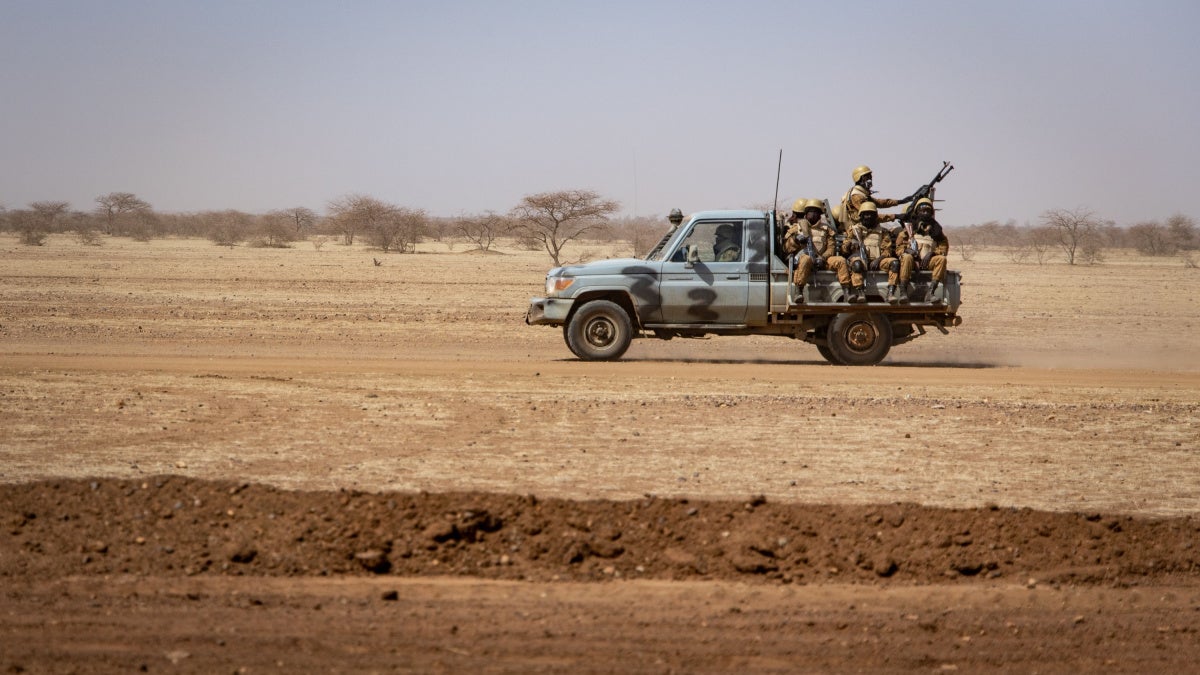
This move by the military government is consistent with a wider pattern of repression that has intensified since the military seized power in September 2022. Since the coup, authorities have systematically targeted non-governmental organizations, independent media, human rights defenders, and all forms of peaceful dissent, progressively shrinking the civic space. They have suspended, banned, or expelled dozens of Burkinabè and international organizations and media outlets based on vague administrative grounds or as retaliation for criticism.
Authorities have also detained humanitarian workers and have arbitrarily arrested, forcibly disappeared, or illegally conscripted human rights defenders, journalists, and political opponents. This escalating repression is unfolding against the backdrop of a deepening security crisis, as Burkina Faso contends with a decade-long insurgency by Islamist armed groups linked to Al-Qaeda and the Islamic State.
While some of the groups affected by the dissolution order were inactive, others—such as Action by Christians for the Abolition of Torture (ACAT) and the Burkinabè Coalition for Women’s Rights (CBDF)—were fully operational and appeared to be in compliance with the July 2025 law. The legislation grants organizations a one-year period to meet its requirements, a deadline that has not yet passed.
“The military government’s action, if based on alleged non-compliance with the 2025 law, appears legally questionable since the required deadline has not yet expired,” noted Ilaria Allegrozzi, a senior researcher at Human Rights Watch. “The scale of this dissolution is one of the most significant blows to civil society groups since the military took power and sends a chilling message to all others.”
The July 2025 law, introduced by authorities to regulate the non-profit sector and combat money laundering and terrorist financing, has drastically expanded government oversight of civil society. It imposes onerous obligations that impede humanitarian and development work. For instance, foreign organizations must appoint Burkinabè nationals to key leadership and financial positions, exposing them to personal risk. This concern is amplified by a provision in the September 2025 Family Code that allows authorities to revoke the nationality of anyone deemed to be acting against state interests, creating a risk of statelessness for targeted individuals.
In early April, following a report from Human Rights Watch on war crimes and crimes against humanity committed by all parties in Burkina Faso since 2023, the military government threatened to take “firm measures” against what it described as “imperialist fronts disguised as NGOs [non-governmental organizations].”
Toward the end of 2025, authorities imposed further administrative hurdles. Organizations are now required to obtain a “statistical visa” before conducting surveys or research. This costly and time-consuming process, according to one aid worker, “hinders independent data collection and analysis in an already extremely closed context.”
Over the past year, several international humanitarian organizations have been suspended or expelled, often for unclear procedural reasons. Between June and July 2025, authorities suspended or revoked the licenses of approximately 20 foreign organizations, including Comunità di Sant’Egidio, Diakonia, Geneva Call, and the Tony Blair Institute, citing a “failure to comply with the obligation to sign the establishment agreement.”
The military government’s crackdown has also targeted individuals within national civil society and international organizations. Since 2022, authorities have detained over 70 humanitarian workers, most of them Burkinabè, according to international media. In a notable case, the military authorities expelled the top United Nations representative in Burkina Faso, Carol Flore-Smereczniak, in August 2025, declaring her persona non grata after a UN report on violations against children in the country.
In another incident in mid-2025, security forces arrested and arbitrarily detained eight staff members of the International NGO Safety Organisation (INSO), a Netherlands-based humanitarian group focused on aid worker security. They were eventually released in December 2025. The authorities had accused them of espionage and treason, alleging they were collecting and providing sensitive security information to foreign powers.
The military authorities have used provisions from an April 2023 “general mobilization” decree—an emergency law—in a selective and disproportionate manner to suppress political opposition, media, and dissent. This has included illegally conscripting dozens of critical voices, including journalists, civil society activists, and judicial personnel, into the armed forces. The authorities claim this conscription is permitted by the decree, which grants the president extensive powers to combat the Islamist insurgency, including requisitioning people and property and restricting civil liberties.
Between July and October 2025, at least six journalists and three activists who had been forcibly conscripted were released. However, other conscripts, including prominent investigative journalist Serge Oulon, remain missing, and there are fears that more individuals have been unlawfully drafted.
International human rights law safeguards the rights to freedom of expression and association, allowing individuals and groups to operate without interference. Any restrictions on these rights must be necessary, proportional, and non-discriminatory—criteria that the recent mass dissolution of civil society organizations and the July 2025 law fail to meet, the four organizations stated.
“A strong and independent civil society serves as a bulwark against abuses of power and amplifies the voices of marginalized communities,” said Drissa Traoré, Secretary General of FIDH. “The Burkinabè authorities should permit civil society organizations to operate freely and ensure the fundamental rights and freedoms of everyone in Burkina Faso.”