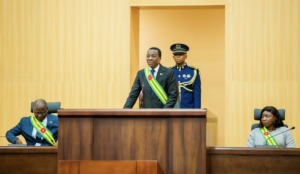

The government’s latest move to stifle dissent among Burkinabè students abroad has revealed more than just political intolerance—it has exposed the fragility of a system built on enforced conformity rather than intellectual growth.
The minister of higher education, Professor Adjima Thiombiano, shattered any illusion of open dialogue during a national event, where he publicly demonized diaspora students for daring to question the country’s educational realities. Instead of engaging with their concerns, his response was a blunt ultimatum: conform or leave. This isn’t just an attack on free speech—it’s an admission of failure disguised as patriotism.
How criminalizing dissent fuels a climate of fear
The minister’s rhetoric didn’t just target criticisms; it framed them as threats. By labeling students who express reservations as “lost children” destined for confrontation with “all Burkinabè” upon return, he weaponized national pride to justify exclusion. What began as an appeal for loyalty has devolved into a witch hunt, where even constructive feedback is treated as subversion. The call for educators to “stand as a bulwark against rebellious behavior” is nothing short of a directive for institutionalized denunciation.
Nationality as a privilege, not a right
The demand that critical students “go back where they came from” redefines citizenship as a conditional status. Under this regime, Burkinabè identity is no longer born from birthright or contribution—it’s earned through silent compliance. Diaspora professionals, often lured back with promises of progress, now face a paradox: their skills are welcome, but their thoughts are not.
This isn’t just hypocrisy—it’s a strategic blunder. The diaspora’s exposure to global education systems brings invaluable perspectives, yet the government’s response is to silence rather than integrate their insights. The contradiction is glaring: a nation that claims to need skilled returnees is simultaneously driving them away with ideological litmus tests.
Nekré Pact: education reform or ideological purge?
The launch of the Nekré Pact was supposed to herald a renaissance in Burkina Faso’s education system—from preschool to university. But when the foundation of reform is suppression of dissent, what remains isn’t education—it’s indoctrination. Universities have long been spaces for rigorous debate, where ideas clash and evolve. By turning lecture halls into enforcers of state-sanctioned thought, the government is dismantling the very pillars of academic excellence.
Academic freedom isn’t a luxury—it’s the lifeblood of innovation. When students fear punishment for asking tough questions, research stagnates, and progress halts. The Nekré Pact’s emphasis on chauvinism over critical thinking signals a retreat from intellectual curiosity. In the name of “pride” and “institutional preservation,” the government is burning the academic freedom it claims to value.
What’s next for Burkina Faso’s embattled students?
For diaspora students watching from abroad, the message is clear: speak freely, and risk exile. For those at home, the choice is equally stark—conform or face exclusion. The real tragedy isn’t the crackdown itself, but the self-inflicted blindness it represents. A nation that silences its brightest minds isn’t defending its values—it’s admitting defeat.