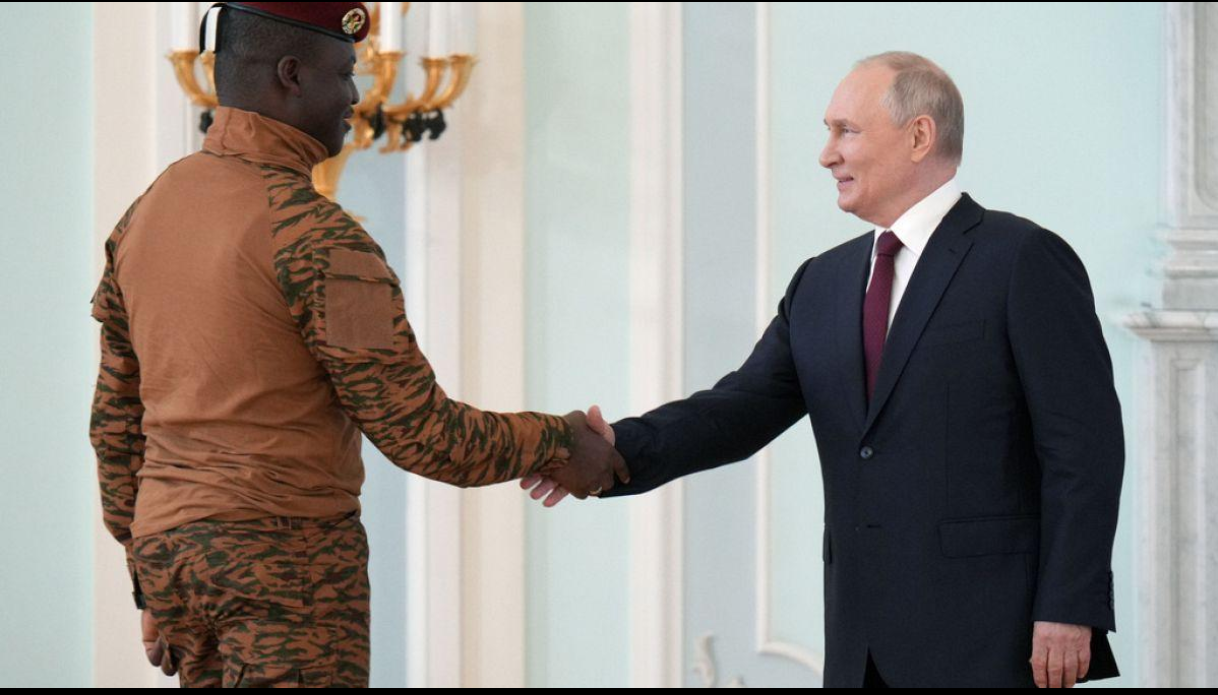

In Burkina Faso, the gold rush is no longer just about extraction—it’s a tool of political survival. Since Captain Ibrahim Traoré seized power in September 2022, the country’s pivot toward Russia has reshaped its security and economic landscape. But beneath the diplomatic rhetoric lies a critical question: how does the nation’s vast gold wealth factor into this alliance?
Beyond the mines: the hidden cost of Burkina Faso’s security deals
The Bissa gold mine, operated by Russian-owned Nordgold, has become a flashpoint in Ouagadougou’s shifting relationships with Moscow. Security for the site—once handled by RSB Group, a Russian firm now seeking to regain its foothold—has exposed the tensions between corporate competition, local stability, and regime protection. Recent allegations, including accusations of mismanagement tied to violence in Fulani communities, suggest this isn’t merely a business dispute.
Reports of rival security firms jockeying for influence hint at a deeper struggle: the blending of Burkina Faso’s economic interests with its political survival under Traoré’s leadership. For Moscow, this presents an opportunity to embed itself not just militarily, but economically.
Russia’s expanding footprint in Burkina Faso’s gold sector
Nordgold, controlled by Russian oligarch Alexei Mordashov, holds stakes in key gold operations like Bissa and Bouly. These assets give Moscow a vested interest in securing mining zones—both to protect production and to deepen its influence. When the Burkinabe government seized 300 kilograms of gold from Bissa Gold in early 2023 under emergency powers, it underscored how gold is now a strategic resource for the state.
But the implications go further. Analysts point to evidence suggesting that Russia’s initial engagement in Burkina Faso may have been tied to safeguarding its mining interests. While direct links between Russian paramilitaries and gold concessions remain unconfirmed, their presence—including at high-profile events alongside Traoré—has raised questions about dual objectives: regime protection and economic consolidation.
The blurred line between security and exploitation
This dual focus is visible in the evolving roles of Russian security providers. Some units serve as presidential protection, while others operate in intelligence-linked structures. Such arrangements, while framed as counterterrorism efforts, align with a broader pattern seen across Africa, where military support is often paired with access to lucrative extraction industries.
For the Burkinabe people, the stakes are high. Mining site security should not come at the cost of worsening local insecurity or human rights violations. Yet the competition among Russian firms to secure contracts—even through litigation and lobbying—reveals a high-stakes game where political favor and economic gain are increasingly intertwined.
Traoré’s balancing act: power, gold, and Moscow’s shadow
Traoré’s government faces mounting challenges: jihadist insurgencies, political instability, and the erosion of traditional alliances. Russia’s offer of military and political backing has positioned it as a critical partner in his efforts to consolidate power. But the exchange goes both ways. In return for security assistance, Russian-linked entities gain greater access to Burkina Faso’s mineral wealth.
There’s no public evidence of a formal quid pro quo, but the convergence of interests is undeniable. As Traoré navigates a fragile domestic situation, the gold beneath Burkina Faso’s soil isn’t just a national treasure—it’s a bargaining chip in a geopolitical chess game. Moscow’s influence extends beyond the battlefield, shaping the very foundations of Traoré’s rule through economic leverage and strategic security partnerships.
What’s next for Burkina Faso’s gold and Russia’s role?
The Bissa controversy highlights a broader truth: Burkina Faso’s engagement with Russia isn’t just about survival—it’s about transformation. The gold that once fueled foreign investors now powers a new equation, where security deals, corporate rivalry, and political survival are inextricably linked.
As the dust settles on the RSB Group dispute, one question lingers: will the pursuit of gold and power continue to reinforce each other, or will the Burkinabe people bear the ultimate cost?