
Cameroon’s staggering losses: over 10 trillion cfa francs lost to corruption
Allegations of massive corruption under President Paul Biya’s regime
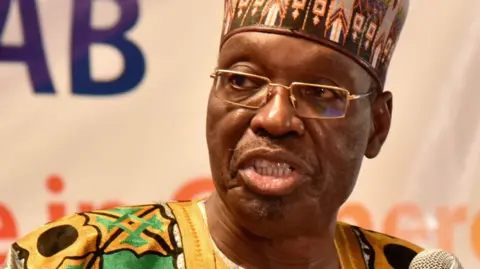
In a scathing public statement, opposition leader Issa Tchiroma Bakary has laid bare what he describes as systemic looting of Cameroon’s wealth, citing staggering financial losses that have devastated the nation’s economy. The allegations span decades of alleged embezzlement, fraudulent contracts, and institutionalized corruption, with figures that paint a grim picture of misrule.
Undermining the nation’s natural resources
The first major revelation involves Cameroon’s natural resources—gold, oil, and timber—each plundered with staggering impunity. Public records, according to Issa Tchiroma Bakary, show that over 2,000 billion CFA francs worth of gold has been siphoned off, while oil revenues managed by the SNH (National Hydrocarbons Corporation) have been kept off-budget and beyond parliamentary oversight for four decades. Independent financial institutions have long flagged these irregularities, yet no corrective action has been taken. Oil sold at a fraction of its market value to foreign firms, vanished shipments, and unaccounted revenues have collectively drained billions from the national coffers.
The timber sector has fared no better. An estimated 80% of Cameroon’s wood exports are believed to be illegal, extracted under state collusion. Issa Tchiroma Bakary asserts that the cumulative losses from these three sectors alone exceed 10,000 billion CFA francs—a sum that could have transformed Cameroon’s infrastructure and social services.
Fraudulent contracts and ghost spending
Another layer of corruption involves budgetary fraud through what are known as Lines 65 and 94, covering 2012 to 2021. These two budget lines, supposedly earmarked for unspecified purposes, account for 5,400 billion CFA francs in unexplained expenditures. The Tribunal Criminel Spécial (TCS), established under President Biya, has convicted officials for embezzling nearly 9,000 billion CFA francs between 1997 and 2021. The scale of fraud extends to ghost workers—over 20,000 fictitious civil servants who appeared on payrolls for years, costing the state an estimated 200 billion CFA francs annually.
Notorious scandals, including the Yaoundé-Douala highway, 2021 Africa Cup of Nations preparations, and COVID-19 vaccine procurement, have seen documented over-invoicing exceeding 500 billion CFA francs—funds that vanished into private pockets.
Systemic tax and customs fraud
Institutional bodies like the ANIF (National Anti-Fraud Agency) and CONAC (National Anti-Corruption Commission) have uncovered deep-rooted mechanisms of financial fraud. Official data reveals:
- 1,665 billion CFA francs in suspicious financial flows in 2023 alone;
- 1,246 billion CFA francs in documented customs fraud over six years;
- 1,745 billion CFA francs in scanning fraud at the Port of Douala, attributed to SGS.
The port of Douala has become a symbol of institutionalized corruption, with rival factions within the regime allegedly vying for control over lucrative fraud networks.
Personal enrichment of the ruling elite
The final dimension of this corruption epidemic is the alleged personal enrichment of the President’s inner circle. Investigations have traced assets acquired abroad, including:
- 744 million Euros in assets identified in the Netherlands;
- The Nyom estate, valued at 18 billion CFA francs;
- Properties in Dubai worth 44 billion CFA francs;
- Luxury stays at the Continental Hotel in Geneva, costing up to $50,000 per night.
Despite constitutional obligations, none of these individuals—including President Paul Biya, his family, or key aides—have declared their assets.
A nation robbed of its future
Issa Tchiroma Bakary estimates the total cost of corruption at a conservative 26,000 billion CFA francs, though experts believe the real figure could be as high as 80,000 billion CFA francs when accounting for hidden assets in tax havens and shell companies. To put this into perspective, these lost funds could have:
- Paid the salaries of 380,000 teachers, healthcare workers, and soldiers for 36 years;
- Built 2,600 district hospitals, or 260 per region.
The opposition leader has vowed no amnesty or secret deals will be made. He warns that every public official implicated in these crimes will face justice, both in Cameroon and abroad.