Africa’s drone revolution: balancing sovereignty with foreign tech dependence
The Rise of Drones in African Military Strategies
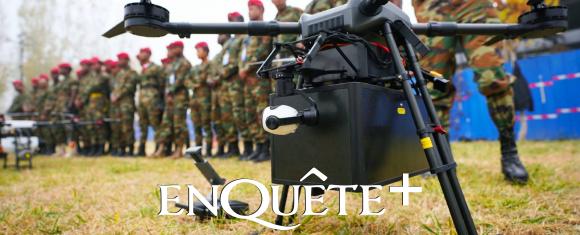
Drones have rapidly become indispensable tools in Africa’s military strategies. A recent analysis highlights a profound transformation in how conflicts are waged across the continent. While this “dronisation” enhances operational capabilities for states, it also exposes significant vulnerabilities—particularly technological dependence on foreign powers—and raises critical questions about security governance and civilian protection.
From Surveillance to Battlefield Dominance
Initially deployed for reconnaissance and intelligence gathering, drones now play a central role in African security operations. Their rapid adoption reflects a fundamental shift in warfare on the continent, where both state actors and non-state armed groups increasingly rely on these technologies. No longer limited to traditional military roles, drones now serve as instruments of propaganda, communication, and psychological warfare in conflicts spanning the Sahel, the Horn of Africa, and beyond.
Accelerating Acquisition Trends Across the Continent
The pace of drone acquisitions has surged in recent decades. While only one military drone deal was recorded in 2001, that number skyrocketed to 21 by 2021. Between 1980 and 2024, over 1,500 military drones were acquired by 31 African nations, with a marked acceleration between 2020 and 2023. North Africa leads the continent in drone procurement, while Nigeria stands out as one of the top buyers.
This surge stems from deteriorating security environments across the region. Drones enable states to conduct surveillance, gather intelligence, and execute precision strikes with reduced risk to ground troops—capabilities that are particularly valuable in combating insurgencies and internal conflicts.
Armed Groups Exploit Drone Technology
One of the most concerning developments is the democratization of drone technology. Commercially available civilian drones are being repurposed as weapons by groups such as Boko Haram, Al-Shabaab, and the Group for Support of Islam and Muslims (JNIM). This shift has fundamentally altered power dynamics, allowing armed factions to carry out targeted attacks, coordinate ground operations, and amplify the psychological impact of their actions through strategic media dissemination.
Foreign Dependence Remains a Critical Weakness
Despite their growing presence, African states remain heavily reliant on foreign suppliers. China, Israel, the United States, and Turkey dominate the African drone market, not only providing hardware but also offering training, maintenance, software updates, and spare parts. This creates lasting strategic dependencies that extend beyond mere technological acquisition.
The situation also raises concerns about digital sovereignty and the security of data collected by these systems. Without robust governance frameworks, sensitive information could be exposed to external actors, further compromising national security.
Local Production Efforts Gain Momentum
In response to these challenges, several African nations are investing in domestic drone manufacturing. South Africa leads the continent’s industrial efforts, while Morocco is pursuing a dual strategy combining local production with international partnerships. Other countries, including Nigeria, Egypt, Ethiopia, Tunisia, and Algeria, are also ramping up initiatives to bolster their industrial capacities.
The Senegalese company Ndobine is making strides in this space, developing drones tailored for maritime surveillance, precision agriculture, and mapping. Yet, despite these advances, local production accounts for only about 12% of the African drone market.
Tactical Gains Do Not Guarantee Strategic Solutions
While drones provide tactical advantages, they are not a panacea for Africa’s conflicts. Experts warn that their proliferation may inadvertently fuel violence rather than resolve it. In 2024 alone, drone strikes resulted in 1,176 civilian deaths across 13 African countries. In Sudan, nearly 700 civilians were killed in the first three months of 2026 due to drone attacks.
To mitigate these risks, African states must adopt comprehensive public policies that govern drone use. Key recommendations include establishing employment doctrines aligned with international humanitarian law, enhancing operator training, improving transparency in acquisitions, fostering local industries, and promoting continental regulatory harmonization under the African Union’s framework.
The Path Forward: Mastery Over Dependence
For African nations, the challenge is no longer about gaining access to drone technology but about mastering its use. Without deliberate action, the “dronisation” of African militaries risks deepening dependencies and exacerbating violence rather than fostering sustainable security.