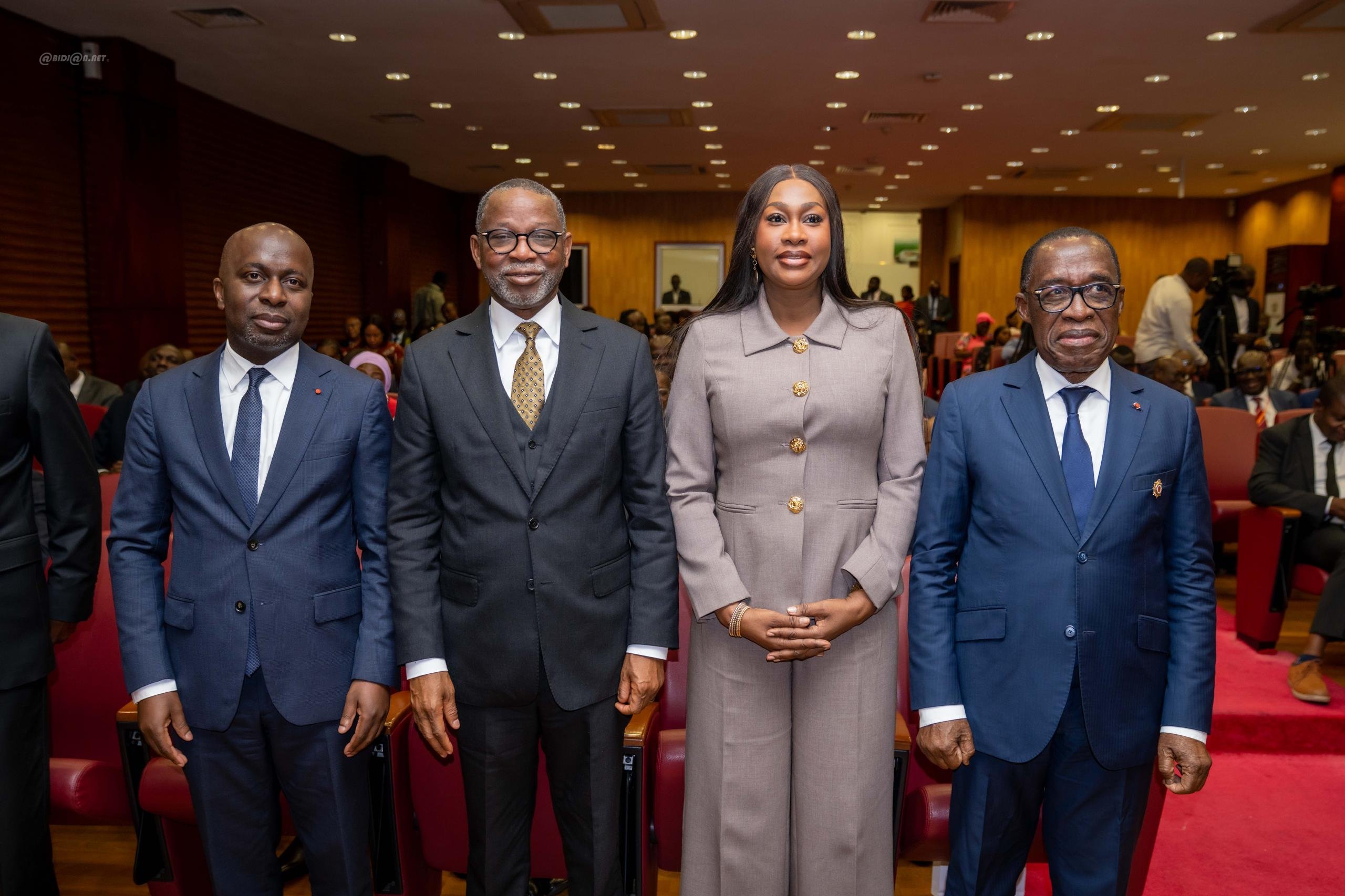

The National Agency for Vocational Training (AGEFOP) unveiled a groundbreaking skills-needs assessment report on June 18, 2026, in Abidjan, marking a pivotal moment in Côte d’Ivoire’s efforts to bridge the gap between young workers’ skills and market demands. This study, conducted under the Passeport-Compétences initiative, aims to systematically align vocational training with real-world economic requirements.
The pilot phase, which mapped labor market needs across the Sud-Comoé region, Yopougon municipality, and Savanes District, engaged over 800 formal and informal sector entities. With its success, the program is set for nationwide expansion.
From data to action: redefining vocational training
Dr. Eugène Aka Aouélé, President of the Economic, Social, Environmental, and Cultural Council (CESEC), emphasized the study’s transformative potential: “Matching training to employment isn’t a distant dream—it’s a structured process rooted in real data. This initiative places human capital at the heart of Côte d’Ivoire’s growth, offering a precise diagnostic of our professional vitality and a compass for future policies.”
Highlighting the program’s strategic depth, he added: “Passeport-Compétences doesn’t just train—it certifies experience. This is a landmark advancement in human capital development, providing concrete solutions to one of our era’s most pressing challenges.”
A ministerial vision for economic transformation
Maître Adama Kamara, Minister of Employment, Social Protection, and Vocational Training, framed the initiative as an accelerator of progress: “This program isn’t about fixing failures; it’s about amplifying momentum to ensure growth translates into skilled jobs.”
The minister outlined key objectives: identifying national skill gaps, upskilling and integrating beneficiaries into the workforce, validating informal workers’ experience, and equipping businesses with qualified talent. “Field feedback will guide curriculum revisions, redirect training resources to high-demand zones, and foster partnerships between enterprises, local governments, and state services,” he noted.
From policy to practice: a new era for vocational training
Karitia Coulibaly De Medeiros, AGEFOP’s Director-General, underscored the shift in vocational training’s role: “No longer a side policy or social expense, vocational training is now a strategic investment driving national competitiveness, job creation, inclusion, and sustainable prosperity.”
She described Passeport-Compétences as a paradigm shift: “Effective training begins with understanding what skills a region, business, or industry truly needs. We’ve grounded this program in ground realities—listening to employers, tracking industry shifts, and anticipating future competencies.”
By uniting local authorities, businesses, training institutions, and communities, the program fosters a unified approach to skill development. “This creates a shared language where competence becomes a national asset, empowering every Ivoirian to turn potential into recognized skills—opening doors to jobs, economic independence, and dignity,” she concluded.
Launched officially in March 2025 in Grand-Bassam, Passeport-Compétences is central to Côte d’Ivoire’s human capital development strategy, designed to equip youth for lasting employment and economic resilience.