
Dioura attack: Mali’s army suffers deadliest blow as JNIM kills 130 and captures 70
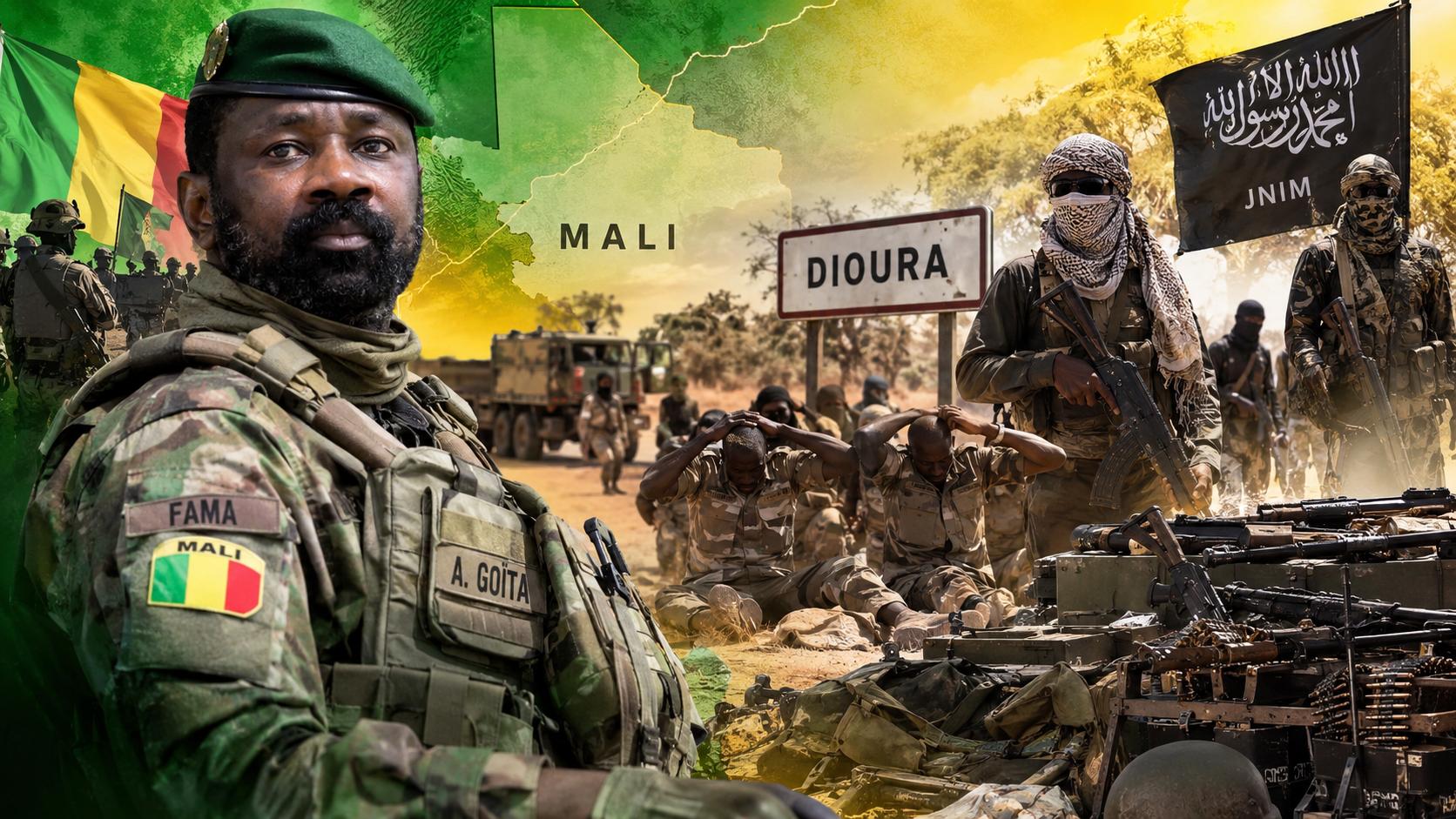
Dioura raid leaves Mali’s military reeling
The assault on the Dioura military camp in central Mali on September 10, 2026, has become the bloodiest single defeat suffered by the Malian armed forces in their long campaign against the JNIM. Local accounts put the death toll at around 130 soldiers, with as many as 70 more taken prisoner. The scale of the loss directly undermines the junta’s promises of restored sovereignty and peace.
How the assault unfolded
At dawn on Thursday, September 10, the town of Dioura, in the Tenenkou circle of central Mali, was transformed into a scene of carnage. Fighters from the JNIM, Al-Qaeda’s affiliate in the Sahel, stormed the military barracks with devastating force. For several hours the camp was shelled, overrun and then looted before the attackers withdrew with heavy equipment and dozens of captives.
A terrifying toll shrouded in censorship
As is customary in such dramatic circumstances, official communications from the Malian Armed Forces (FAMA) and the transitional presidency remained minimal or silent. Yet on the ground, information reaching the outside world paints an apocalyptic picture.
According to multiple concordant local sources, the human toll has climbed to nearly 130 Malian soldiers killed. To this carnage is added a strategic humiliation: around 70 military personnel are said to have been taken prisoner by the insurgents. Propaganda images and videos released shortly afterwards by the terrorist group show dozens of young conscripts lined up, their eyes filled with terror, along with substantial stocks of confiscated weapons and ammunition. For the families of the victims, the anguish is total, amplified by the denial or delayed reaction of the authorities in Bamako.
The Russian partnership illusion and the abandonment of territory
This devastating attack lays bare the glaring failure of the security strategy championed by the military junta led by Colonel Assimi Goïta. Since the coup and the geopolitical pivot towards Moscow, the regime promised a build-up of the army and the imminent eradication of the terrorist threat thanks to the support of Russian mercenaries.
On the ground, the triumphalist rhetoric has collapsed. The expulsion of international forces (MINUSMA, Barkhane) and the inability of Russian partners to stabilise the territory have left Malian forces isolated, under-equipped and vulnerable. Forward military bases such as Dioura find themselves encircled by mobile armed groups that now strike where and when they choose, illustrating the state’s inability to secure its own defence lines.
The despair of local populations: left to fend for themselves
Beyond the military loss, it is the civilian populations of the Mopti region who pay the heaviest price for this fiasco. In Dioura, incomprehension has given way to resignation and despair.
“Every time the camp falls or withdraws, we know what awaits us: reprisals, fear and absolute emptiness,” confides an inhabitant of the area, speaking anonymously. “They talk to us about sovereignty on television in Bamako, but here we have no protection, no state, no future.”
Traders in the area report a total economic paralysis. Weekly markets are cancelled, roads are cut by the insurgents, and the supply of basic necessities is a miracle. After the attackers pass through, fear of being caught up in the violence or of post-attack reprisals drives many villagers to flee to major urban centres, swelling the number of internally displaced persons amid almost general indifference.
Towards a political and military dead end
The Dioura tragedy is a severe warning for Mali’s transitional authorities. By prioritising the war of communication over the reality of operations on the ground, the junta is locking itself into a dead end. The continuous weakening of troop numbers, the low morale of soldiers and the progressive loss of territorial control in the centre and north raise an urgent question: how much longer can reclaimed sovereignty serve as a screen for the collapse of national security?
Without a profound reassessment of alliances, military tactics and dialogue with local communities, Mali risks sinking further into a vicious circle where civilians and soldiers remain the primary victims of political blindness.