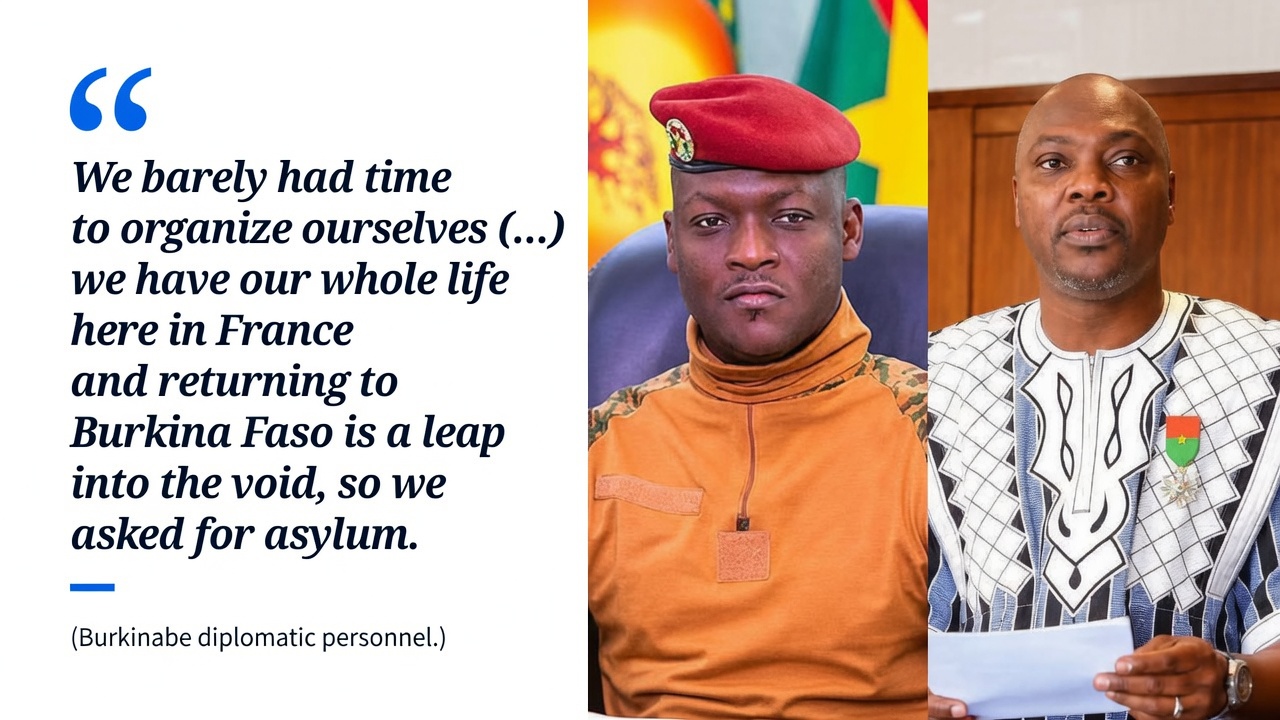

An unprecedented development has sent shockwaves through Burkina Faso’s transitional authorities, as diplomatic staff stationed at the country’s embassy in Paris have formally requested political asylum from French authorities. This extraordinary move underscores not only individual desperation but also a systemic crisis within the nation’s governance structure.
Reports indicate that the decision follows a string of administrative shake-ups within Burkina Faso’s diplomatic corps, including the forced recall of several overseas personnel. While officials in Ouagadougou have framed these changes as routine restructuring, the affected diplomats perceive them as anything but benign.
In a widely circulated statement, the embassy staff detailed their motivations for seeking international protection. The message was stark in its clarity:
« We barely had time to prepare. We’ve built our entire lives here in France—our families, our children’s education, our careers. Returning to Burkina Faso feels like stepping into the unknown. That’s why we’ve applied for asylum. »
Their words reveal a profound sense of instability. Having spent years in France, some with spouses and children fully integrated into the local system, the prospect of uprooting their lives overnight is daunting. Beyond logistical challenges, the diplomats express deep-seated apprehension about the political climate awaiting them upon return.
escalating security concerns fuel the exodus
This wave of asylum requests coincides with Burkina Faso’s ongoing security crisis. The country continues to grapple with persistent threats from armed groups, prompting sweeping mobilizations and civilian requisitions as part of counterinsurgency efforts. While authorities maintain these measures are necessary, reports from human rights organizations and affected individuals suggest a troubling lack of preparation and support for those deployed.
Diplomats caught in this administrative purge now cite these very concerns as justification for their refusal to return. They argue that being sent into high-risk zones without adequate safeguards mirrors the systemic neglect they fear upon re-entering national service.
a governance crisis disguised as administrative reform
Observers point to what they describe as an increasingly centralized and abrupt decision-making process under the current transitional leadership. Critics contend that sweeping administrative changes—such as the recall of long-serving diplomats—are executed with little regard for human consequences. The absence of structured transition periods or support mechanisms has only exacerbated the distress among those affected.
This episode carries symbolic weight. When diplomats, tasked with representing their nation abroad, choose exile over return, it signals a fundamental breakdown in trust between state institutions and their representatives. Such asylum requests are rare in international relations and are often interpreted as a barometer of political and social instability.
a test of credibility for Burkina Faso’s transitional government
For the military-led administration, this situation presents a significant reputational challenge. Since seizing power, the regime has pledged to restore national sovereignty and rebuild public trust in state institutions. Yet the spectacle of diplomats seeking asylum abroad rather than returning home inevitably fuels skepticism about the government’s ability to guarantee safety and stability for its own officials.
Beyond political implications, this affair highlights the human toll of administrative decisions. Behind the bureaucratic maneuvers lie real lives—families, children in school, careers built over years abroad. The embassy staff’s public statement reveals a harsh truth often overlooked in official narratives: for some, exile is not a choice, but a calculated response to an environment they no longer trust.
This episode serves as a reminder that governance decisions, no matter how strategically framed, ultimately affect individuals whose personal and professional existence is intertwined with their diplomatic missions. It underscores the delicate balance between state authority and human dignity—a balance that, in this case, has been visibly disrupted.



