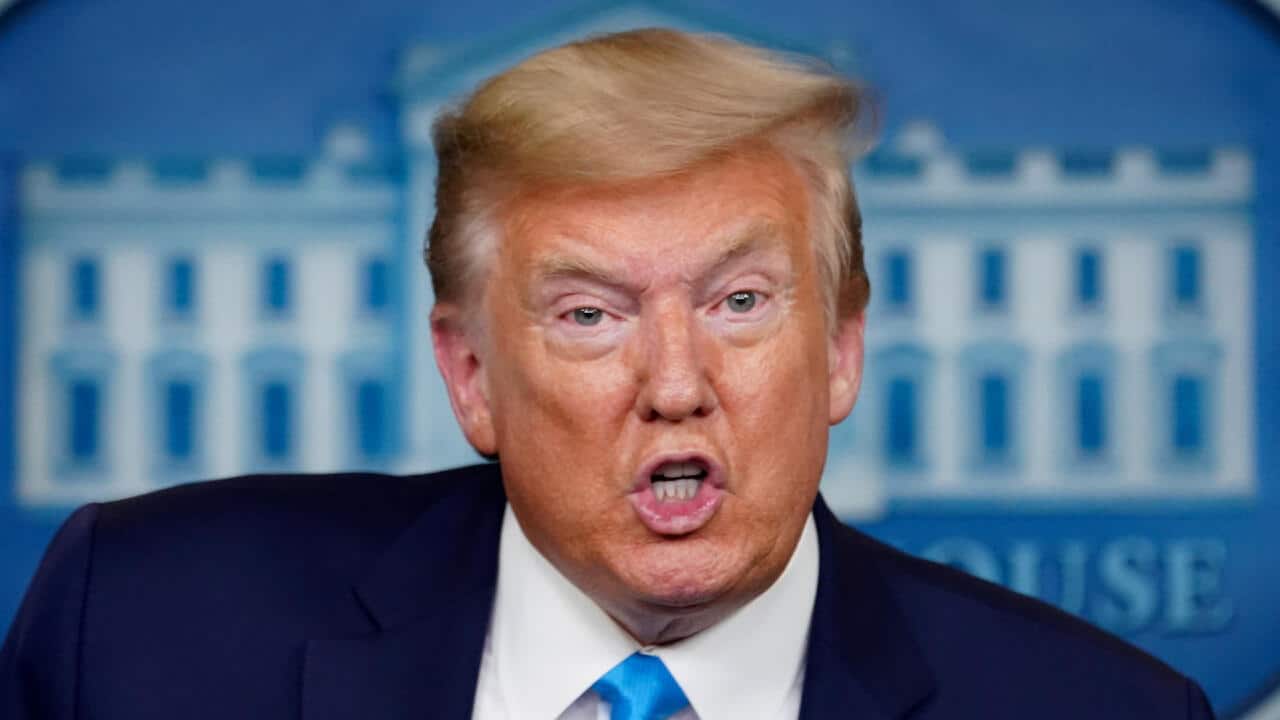

Donald Trump’s strategic pivot: Cameroon at the core of US critical minerals agenda
From his initial term, Donald Trump consistently reshaped United States foreign policy, primarily to counter China, which he views as the foremost challenge to American global dominance.
Donald Trump’s administration has consistently prioritized reducing American reliance on Chinese rare earth minerals, a strategic imperative to bolster US hegemony.
The Trump administration has made achieving independence from China’s rare earth supply a critical strategic objective. To spearhead this initiative, Washington relies heavily on GreenMet.
GreenMet’s CEO, Drew Horn, a former senior advisor to the Director of National Intelligence during Trump’s tenure, recently made a low-profile visit to Yaoundé. Horn represents a broader American program, with key associates including Donald Trump’s former legal counsel, Georges Sorial, and his former Director of Security for the Trump Organization, Keith Schiller. These individuals are trusted collaborators of the former president.
Central to this American strategy, championed by Drew Horn and GreenMet, was a delegation of high-ranking US officials to Cameroon. Their visit culminated in the signing of Memoranda of Understanding (MoU), the specifics of which have not been publicly disclosed by the American group. However, it is known that American Renaissance Minerals (ARM), a company directly affiliated with GreenMet, has secured a leading position in Cameroon’s Nkamouna nickel and cobalt project. Furthermore, Washington’s strategic interests in the region extend significantly to rare earth deposits.
Donald Trump’s commitment to his vision for Cameroon is so profound that he circumvented congressional restrictions that had excluded Cameroon from the African Growth and Opportunity Act (AGOA). The former US president now leverages the American Chamber of Commerce in Cameroon (AmCham) to facilitate commercial agreements.
In contrast to China’s extensive presence in the Democratic Republic of Congo’s strategic mineral sector, the United States, aiming to invest in mineral processing to reduce its carbon footprint, has conditioned its support to the Cameroonian government on transparency in extractive and legal domains.
US intelligence agencies reportedly intervened following revelations by the Extractive Industries Transparency Initiative (ITIE) regarding illicit gold trafficking. Washington is actively collaborating with Yaoundé to identify and prosecute those involved in this illicit trade.
The United States’ engagement does not stop there. American diplomatic efforts have resulted in a significant reduction in the number of African countries eligible to issue US visas. Cameroon is among the select 20 nations chosen from over 50 across Africa. On the security front, President Paul Biya hosted General Dagvin Anderson, then AFRICOM Commander, in September 2025, followed by Lieutenant-General John William Brennan Jr., AFRICOM Deputy Commander, in May 2026, within an eight-month period.
Improving the business climate remains a top priority for Washington. Christopher Lamora, following a meeting with President Paul Biya earlier this year, stated, “I sincerely wish to see more American companies invest in Cameroon, develop commercial relationships, and forge partnerships, including joint ventures between American and Cameroonian firms. This benefits both nations: it creates jobs in the United States, supports American industry – a priority for President Trump – and also stimulates the Cameroonian economy.“
Washington is determined to meet the challenge posed by China, which has invested over 700 billion dollars across 49 African countries.
Some analysts observing Trump’s policy interpret his strategy as an ambition to transform target countries such as Cameroon, Nigeria, and Kenya, mirroring the economic success of the “Asian Dragons” (South Korea, Taiwan, Hong Kong, and Singapore) in their respective eras.

Related Posts


Commentaires