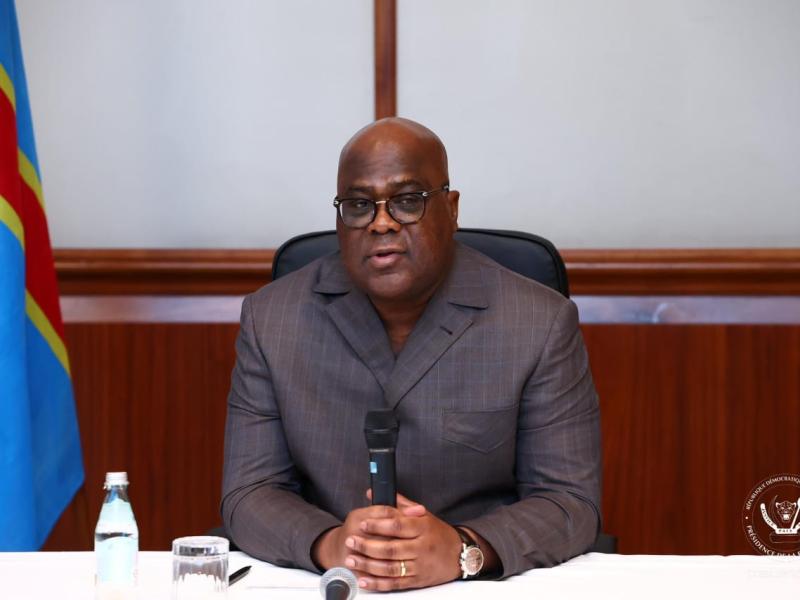

Kinshasa — President Félix Tshisekedi has opened the door to an inclusive national dialogue after a landmark meeting with representatives of the country’s major religious confessions. The historic gathering took place at the African Union headquarters in the capital, marking a significant shift in the government’s approach to national reconciliation.
During the closed-door session, religious leaders presented a unified front, emphasizing the urgent need for peaceful conflict resolution and national cohesion. Sources close to the discussions revealed that the President had initially hesitated about launching such a dialogue but has now fully embraced the initiative following this engagement.
The government is expected to release an official roadmap outlining the dialogue process in the coming days. This framework will detail the objectives, participants, and timeline for the national conversation aimed at addressing the country’s persistent challenges.
Religious leaders play pivotal role in national reconciliation
The involvement of religious institutions in political processes has become increasingly significant in the Democratic Republic of Congo. These organizations bring moral authority and grassroots connections that can help bridge divides between different segments of society.
« This meeting represents a crucial step toward healing our nation’s divisions, » stated one prominent religious leader who participated in the discussions. « We believe that through sincere dialogue, we can find solutions to the challenges facing our country. »
Government signals commitment to inclusive governance
The President’s decision to engage religious leaders comes at a critical juncture for the nation. With ongoing security challenges in eastern regions and economic pressures affecting millions, the government appears to be seeking alternative pathways to address these complex issues.
The upcoming dialogue process is expected to involve not only political parties but also civil society organizations, youth representatives, and other key stakeholders. This comprehensive approach aims to ensure that all voices are heard in the national conversation about the country’s future.
The government’s commitment to this process will be closely watched by both domestic and international observers, who have long called for more inclusive governance in the DRC.