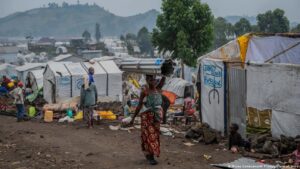
Violent conflicts and severe budget cuts are pushing millions across West and Central Africa to the brink of a catastrophic food crisis. The World Food Programme (WFP) warns that nearly 55 million people—including over 13 million children—face extreme hunger this summer, with famine-like conditions looming in the most vulnerable regions.
In a recent assessment, the WFP revealed that more than three million people in the Sahel and Central Africa are expected to experience emergency-level food insecurity (IPC Phase 4) in 2026, doubling the 1.5 million affected in 2020. The situation is most dire in four countries: Nigeria, Chad, Cameroon, and Niger, where 77% of food insecurity cases are concentrated. In Nigeria’s Borno State alone, 15,000 people are at risk of catastrophic famine (IPC Phase 5)—the first such threat in nearly a decade.
funding shortages deepen humanitarian catastrophe
The WFP urgently requires over $453 million in the next six months to prevent a full-blown disaster. Sarah Longford, WFP’s Deputy Regional Director for West and Central Africa, emphasized the dire consequences of reduced funding: « The budget cuts in 2025 have worsened hunger and malnutrition across the region. With needs outpacing resources, the risk of young people falling into despair is rising dramatically. »
Mali: rising hunger amid conflict and aid cuts
In Mali, reduced food rations have led to a 64% surge in acute hunger in some areas, while regions receiving full rations saw a 34% decrease. Ongoing insecurity disrupts supply chains, leaving 1.5 million Malians vulnerable to food crises. The WFP’s nutrition programs, critical for children under five, are underfunded, with only 72,000 people set to receive aid in February 2026—down from 1.3 million a year earlier.
Nigeria: malnutrition crisis reaches critical levels
Nigeria faces a rapidly deteriorating situation, particularly in the northeast. Budget shortfalls forced the WFP to slash nutritional support for over 300,000 children in 2025. Malnutrition levels have escalated from « severe » to « critical » in several northern states, with projections suggesting the crisis will worsen without immediate intervention.
Cameroon: half a million at risk of losing vital aid
In Cameroon, over 500,000 vulnerable individuals could lose access to life-saving assistance in the coming weeks if emergency funding is not secured. The WFP’s ability to provide food and nutrition support is hanging by a thread, exacerbating an already dire humanitarian landscape.
13 million children on the edge of starvation
Speaking from Rome, Jean Martin Bauer, WFP’s Food Security and Nutrition Analysis Director, highlighted that 13 million children in the region are at risk of starvation this year. « When we talk about IPC 5, it means immediate mortality risks, » he warned. « People are dying of hunger. We must ensure aid reaches those most vulnerable—especially children. »
breaking the cycle of hunger: a call for resilience and investment
To prevent future crises, the WFP urges a shift toward proactive measures, including early action, resilience-building, and community empowerment. Over 300,000 hectares of degraded land have been rehabilitated since 2018, benefiting four million people by protecting them from climate shocks. However, these efforts remain underfunded.
« Solutions exist, but they lack the necessary financing, » Bauer stressed. « Without urgent investment, the cycle of hunger will persist, fueling further displacement, conflict, and instability. »
The WFP’s appeal for $453 million aims to stabilize the situation, but time is running out. Governments and partners must act now to avert a humanitarian collapse in the Sahel and Central Africa.