
France’s hidden agenda in the Francophonie leadership race
France’s hidden agenda in the Francophonie leadership race
The Organisation internationale de la Francophonie (OIF) is set to elect its next Secretary-General during its summit in Phnom Penh, Cambodia, on 15 and 16 November 2026. This leadership position, which oversees a network of 90 member states, wields significant influence over the diplomatic balance within the Francophone world.
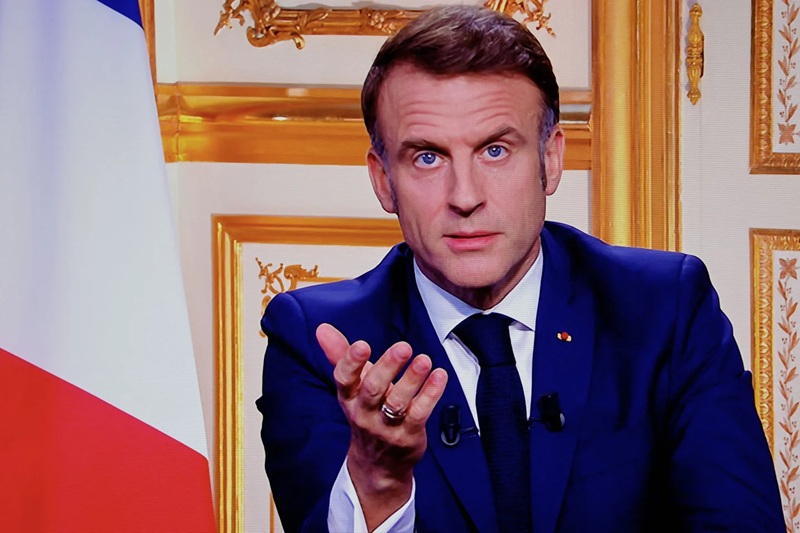
Amidst this high-stakes election, France, under President Macron’s leadership, appears to be maneuvering behind the scenes to secure the candidacy of Dacian Ciolos, former Prime Minister of Romania, rather than supporting the widely favored candidate from the Democratic Republic of the Congo (DRC), Juliana Amato Lumumba.
While France publicly endorses Ms. Lumumba’s bid, diplomatic insiders reveal a contrasting private strategy. The French government is reportedly pushing for Ciolos’ election, leveraging its influence within the Francophone African bloc to sway votes in his favor. This covert maneuver raises questions about France’s true intentions and its commitment to the values of the Francophonie.
Why the Democratic Republic of the Congo deserves the leadership role
The DRC stands as the largest Francophone nation in the world, with over 100 million French speakers, a thriving francophone media landscape, and numerous universities teaching in French. These attributes make it the natural heart of the Francophonie. Yet, France seems reluctant to acknowledge this reality, choosing instead to undermine the Congolese candidacy.
In contrast, Rwanda, the current Secretary-General’s home country, has repeatedly challenged the primacy of the French language and is nearing the end of its second term. Despite this, France appears determined to block the DRC’s legitimate bid for leadership, opting instead for an outsider candidate who may not share the same vision for the organization.
The consequences of France’s double game
If France succeeds in thwarting Juliana Lumumba’s election through its covert maneuvers, the DRC must reconsider its relationship with the former colonial power. As the world’s largest Francophone nation, the DRC has every right to expect fair and respectful treatment from France. Instead, France’s actions risk alienating a key ally and undermining the very principles of solidarity and mutual respect that the Francophonie claims to uphold.
An experienced, non-divisive leader is essential to guide the Francophonie through its next chapter. Juliana Amato Lumumba, with her deep understanding of African and global issues, is precisely the kind of figure the organization needs. Her candidacy aligns with the values of the Francophonie and the aspirations of its member states.
The choice of Secretary-General is not merely a procedural matter—it shapes the future direction of the Francophonie. With 90 member states, the organization’s leadership holds immense sway over cultural, political, and economic ties across three continents. A leader like Lumumba, rooted in Africa’s realities, would bring much-needed credibility and vision to the role.
France’s covert support for Ciolos over Lumumba is a betrayal of the Francophonie’s core values. If this strategy succeeds, the DRC must take decisive action to protect its interests and redefine its partnership with France.