
Gabon and France forge a new era of partnership
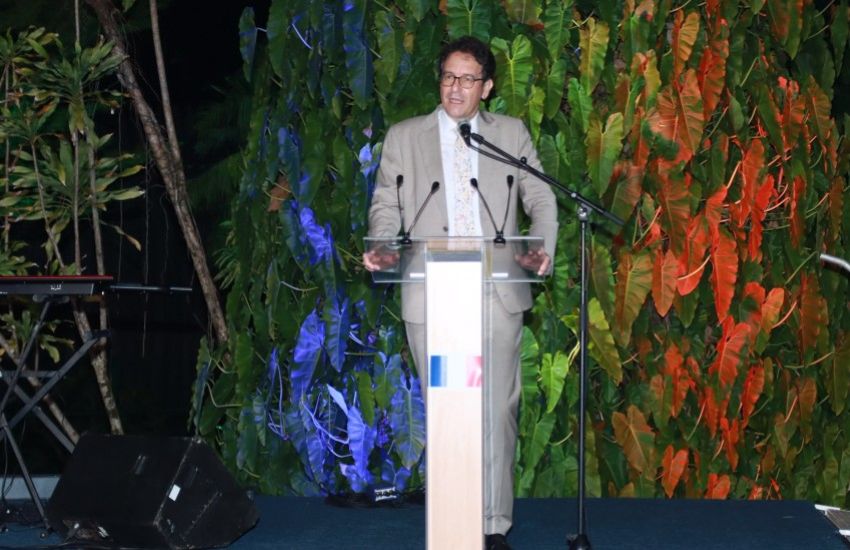
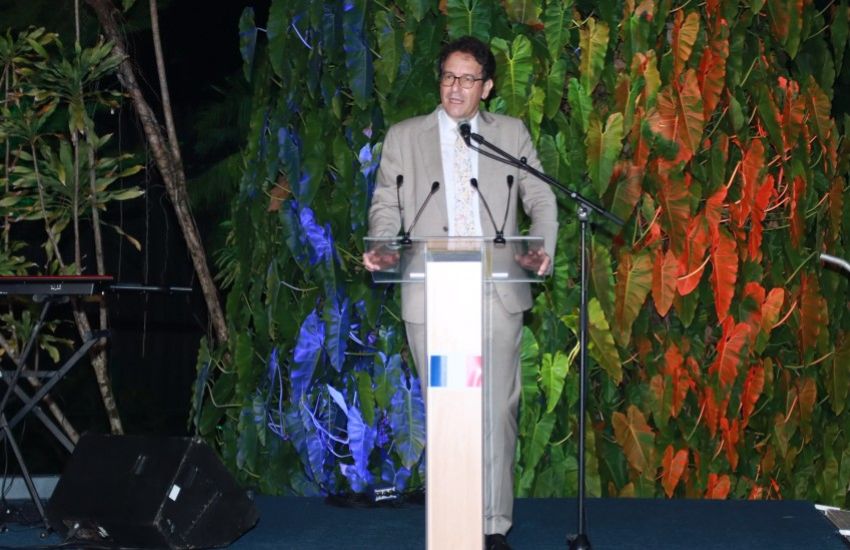
Libreville, July 16, 2026 – The July 14 celebrations in Libreville transcended traditional festivities. In a speech delivered by France’s Ambassador to Gabon, Fabrice Mauriès, a blueprint of the evolving relationship between Paris and Libreville was unveiled.
Three landmark announcements reshaped diplomatic conversations: an imminent state visit by Gabonese President Brice Clotaire Oligui Nguema to France, the permanent transformation of Camp De Gaulle, and the establishment of a national financial prosecution office in Gabon. Each initiative, though distinct, converges toward a shared vision—redefining Franco-Gabonese ties for the modern era.
Amid global power rivalries, rising African sovereignty demands, and shifting strategic alliances, Gabon is emerging as a pivotal case study in Europe-Africa relations. The country is redefining its diplomatic playbook, and France appears ready to adapt.
State visit signals deeper cooperation
The announcement of President Oligui Nguema’s upcoming state visit to Paris marks the strongest political signal exchanged between the two capitals since the 2023 transition. In France’s diplomatic protocol, a state visit represents the highest form of recognition extended to a foreign leader.
This decision underscores Paris’s commitment to supporting Gabon’s post-transition trajectory while acknowledging the return to constitutional order following last year’s presidential election. Ambassador Mauriès emphasized a key principle: Gabon’s transition belongs to the Gabonese people. While France played no role in shaping it, the country remains a steadfast partner in ensuring its success.
This nuanced approach carries weight across Africa, where former colonial powers often face allegations of political interference. France now appears to favor accompaniment over direct influence, cooperation over control—a shift that resonates in a continent increasingly asserting its autonomy.
End of an era for military presence
The transformation of Camp De Gaulle symbolizes the most visible change in this evolving dynamic. For decades, the French military base embodied Paris’s strategic footprint in Central Africa. Its announced overhaul signals the close of a historical chapter that began after African independence.
France’s future military footprint in Gabon will prioritize operational partnerships, joint training, maritime security, and targeted exercises over large-scale troop deployments. This aligns with France’s evolving doctrine in Africa, which now emphasizes tailored cooperation aligned with partner nations’ priorities.
For Gabon, this transition offers a chance to bolster its defense capabilities while preserving historical ties with France. Future joint maritime projects, particularly in securing the Gulf of Guinea—a critical maritime corridor—highlight a shared commitment to protecting regional interests.
Financial justice and institutional reform
The third major announcement—the creation of a Gabonese national financial prosecution office—addresses a global imperative: combating corruption, illicit financial flows, and economic crime. The initiative holds particular significance for a resource-rich nation like Gabon, where oil, manganese, and other natural assets demand transparent governance.
Ambassador Mauriès stressed that judicial cooperation will be reciprocal, reflecting a balanced approach between the two legal systems. This move complements Gabon’s broader agenda of transparency, economic governance, and institutional modernization. Beyond financial crimes, collaboration extends to counter-narcotics efforts, border security, domestic stability, and capacity-building for Gabonese security forces.
Together, these developments outline a bilateral relationship rooted in shared governance, collective security, and economic development—moving beyond historical legacies toward a pragmatic, 21st-century partnership.
The July 14 address in Libreville may well be remembered as the moment Gabon and France formally entered a new chapter in their shared history. Not a break from the past, nor a blind continuation, but the deliberate construction of a balanced, pragmatic alliance fit for today’s geopolitical realities. The true test ahead will be translating these diplomatic commitments into tangible outcomes for both nations and Central Africa’s long-term stability.