
Libreville, Wednesday 3 June 2026 — In a political landscape where public discourse often wavers between uncritical praise and cautious hesitation, a recent statement by Gabonese President Brice Clotaire Oligui Nguema has reframed the national conversation around a core principle of democratic governance: the relationship between power and truth.
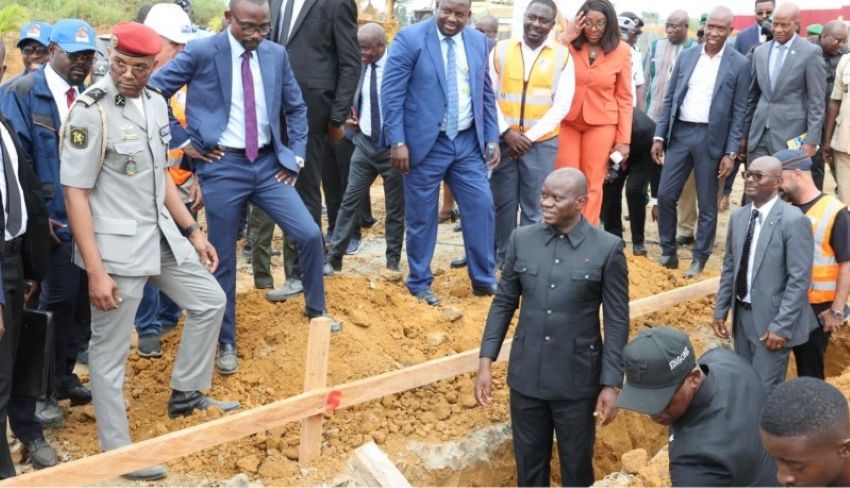
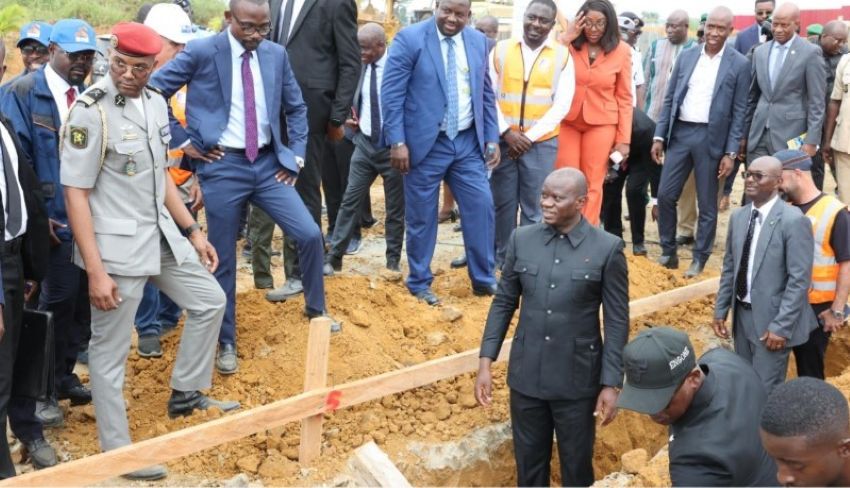
During the groundbreaking ceremony for 3,100 new housing units in Bikélé, the Head of State told journalist Chamberlain Moukouma that a leader must not only welcome applause but also accept sincere criticism when it serves the public good. This declaration transcends political rhetoric, touching the very essence of accountable leadership.
Rejecting blind allegiance in favor of honest accountability
By insisting that he must be told when he is wrong so that corrective action can be taken, President Oligui Nguema signals a deliberate break from a long-standing culture of automatic endorsement. His stance elevates constructive criticism from a peripheral idea to a cornerstone of institutional discourse, framing dissent not as opposition but as a civic duty.
In this vision, perpetual applause is no longer a sign of political vitality but a potential source of collective delusion. The President’s words implicitly call for a new social contract—one built on transparency and shared responsibility between those who govern and those who are governed.
This approach asserts that national progress cannot be built on flattery, but must rest on an unflinching assessment of public policy, celebrating successes while openly acknowledging shortcomings.
Criticism as a pillar of national development
The presidential remarks reaffirm a principle that has long been sidelined in political practice: constructive criticism is not an act of defiance, but a civic duty rooted in the pursuit of the common good. In this context, public debate becomes a mechanism for continuous improvement rather than a battleground for sterile confrontation.
A mature citizenry, according to this philosophy, is one that recognizes achievements while also identifying dysfunctions—thereby contributing to the enhancement of governance quality. This demands a cultural shift: citizens, civil society, and media must adopt a posture grounded in objectivity, responsibility, and commitment to the national interest. Criticism is no longer an end in itself, but a lever for refining public policy.
Redefining political dialogue through active listening
Beyond the statement itself, a broader philosophy of governance is emerging. President Oligui Nguema appears to advocate for a leadership model based on active listening, where citizen feedback becomes a navigational tool for policymakers.
Under this framework, national development is no longer driven solely by top-down state decisions, but by a dynamic interplay between leaders and citizens. It calls for a delicate balance—one that acknowledges progress while maintaining constant pressure for improvement.
The interview conducted by Chamberlain Moukouma, widely shared on social platforms as part of a civic education initiative, reinforces this vision of a more informed and responsible public sphere.
Ultimately, the President’s remarks invite Gabon to rethink its political culture around three guiding principles: applaud when deserved, critique when necessary, and always act in the supreme interest of the nation.
In a political environment often dominated by performative postures, this call for shared truth stands as a litmus test of democratic maturity. It positions citizens not as passive observers of power, but as active participants in its continuous improvement.