
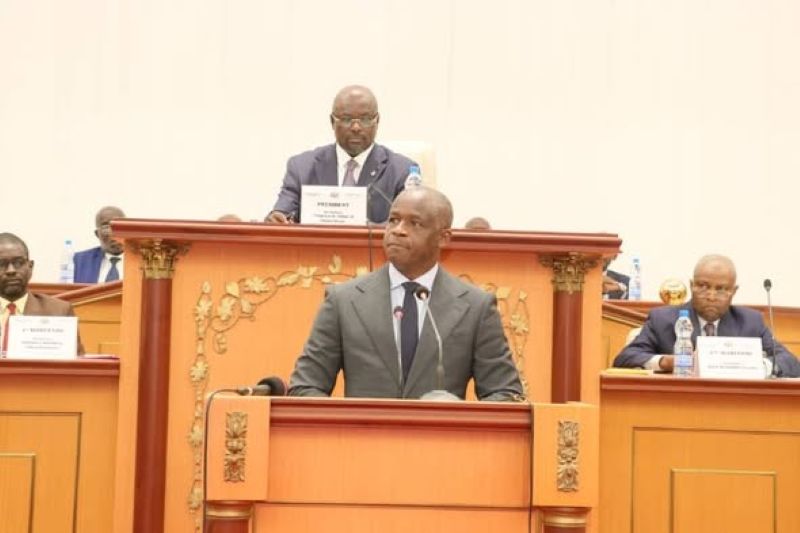
In Libreville, the National Assembly recently became the stage for a critical confrontation between the executive branch and the people’s representatives.
The traditional exercise of oral questions at the Palais Léon Mba took on a deeper significance this week. Members of the 14th legislature fully embraced their oversight role, questioning the government on the most pressing issues facing the Gabonese public. From the rising cost of living and healthcare to security, employment, and economic independence, no stone was left unturned during this intense parliamentary session.
This major political milestone comes just days before the scheduled Parliamentary Congress on June 15. During that upcoming event, President Brice Clotaire Oligui Nguema is expected to deliver his State of the Nation address, making this preliminary questioning of ministers a vital indicator of the country’s current climate.
Protecting the future of Gabonese youth
One of the most urgent topics discussed was the alarming spread of narcotics and addictive substances within the school system. Huguette Tsono, the sixth Vice-President of the Assembly, challenged the government on its strategy to combat this trend. In response, Vice-President of the Government Hermann Immongault acknowledged the severity of the crisis and reiterated the state’s commitment to securing educational environments.
Given that youth make up the vast majority of Gabon’s population, the fight against addiction is viewed as a strategic necessity for long-term social stability. Similarly, Minister of State Camélia Ntoutoume-Leclercq addressed concerns regarding national education reforms, assuring deputies that the government’s overhaul of the school system is moving forward according to the established timeline.
A shift toward economic sovereignty
The session also highlighted a decisive move toward domestic production and industrialization. The Minister of Agriculture, Pacôme Kossy, defended the gradual ban on poultry imports, explaining that the policy is designed to foster a robust local poultry industry capable of meeting domestic demand and generating new jobs.
This push for food security is mirrored in the mining sector. Minister of Mines Sosthène Nguema Nguema detailed the planned prohibition of raw manganese exports. This strategy aims to ensure that more processing occurs within Gabon, allowing the nation to capture a greater share of the value chain from its natural resources. This shift represents a significant break from the traditional model of exporting raw materials without local transformation.
Addressing social welfare and administrative hurdles
Daily struggles were not ignored during the debates. Minister of the Interior Adrien Nguema Mba was questioned about the persistent delays and difficulties citizens face when trying to obtain national identity cards and passports. These administrative bottlenecks are particularly felt by those living in rural areas, where access to government services is often limited.
Furthermore, Minister of Social Affairs Armande Longo addressed the concerns of retirees, people living with disabilities, single mothers, and those covered by the CNAMGS health insurance system. These discussions underscored the reality that economic growth must be accompanied by tangible improvements in the standard of living for the most vulnerable citizens.
The revitalized role of the National Assembly
Beyond the specific answers provided by ministers, the session signaled a robust return of the Parliament to the center of the institutional game. By providing a platform for debate on industrial transformation, public health, and administrative governance, the National Assembly has reasserted its democratic function.
As Assembly President Michel Régis Onanga Ndiaye brought the session to a close, the focus shifted toward the upcoming Congress. This first major oral question session of the 14th legislature reveals a nation in the midst of profound change, where the government is now being judged not just on its promises, but on its ability to deliver concrete results for the people of Gabon.