
Libreville, June 3, 2026 — Housing, infrastructure, African finance, and private investment. President Brice Clotaire Oligui Nguema is advancing a strategy that blends African capital with international partnerships to drive sustainable growth in Gabon’s economy.
In an era where African nations are balancing economic expansion, social inclusion, and national sovereignty, Gabon is accelerating on multiple fronts. Tuesday’s meetings between the President and Idrissa Nassa, CEO of Coris Bank International, as well as Zhu Junbo, General Manager of China Civil Engineering Construction Corporation (COVEC), underscore a central pillar of the government’s strategy.
Beyond diplomatic formalities, these discussions reveal a broader vision: a nation determined to mobilize African capital, attract foreign investors, and revive critical infrastructure projects to fuel economic transformation.
African capital takes center stage
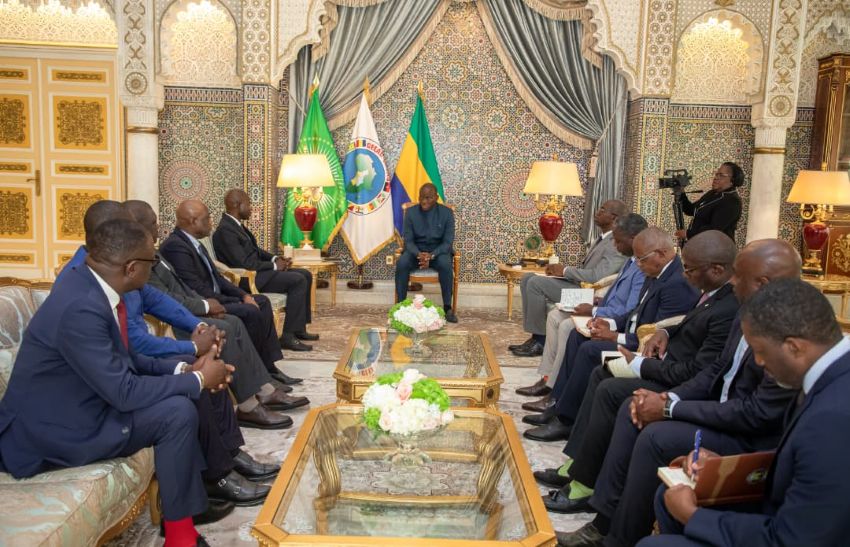
The meeting with Idrissa Nassa was particularly significant. The Coris Bank leader was not alone—he arrived with a high-profile delegation that included prominent Burkinabè entrepreneurs such as Roland Sow, President of the Chamber of Commerce and Industry of Burkina Faso, Saïdou Tiendrébeogo, President of Burkina Faso’s Real Estate Developers Association, and Achille Ouédraogo, President of the National Federation of Young Entrepreneurs of Burkina Faso.
This presence signals a notable shift in Africa’s economic landscape. While the continent has historically relied on European, American, and Asian capital, many African nations are now witnessing the rise of homegrown financial institutions capable of investing beyond their borders. Gabon is positioning itself at the forefront of this movement.
Discussions centered on Gabon’s ambitious housing program—a project with deep social and economic implications. Housing initiatives mobilize banks, construction firms, material suppliers, public services, and local labor, creating a ripple effect across multiple sectors.
By encouraging Coris Bank to participate, the Gabonese President is championing an approach where African solutions fund African ambitions.
Housing as a catalyst for development
Access to housing is a cornerstone of the President’s national development agenda. However, the stakes extend far beyond erecting buildings. In emerging economies worldwide, housing is a driver of social stability, wealth creation, and urban growth.
By promoting homeownership, the state fosters savings, strengthens the middle class, and stimulates economic activity. This explains the pivotal role assigned to financial partners in the program’s success.
The announcement that Coris Bank will establish its headquarters on Boulevard de la Transition further underscores the bank’s commitment to Gabon’s long-term economic future.
Infrastructure reclaims its pivotal role
The second presidential meeting focused on one of Gabon’s longstanding development challenges: infrastructure. Zhu Junbo confirmed the imminent resumption of road construction on several key routes, including Ndendé-Tchibanga and Tchibanga-Mayumba in Nyanga province, as well as the Sibang-Bambouchine axis in Estuaire.
The impact of these projects stretches beyond mobility. Roads lower logistics costs, facilitate trade, improve access to public services, attract investors, and bridge territorial divides. In many countries, infrastructure is the invisible backbone of economic growth—its absence stifles progress, while its presence fuels it.
The revival of these projects sends a strong signal to both domestic and international investors.
A strategy rooted in economic sovereignty
These two meetings share a common thread: Gabon’s pursuit of diversified partnerships without compromising its sovereignty. African capital is being tapped, international firms remain engaged, and the sectors targeted align directly with citizens’ daily lives—housing, transportation, agriculture, livestock, and financial inclusion. Each plays a role in reducing the country’s dependence on oil revenues and building a more resilient economy.
The success of this strategy hinges on the concrete execution of announced commitments. Citizens anticipate completed homes, finished roads, accessible banking services, and tangible economic opportunities.
Yet one truth already stands out: by convening African investors and international partners around transformative projects, President Brice Clotaire Oligui Nguema is positioning Gabon at the heart of a new economic geography for the continent—one where development is no longer solely dependent on external aid but on Africa’s ability to invest in its own future.