
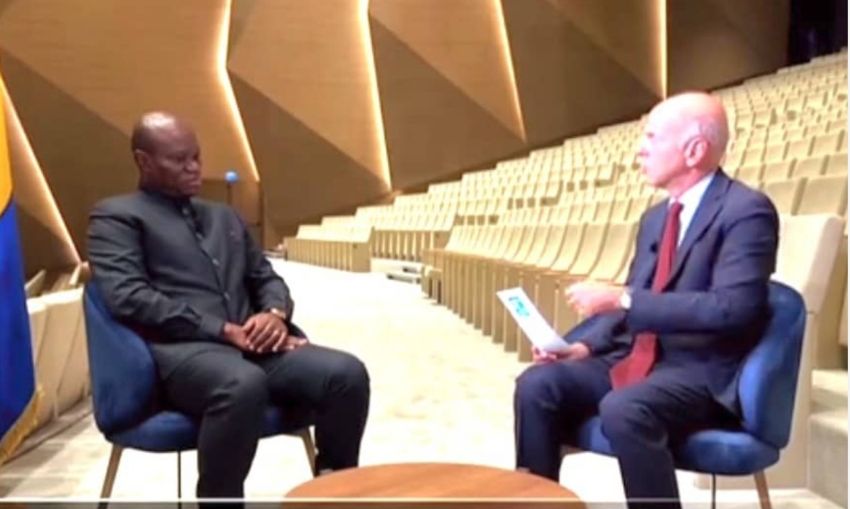
Libreville, Wednesday, June 3, 2026 – In a carefully orchestrated media appearance, Gabonese President Brice Clotaire Oligui Nguema used his platform on international television to reaffirm his administration’s commitment to economic sovereignty, progressive reform, and democratic renewal.
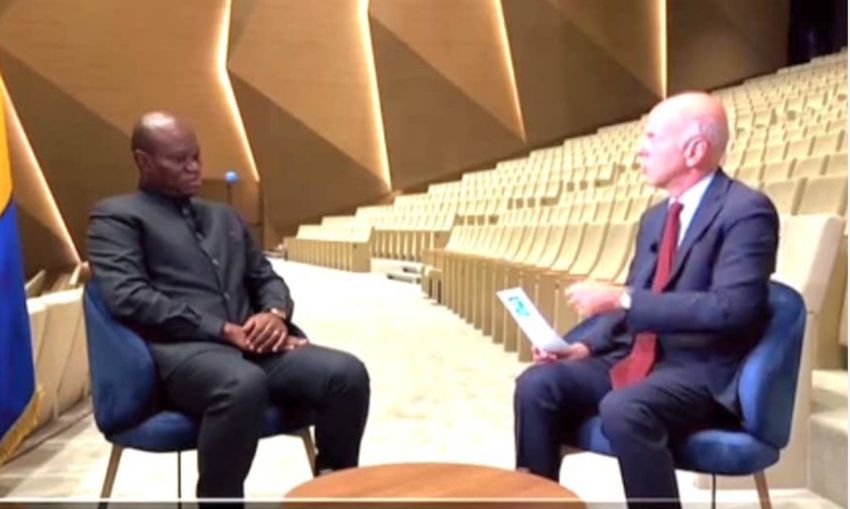
Three years after assuming leadership and one year following his election with over 94% of the vote, the Gabonese head of state granted his first major international interview from the Congress Hall of the Cité de la Démocratie in Libreville. Addressing pressing national and global issues with measured precision, Oligui Nguema defended his policy choices, clarified economic priorities, and dismissed speculation about dynastic ambitions.
The president’s remarks revealed a clear political roadmap: one that champions long-term structural reforms, asserts economic independence from foreign conglomerates, and redefines Gabon’s international partnerships without resorting to confrontation.
Progressive reform as a guiding principle
Critics have questioned the pace of development—particularly in access to clean water and reliable electricity. In response, Oligui Nguema emphasized that his seven-year mandate is designed to deliver sustained progress, not instant results. He highlighted ongoing investments exceeding 800 billion CFA francs in energy infrastructure, positioning these efforts as foundational to the nation’s future.
The president framed his approach as a deliberate departure from short-term thinking, arguing that meaningful transformation requires patience and consistent policy execution.
Economic sovereignty takes center stage
The most decisive statements came on the economic front. Oligui Nguema confirmed Gabon’s intent to engage with the International Monetary Fund—but only after a thorough audit of public finances. This cautious stance reflects a broader strategy: regaining control over national financial commitments before entering new international agreements.
The mining sector is another arena where sovereignty is being asserted. Starting in 2029, Gabon will ban the export of unprocessed manganese—a bold move by a top global producer aiming to boost local value addition. The policy sends a clear message to multinational players like Eramet: processing facilities must be operational well before the deadline, or raw ore exports will cease. This shift signals a recalibration of state-corporate relations in favor of greater domestic benefit.
A balanced foreign policy
On the international stage, Oligui Nguema underscored that sovereignty does not equate to isolation. He confirmed a planned state visit to France on July 20, portraying the relationship as cooperative rather than conflict-driven—a contrast to trends observed elsewhere in the region. The upcoming transfer of Camp de Gaulle to Gabonese authorities, he insisted, exemplifies this partnership-first approach.
Similarly, Gabon will not accept a proposed U.S. arrangement to host deported migrants. While relations with Washington remain cordial, the president made it clear such an agreement would not serve Gabon’s interests.
Rejecting political dynasties
In a region where leadership often extends beyond constitutional limits and familial ties, Oligui Nguema firmly rejected any notion of a political dynasty under his name. He affirmed that the single seven-year term, renewable once, is a permanent fixture of Gabon’s institutional framework—part of a broader push toward democratic alternation.
The president’s comments on former leader Ali Bongo Ondimba were measured. While acknowledging health concerns, he implied that accountability for past governance failures rests elsewhere.
The test of implementation
Beyond rhetoric, this interview laid bare the pillars of Gabon’s evolving governance model: economic self-reliance, local resource processing, balanced diplomacy, phased infrastructure upgrades, and a commitment to democratic turnover. Yet the true measure of success will lie in execution.
With significant political capital still intact, Oligui Nguema has staked his legacy on restoring Gabon’s control over its economic and political destiny. The Gabonese people, however, will judge him not by promises, but by tangible outcomes—especially when basic services like electricity and water reach every household. Only then will the vision of a renewed, sovereign Gabon be truly realized.