
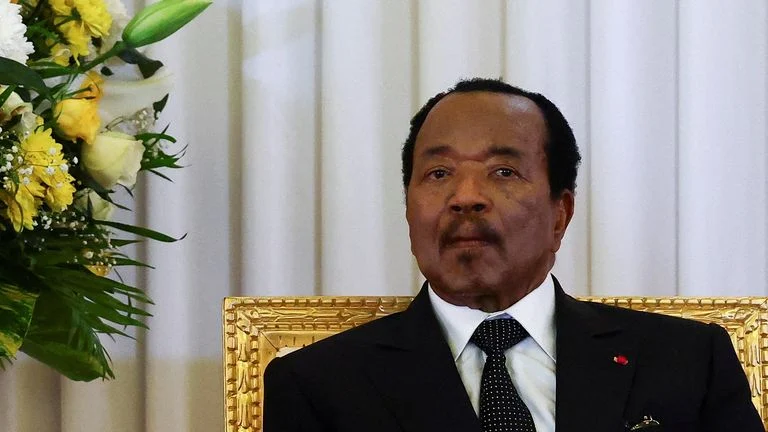
Cameroon’s Paul Biya absent for over 40 days stirs discontent
What was initially described as a brief private trip to Europe has stretched into an extended absence. Since President Paul Biya departed Cameroon on June 7, 2026, alongside his wife, no return has been announced. More than 40 days without official communication have left citizens in the dark, with no reassurance from the head of state who was re-elected last November for a new seven-year term. For those familiar with his history, this prolonged absence comes as no surprise.
Frustration grows among Cameroonians over the president’s extended absences
Paul Biya, who has led the country for over four decades, frequently travels abroad—particularly to Switzerland—often spending more time in luxury hotels than in the Etoudi Palace. His extended stays abroad are widely believed to be tied to his health, as the 93-year-old leader’s condition has visibly deteriorated with age. Like many African leaders, Biya reportedly prefers medical care abroad, possibly reflecting a lack of trust in Cameroon’s healthcare system. Yet, with the president’s health treated as a state secret, the public remains in the dark. Rumors swirl, and without official updates, the government’s usual heavy-handed response—through legal or administrative channels—may soon follow to suppress dissent.
A pressing question lingers: Who truly governs Cameroon? Critics argue the country operates on autopilot, pointing to the president’s extended absences as evidence of a leadership vacuum. At 93, with his health in decline, doubts persist about Biya’s ability to fulfill his duties effectively. His latest re-election, secured after sidelining credible opponents, may prove to be one mandate too many. Yet Biya, who has ruled with an iron fist, seems determined to cling to power until his final days, envisioning a grand national funeral.
Growing impatience is palpable among Cameroonians, who grow weary of a president whose presence in the country is increasingly rare. Opposition voices are growing louder. For instance, legislator Jean Michel Nintcheu has urged the Constitutional Council to declare a power vacuum. The ruling party swiftly dismissed such claims, declaring, “The Lion has not left.”
In Cameroon under Biya, stability often trumps change. The government has remained unchanged for over seven years, with Prime Minister Joseph Dion Ngute’s cabinet operating since January 2019—effectively spanning an entire presidential term. Biya, known for his unorthodox leadership style, has yet to appoint a vice president, despite the constitutional revival of the position in April 2026. This stagnation—another hallmark of Biya’s rule—reflects a system where continuity is prioritized over reform or accountability.
Sacré Biya!