
The silent struggle for influence: Why Algeria’s troop deployment in Niger is more than just a military move
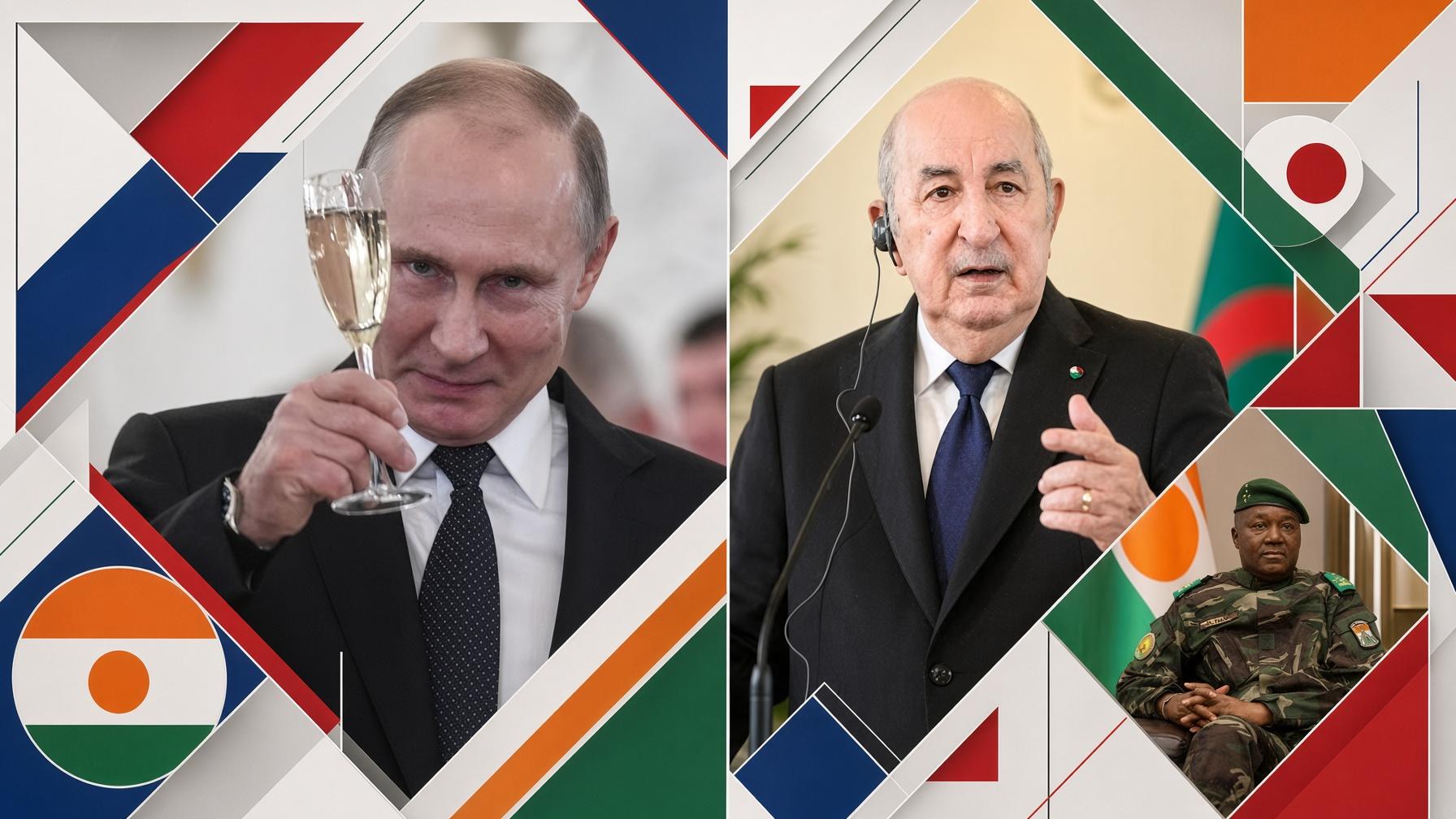
Behind the diplomatic headlines lies a deeper tectonic shift in the Sahel. By greenlighting the deployment of Algeria’s National People’s Army (ANP) into Niger, lawmakers in Algiers have not merely extended their country’s security umbrella—they have triggered a low-intensity geopolitical earthquake that exposes the fragility of Moscow’s post-Western strategy in the region. For the first time in half a century, Algerian troops will operate beyond its borders on a scale that signals more than partnership; it signals strategic defiance.
From Moscow’s cash cow to Algeria’s buffer zone
The Kremlin’s once-uncontested dominance in Niger was built on urgency and exclusivity. Following Niamey’s regime change, Russian military contractors fast-tracked multi-hundred-million-dollar arms deals—air defense systems, tactical drones, attack helicopters, and paid deployments of Africa Corps instructors—all wrapped in mining and oil concessions. But the Algerian parliament’s decision to station regular troops on Nigerien soil neutralizes this economic model at its core:
- Dilution of Russian monopoly: Algeria’s offer of high-profile military support, backed by a professionalized and well-equipped army, gives Niger an alternative that reduces immediate reliance on expensive Russian hardware.
- Undermining extractive quid pro quos: The presence of Algerian forces disrupts the Kremlin’s traditional revenue streams, which have often hinged on securing mining permits and oil blocks in exchange for security services.
- Technical autonomy over Russian tech: Because Algeria operates Soviet-legacy systems like Su-30 fighters, T-72 tanks, and D-30 howitzers, it can offer in-house maintenance and sustainment, diverting lucrative after-sales contracts away from Russian state-run enterprises.
- Kafra oilfield: Operated by Sonatrach subsidiary SIPEX, this block holds tens of millions of barrels and anchors the industrial revival between Algeria and Niger.
- Trans-Saharan Gas Pipeline (TSGP): The planned 30-billion-cubic-meter annual corridor from Nigerian gas fields to Europe via Niger and Algeria demands absolute security along the Saharan transit belt—a condition incompatible with unregulated mercenary deployments.
- For Niamey: The arrival of Algerian troops provides an unprecedented bargaining chip—less reliance on Moscow’s mercenary model and a chance to diversify security partners without triggering immediate financial penalties.
- For Algiers: It reaffirms Algeria’s role as the indispensable gatekeeper of Sahelian stability, ensuring that energy transit and domestic investments remain shielded from mercenary spillovers.
- For Moscow: It punctures the illusion of exclusive control over the AES, replacing it with a tense cohabitation where economic and military leverage are now matters of open contest rather than silent negotiation.
Energy corridors hang in the balance: Algeria secures its Sahara lifelines
For Algiers, the calculus is straightforward: any armed group—especially one with ties to external backers—operating near Algeria’s southern frontier threatens billion-dollar energy assets. Two projects sit at the heart of this urgency:
By positioning its troops, Algeria does not merely protect troops; it protects transit routes and upstream investments, signaling to Moscow that its infrastructure will not be collateral damage in Russia’s Sahelian chess game.
Algeria vs. Russia: the unspoken price of yesterday’s arms sales
Historically, Algeria ranked among Russia’s top clients in Africa, but today it wields its own military leverage against its erstwhile arms supplier. The deployment forces Niamey to recalibrate its alliances, weakening the junta’s total alignment with the Kremlin. Moscow, which assumed the AES was its uncontested sphere, now confronts a regional heavyweight that is weaponizing its own industrial-military complex to neutralize Russian influence on the ground.
What began as arms purchases has evolved into a stark reality: yesterday’s contracts cannot guarantee today’s dominance. The Sahara is no longer a one-player theater; it is a contested economic battleground where Algeria has just drawn a new red line.
What this means for Niamey, Algiers, and Moscow: three strategic narratives collide
The Algerian move redefines the stakes for all three capitals:
The silent war is no longer silent. It has just entered a phase where troops, contracts, and pipelines intersect—and Algeria holds the initiative.