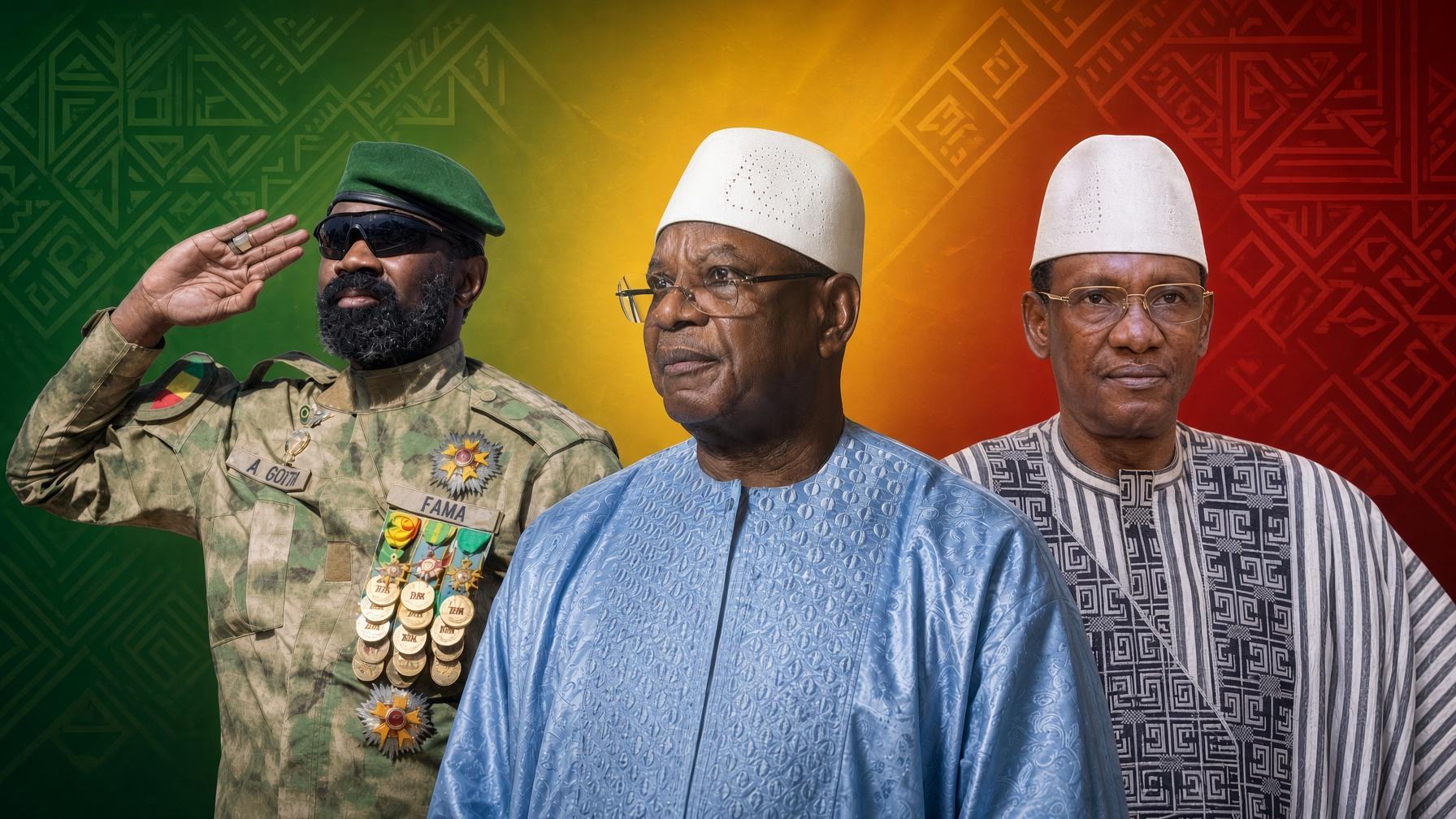

Once the architects of Mali’s political life, the old guard now lingers in obscurity. For three decades, leaders of the ADEMA, RPM, URD, and a host of democratic coalitions shaped governments, dominated media debates, and filled convention halls with their presence. Yet, since General Assimi Goïta solidified control, that era has vanished—not by accident, but through a deliberate, multi-pronged campaign of suppression.
The three pillars of political elimination
The junta’s strategy rests on three interconnected mechanisms: legal coercion, forced displacement, and institutional asphyxiation. Each branch targets a different segment of the traditional political elite, ensuring no faction escapes pressure.
Prison as political deterrence
Prosecutors and military tribunals have become the junta’s preferred tools for neutralising dissent. Former prime ministers, party leaders, and prominent figures like Choguel Maïga—once a key regime strategist—now face years in pre-trial detention under charges ranging from ‘undermining state security’ to financial mismanagement. The judiciary, once a theatre of political showmanship, now operates as a silent arm of the military leadership, extending proceedings to drain resources and morale.
The exodus of dissent
For those not jailed, exile has become the next logical step. Dozens of former ministers, party cadres, and civil society voices have fled to neighbouring capitals like Dakar, Abidjan, or further afield to Paris. From afar, they attempt to sustain opposition networks, but their influence dims against the junta’s tight control over national discourse in Bamako. Social media, once a space for debate, is now heavily monitored, and any dissenting voice is swiftly labelled as ‘traitorous’ or ‘subversive’ in state-aligned media.
Self-censorship as survival
Those who remain confront an atmosphere of suffocating pressure. Political parties have been suspended or dissolved; associations critical of the regime face dissolution. In this climate, even cautious statements risk misinterpretation. The message is clear: speak only what aligns with the official narrative—or face consequences.
From public distrust to institutional lock-in
The junta didn’t just suppress the old regime—it weaponised public frustration. Malians, worn down by decades of perceived corruption, political infighting, and failure to curb the security crisis, welcomed the military’s rise. By blaming the ‘traditional political class’ for the nation’s collapse, Assimi Goïta positioned himself as a saviour. What began as a populist purge, however, morphed into structural control.
Elections remain indefinitely postponed. Democratic institutions lie dormant. A tailor-made transitional framework now governs, sidelining parties that once held real power. The same actors who once dominated the political stage now watch from the sidelines as a new national order is built—without them.
The cost of a politics-free future
The junta’s success in fragmenting and silencing the old guard is undeniable. Yet, this comes at a price: the evaporation of structured debate and political mediation. Disappearing the old elite may offer short-term calm, but it risks leaving Mali with a hollowed-out system unable to address long-term challenges.
By erasing the political class of yesterday, Bamako has not only extinguished dissent—it has starved the nation of the very voices needed to navigate its future. In the absence of credible opposition or democratic renewal, the regime faces an ironic paradox: the more it suppresses politics, the more isolated—and vulnerable—it becomes.