
The brutal lynching of a migrant in Durban’s streets has triggered a rare condemnation from the African Union’s human rights body, not merely for its savagery, but for what it reveals about the deep-seated structures enabling xenophobic violence in South Africa. When a foreign national was beaten to death by a mob in October 2026, officials and rights advocates saw more than a crime — they recognized a symptom of a systemic crisis that Pretoria has struggled to contain.
The African Commission on Human and Peoples’ Rights did not mince words. In a strongly worded statement, it called the attack one of potential crimes against humanity, a legal classification that, while not automatically definitive, underscores the gravity of the moment. It is a charge that forces South Africa to confront uncomfortable truths: the state’s failure to curb mob violence and the normalization of anti-immigrant sentiment in public discourse.
At the heart of this crisis lies a paradox. South Africa, a nation built on anti-apartheid solidarity across Africa, now faces growing hostility toward its continental neighbors. The murder in Durban, a city long scarred by xenophobic flare-ups, was not an isolated act of rage. It emerged from a climate where political rhetoric blames foreigners for unemployment, crime, and strained public services — claims that, though often exaggerated, resonate with a population grappling with deep economic inequality.
How systemic neglect fuels mob violence in South Africa
For decades, successive governments have treated immigration control as a political tool rather than a human rights obligation. While Pretoria tightens border policies and deports undocumented migrants, it has failed to address the underlying conditions that make mob justice seem like a viable alternative. Unemployment in urban areas hovers above 30 percent, and access to basic services remains uneven. In such an environment, scapegoating becomes a convenient distraction from systemic failures.
Human rights defenders argue that the state’s weak response to prior xenophobic attacks has fostered a culture of impunity. When mobs burn foreign-owned shops or assault migrants in 2019, 2022, and now again in 2026, few perpetrators face consequences. This pattern sends a dangerous signal: violence can be used to enforce exclusionary social norms without legal repercussions.
Durban’s dual role: historic hub of solidarity and modern epicenter of xenophobia
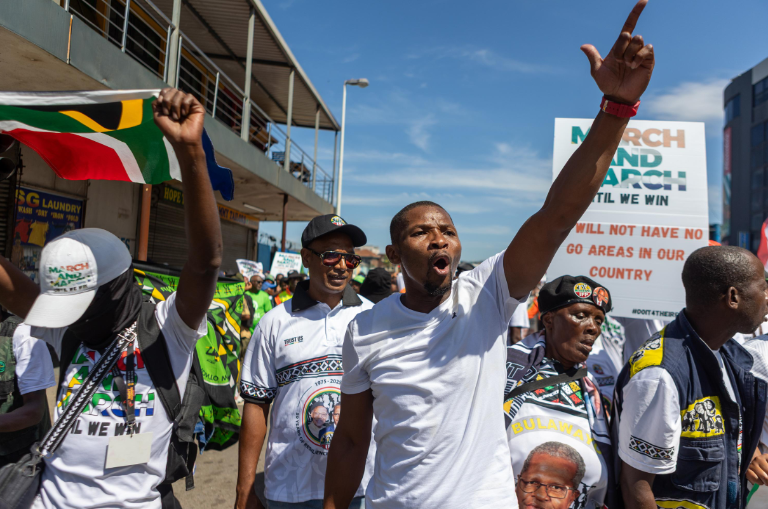
Durban, South Africa’s third-largest city and a historic symbol of African unity during the anti-apartheid struggle, has become a flashpoint for xenophobic sentiment. Local activists point to recurring protest movements led by militant groups demanding the expulsion of irregular migrants. These groups frame immigration as a threat to economic stability, despite evidence showing that immigrant labor contributes significantly to sectors like agriculture, construction, and informal trade.
What began as vocal opposition has escalated into targeted violence. Shops owned by foreign nationals have been vandalized, and individuals have been chased through neighborhoods. The October 2026 killing was not an anomaly — it was the latest in a series of escalations that began with rhetoric, intensified with intimidation, and culminated in bloodshed.
The African Union’s warning: why this case is a turning point
The African Commission’s rare invocation of potential crimes against humanity is more than a legal stance. It reflects a broader recognition that systemic xenophobic violence, if left unchecked, undermines Africa’s shared values of Pan-Africanism and regional integration. The statement challenges South Africa’s government to act not only to punish the perpetrators but to dismantle the ideological and institutional frameworks that allow such violence to persist.
Critically, the Commission does not place responsibility solely on law enforcement. It highlights the role of political leaders who publicly stigmatize migrants, media that sensationalize crime involving foreigners, and civil society that remains largely silent in the face of rising hate speech. The murder in Durban is not just the work of a mob — it is the result of a collective failure to uphold human dignity.
What justice would look like — and why it still hasn’t come
Within hours of the attack, police arrested several suspects. But arrests alone do not constitute justice. For a nation facing international scrutiny, the credibility of the investigations will be tested. Will the case be handled swiftly? Will the accused stand trial in a court of law, not in a kangaroo court of public opinion? And most importantly, will the state take concrete steps to prevent future attacks — not through harsher deportations, but through policies that address inequality and protect vulnerable communities?
The South African Human Rights Commission has echoed the African Union’s demands, affirming that every person within the country’s borders — regardless of nationality or legal status — is entitled to the right to life and security of the person as guaranteed by the constitution. This legal clarity stands in stark contrast to the lived reality for many migrants, who live in constant fear.
The road ahead: healing a fractured nation
This tragedy forces South Africa to ask itself a difficult question: What does it mean to be an African nation in the 21st century? Is it a country where borders define who deserves protection, or one where shared history and solidarity transcend nationality? The violence in Durban is not just a stain on South Africa — it is a challenge to the entire continent.
The path forward requires more than condemnation. It demands structural change: fair labor policies that reduce scapegoating, community dialogues that rebuild trust, and a justice system that treats every life as equally valuable. Until then, the fear of another mob killing will linger — not as a possibility, but as a looming certainty.
A foreign worker, whose name may never be known, died under blows that should have been prevented. His death is not just a crime — it is a national reckoning waiting to happen.