
Behind the scenes: Why Mali’s Assimi Goïta stood out at the 2026 Russia-Africa summit
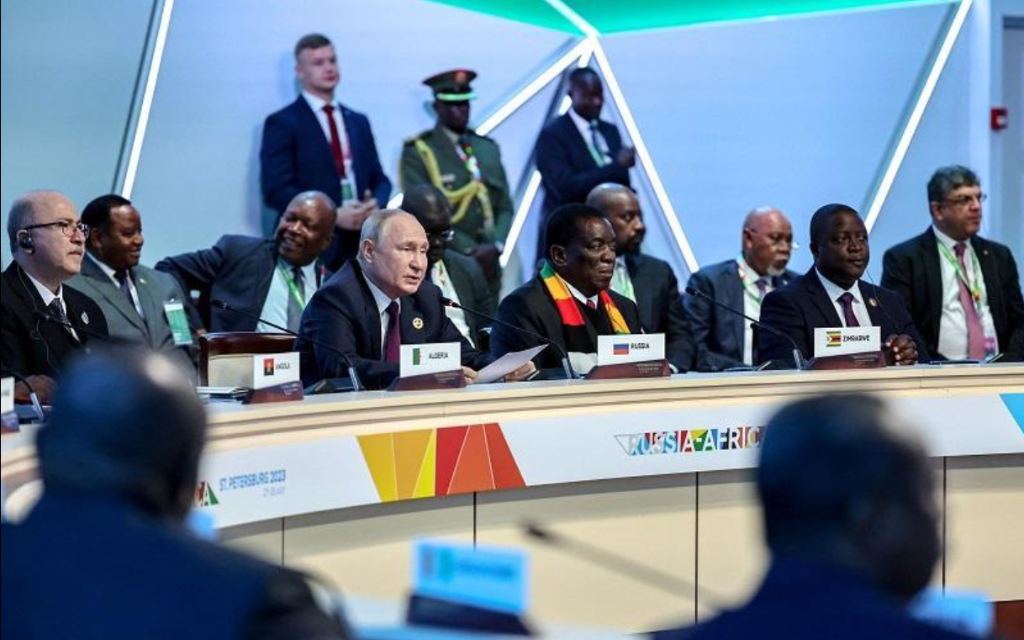
The Russia-Africa summit in Moscow, held on October 28–29, 2026, has become more than just a diplomatic gathering—it’s a mirror reflecting the shifting dynamics within the Alliance of Sahel States (AES). While African leaders from across the continent converged to discuss trade, security, and investments, one figure emerged as the sole unchallenged presence among the Sahel bloc’s top ranks: Mali’s transitional president, Assimi Goïta. His arrival, confirmed well in advance, contrasted sharply with the uncertain and partial representations from Burkina Faso and Niger, where heads of state stayed behind or failed to materialize altogether. The question now is: What does this asymmetry reveal about the AES’s internal cohesion—and Moscow’s calculations in engaging with a fragmented alliance?
Mali leads the Sahel charge, but Burkina and Niger send mixed signals
The Malian delegation’s presence was unmistakable. Assimi Goïta landed in Moscow on October 26, accompanied by a high-level team, and was promptly received at Vnukovo Airport. Aides confirmed bilateral talks with Vladimir Putin were scheduled, signaling Mali’s willingness to deepen strategic ties with Russia. This level of engagement was not replicated elsewhere in the AES. While Burkinabè officials insist the country remains committed to the alliance, the absence of Ibrahim Traoré—initially rumored to attend—raised eyebrows. Instead, Burkina Faso sent Prime Minister Rimtalba Jean Emmanuel Ouédraogo, a move that preserved diplomatic participation but deprived the delegation of the visibility a head of state provides. The case of Niger is even more ambiguous. Russian authorities had announced Abdourahamane Tiani’s attendance, yet no official confirmation materialized by the summit’s opening. Until an explicit withdrawal is declared, the possibility of a last-minute appearance cannot be ruled out—but the uncertainty itself speaks volumes about the fragility of unified representation.
From personal visits to proxy diplomacy: How different African nations played the summit
The Kremlin’s tally of 48 African countries represented—22 by heads of state—underscores the event’s global importance, yet not all delegations carried the same weight. Algeria, for instance, sent Prime Minister Sifi Ghrieb in place of its president, while Benin’s Vice President Mariam Chabi Talata stood in for Patrice Talon. Others, like South Africa, opted for high-level bureaucratic representation, with Zane Dangor leading the delegation in lieu of Cyril Ramaphosa. Rwanda’s absence of President Paul Kagame—replaced by Prime Minister Justin Nsengiyumva—likewise reflected a deliberate choice. These patterns suggest that participation levels are influenced by a mix of logistical considerations, domestic priorities, and the perceived strategic value of the summit. But within the AES, the contrast was particularly stark: Goïta’s personal presence versus the Burkinabè and Nigerien send-offs underscored a hierarchy of engagement that could reshape perceptions of the alliance’s unity.
What’s at stake: visibility versus substance in Sahel-Russia relations
The AES may be united in its ambition to redefine its partnerships with global powers, but its summit representation laid bare internal fissures. While Goïta’s high-profile engagement in Moscow may enhance Mali’s diplomatic leverage, the absence—or partial presence—of his counterparts introduces doubts about the bloc’s coherence. For Moscow, the calculus is clear: engagement with Sahel states remains a priority, but the Kremlin is pragmatic enough to work with available interlocutors. The summit’s agenda—ranging from trade and energy to security cooperation—will demand concrete deliverables, not just photo opportunities. Yet for the Sahel’s leaders, visibility in Moscow carries its own currency, especially as they navigate shifting alliances and rising domestic pressures. Whether this gathering cements long-term bonds or merely highlights existing divisions may become clearer once the new Russia-Africa cooperation program for 2027–2029 begins to take shape.
Key takeaways from the AES’s summit performance
- The Malian exception: Goïta’s personal attendance set the AES delegation apart, signaling Mali’s proactive diplomacy and potentially positioning Bamako as the bloc’s most visible interlocutor with Moscow.
- Burkina Faso’s cautious approach: Sending a prime minister instead of Traoré suggested a balanced strategy—participation without overcommitment—but left observers questioning the true extent of Ouagadougou’s engagement.
- Niger’s unresolved question: Despite Russian announcements, Tiani’s non-appearance introduced uncertainty, leaving Niger’s status at the summit—and within the AES—ambiguous.
- Moscow’s flexibility: The Kremlin’s willingness to engage with second-tier delegations reflects a pragmatic approach, but the long-term viability of such interactions depends on delivering tangible outcomes.