
Behind the scenes: how internal political dynamics are shaping Senegal’s budget crisis.
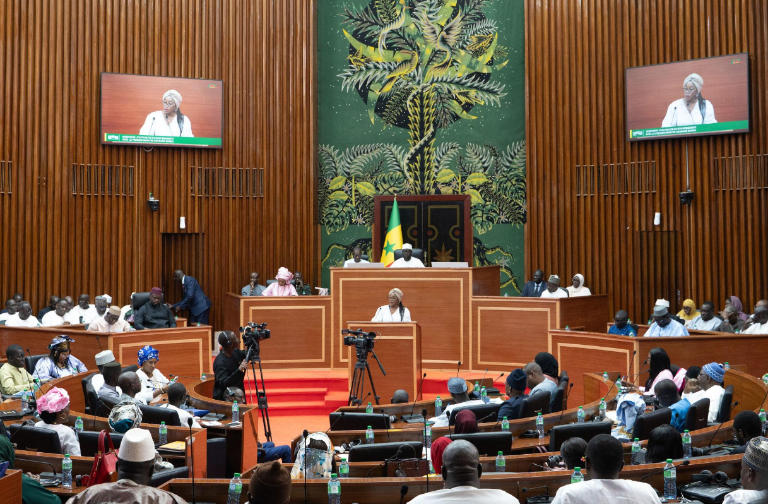
As Senegal prepares for a decisive parliamentary vote on the revised budget, friction within the ruling coalition is threatening to derail the government’s economic agenda. At the heart of the standoff: a growing divide between the executive and its own parliamentary majority, particularly over fiscal priorities and spending adjustments.
Why the revised budget faces rebellion from within
The government’s revised financial plan, meant to realign state revenues and expenditures, has hit an unexpected snag. Despite belonging to the same political camp, lawmakers from the Pastef bloc—which holds the majority in the National Assembly—have openly challenged the proposal, rejecting it in committee last week. This internal defiance signals more than just policy disagreement; it reflects deeper tensions over who ultimately controls fiscal decision-making.
What’s driving this rebellion? While the official rejection lacks detailed justification, signs point to a clash between the government’s austerity measures and the parliamentary bloc’s expectations of expanded social spending. In a year marked by economic pressures, these contrasting visions are colliding at a critical moment—just as the state seeks parliamentary approval for its mid-year budget adjustments.
The numbers that expose the political fracture
The committee vote revealed a stark reality: even within a united political coalition, unity does not guarantee automatic compliance. Despite the government’s insistence on the necessity of these adjustments, lawmakers with a strong majority in the Assembly are flexing their authority, signaling a shift from traditional party discipline to a more assertive parliamentary role.
This isn’t just a numbers game—it’s a power play. With the budget under review, every clause is being scrutinized not only for its fiscal impact but also for its political symbolism. The government’s insistence on maintaining deficit targets clashes with lawmakers’ demands for increased public investment, creating a fault line that risks paralyzing the legislative process.
Can dialogue prevent a budget showdown?
The Prime Minister, Amadou Al Aminou Lo, has entered direct negotiations with Pastef lawmakers in a last-ditch effort to salvage the revised budget. But the clock is ticking. With the plenary session looming, the government faces a high-stakes dilemma: compromise on key fiscal adjustments to secure passage, or stand firm and risk legislative gridlock.
For the executive, the stakes are clear: a second defeat would erode confidence in its capacity to govern. For the parliamentarians, persistence in opposition could affirm their role as a counterbalance to executive power—but at the cost of deepening institutional friction.
The anatomy of a compromised budget
The revised budget isn’t just a financial document—it’s a reflection of political priorities. In an era of rising public expectations and constrained resources, every spending cut or revenue projection is being dissected. The government argues that the adjustments are essential to fiscal stability. But lawmakers, particularly those from the ruling coalition, are questioning whether those cuts are hitting the right targets—or whether they risk undermining social progress.
Key areas of contention likely include capital expenditures, social programs, and tax measures. While the government emphasizes macroeconomic stability, dissenting voices within the majority are pushing for accelerated public investment and targeted relief for vulnerable sectors.
A test of institutional resilience
Beyond the budget’s technical aspects, the current crisis exposes a deeper question: What does it mean for a government to govern when its own parliamentary base refuses to rubber-stamp its proposals? Senegal’s political evolution is revealing a new reality—one where parliamentary autonomy is no longer a theoretical construct, but a practiced norm.
As the plenary vote approaches, the nation watches not only the outcome but the process itself. Can these internal disagreements be resolved through dialogue, or will they lead to a prolonged institutional standoff? The answer will shape not just the budget’s fate, but the future of executive-legislative relations in Senegal.
The Prime Minister’s upcoming address to lawmakers may offer clarity—or it may only deepen the divide. One thing is certain: the revised budget is no longer just a fiscal matter. It has become a referendum on the coherence of Senegal’s governing majority.