
From promises of liberation to deeper entanglements
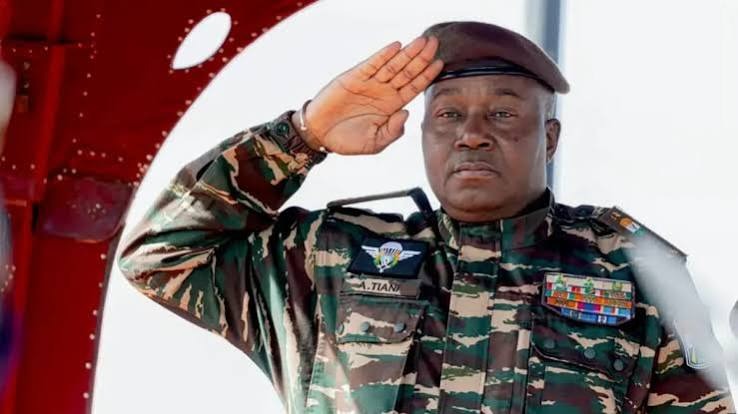
The July 2023 coup in Niger was framed as a necessary reset—a decisive break with the governance failures of President Mohamed Bazoum. The National Council for the Safeguarding of the Homeland (CNSP) promised to restore security, reclaim sovereignty, and dismantle systemic corruption. Yet, more than three years after taking power, the narrative of progress has collided sharply with reality.
The regime’s decision to sever military ties with former partners was presented as a bold step toward genuine independence. Instead, Niger now finds itself locked in opaque alliances that risk compromising its long-term strategic autonomy. The arrival of new foreign forces on Nigerien soil—negotiated in closed rooms and without public oversight—has raised urgent questions about who truly holds the reins of national sovereignty.
Border control under scrutiny: new threats to independence
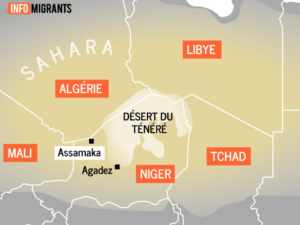
One of the most striking contradictions lies in Niger’s shifting geopolitical posture. While the exit of French and American troops was hailed as a reclaiming of territorial control, the government has since granted access to other external actors. The reported presence of Russian military advisors and the recent deployment of Algerian forces deep into eastern Niger—over 200 kilometres from the border—highlight a troubling pattern: what began as criticism of foreign interference now resembles a reshuffling of dependencies.
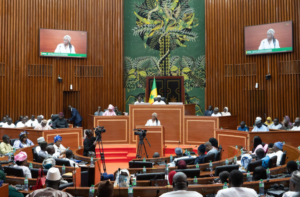
These arrangements, agreed upon without parliamentary approval or public consultation, raise serious concerns about transparency and accountability. The CNSP’s earlier denunciation of Bazoum’s ‘foreign subjugation’ now rings hollow as Niger effectively becomes a stage for competing external influences.
A security crisis that refuses to fade
The CNSP’s justification for seizing power rested largely on the deteriorating security situation under Bazoum. Over three years later, the evidence suggests the problem has not only persisted but worsened. Armed groups such as EIGS and JNIM continue to launch devastating attacks across Diffa, Maradi, Tahoua, and Tillabéri.
Schools and health facilities remain shuttered in large parts of these regions, while civilians bear the brunt of escalating violence. Despite frequent claims of military progress, the reality on the ground tells a different story—one of stalled operations, unmet promises, and a population still trapped in cycles of instability.
Economic promises left in limbo
The dream of economic self-reliance has also faltered. Major infrastructure projects—once central to the CNSP’s vision of a resource-rich, independent Niger—are stuck in limbo. The Kafra oil permit has faced repeated delays, while the proposed trans-Saharan gas pipeline remains mired in uncertainty. These setbacks contradict the regime’s rhetoric of sovereignty and self-sufficiency, leaving many to question the long-term viability of Niger’s development path.
Where have the early supporters gone?
A striking feature of this transition has been the deafening silence from those who once rallied behind the coup. Civil society voices that once condemned Bazoum’s rule now appear reluctant to challenge the military leadership—even as contradictions mount. Public criticism of the regime remains rare, with supporters often defending every decision without scrutiny.
This shift underscores a troubling paradox: the same grievances once used to justify the coup now go unchallenged when voiced against the current leadership. The result is a political climate where dissent is muted, accountability is sidestepped, and the public is left bearing the cost of an unfinished transition.
What comes next for Niger?
The military leadership’s insistence on sovereignty now seems less about reclaiming power for the people and more about consolidating control under new, equally opaque arrangements. With security unaddressed, development stalled, and public discourse increasingly restricted, Niger’s future grows more uncertain by the day.
The original pledge of liberation has given way to a cycle of repetition—where old failures are not corrected, but compounded. The people of Niger deserve better than a transition that continues to repeat the mistakes it swore to end.