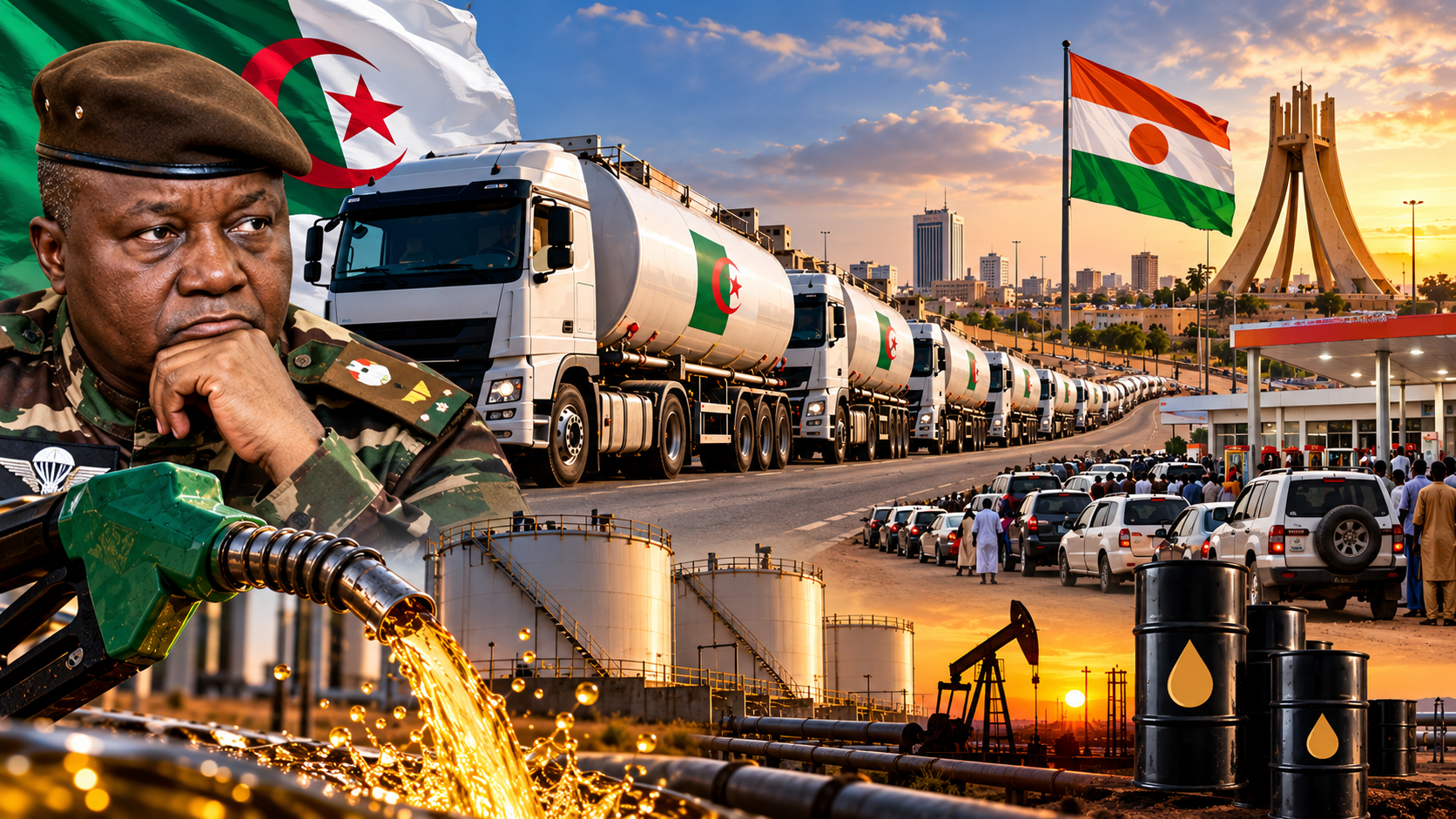

In a strategic pivot that has sparked considerable debate, 3.75 million liters of Algerian fuel originally planned for Agadez have been rerouted to Niamey under a high-cost agreement. The emergency measure, priced at 800 FCFA per liter with deferred payment in crude oil, underscores deeper questions about Niger’s energy security and the economic trade-offs of crisis-driven procurement.
Why Agadez’s fuel ended up in Niamey
A shipment of 150 tankers, each carrying 25,000 liters, was initially designated to alleviate fuel shortages in Agadez. However, reports indicate the cargo is now being redirected to Niamey, a move that raises immediate logistical and operational questions. Was this a forced adjustment due to escalating demand in the capital, or part of a broader reassessment of supply priorities?
The shift comes as Niamey faces mounting pressure to maintain fuel reserves amid erratic supply chains. While the reasons behind the rerouting remain officially undisclosed, the decision highlights the delicate balance between responding to regional disparities and safeguarding the nation’s economic engine.
The hidden costs of crisis fuel
The price tag attached to this operation 800 FCFA per liter has intensified scrutiny of the deal’s long-term viability. Unlike previous imports from Nigeria, which cost 702 FCFA per liter (transport included), this Algerian supply comes at a premium of 98 FCFA per liter. At 3.75 million liters, the differential represents an additional 367.5 million FCFA, a figure that prompts further analysis.
Yet cost alone does not tell the full story. The agreement’s structure, including payment in crude oil, complicates direct comparisons. How will the value of the crude be calculated? What quantities will be exchanged, and how will they impact national oil reserves? Without transparent data, the true financial burden remains speculative. What is clear, however, is that emergency procurement often comes at a steep price one that must be weighed against immediate needs and future stability.
Is emergency fuel averted, or is crisis looming?
Niamey’s fuel crisis is not merely a logistical challenge; it is a potential threat to the city’s socioeconomic fabric. Public transport, small businesses, power generators, and essential services rely on consistent fuel availability. A single major disruption could trigger price hikes, paralyze mobility, and stifle economic activity across sectors.
The arrival of 3.75 million liters offers temporary relief, but experts warn against viewing it as a long-term solution. The question remains: how much of this volume will be allocated to replenish strategic reserves, and how much will be consumed immediately? Officials have not clarified whether the shipment includes dedicated storage allocations or if it is merely a stopgap measure.
To prevent future shortages, Niger must move beyond reactive measures. A sustainable strategy requires: expanded storage capacity, diversified supply corridors, and robust contingency planning. Without these pillars, the nation risks remaining trapped in a cycle of last-minute rescues, where each crisis demands a costly, uncertain lifeline.
The unanswered questions behind the deal
For all its urgency, this operation leaves several critical questions unaddressed:
What are the terms of the crude oil repayment? Will the valuation align with market rates, or will it reflect a discounted exchange?
How much of the shipment will bolster Niamey’s strategic stocks? National energy security depends on reserves, not just transient deliveries.
What safeguards are in place to prevent diversion or spoilage? Poor storage practices have derailed past inventory efforts.
Will Agadez receive alternative arrangements? If the original allocation was repurposed, how will the northern city’s fuel needs be met?
Transparency on these points would distinguish this operation as a pragmatic crisis response from a symptom of deeper systemic weaknesses. Niger’s leaders face a choice: treat this as an isolated fix, or use it as a catalyst for a smarter, more resilient energy policy.
The road ahead: from emergency to strategy
The rerouting of Algerian fuel to Niamey is a stark reminder of the trade-offs involved in energy procurement. While the immediate need for fuel is undeniable, the country cannot afford to treat every shortage as a fire drill. The real test will be whether this crisis sparks lasting reforms or merely delays the next one.
One thing is certain: a nation that waits for its capital to run dry before securing fuel is not planning ahead. It is gambling with stability. And in the Sahel, where unpredictability defines daily life, the stakes could not be higher.
By Moussa Samuel Coulibaly — Journalist