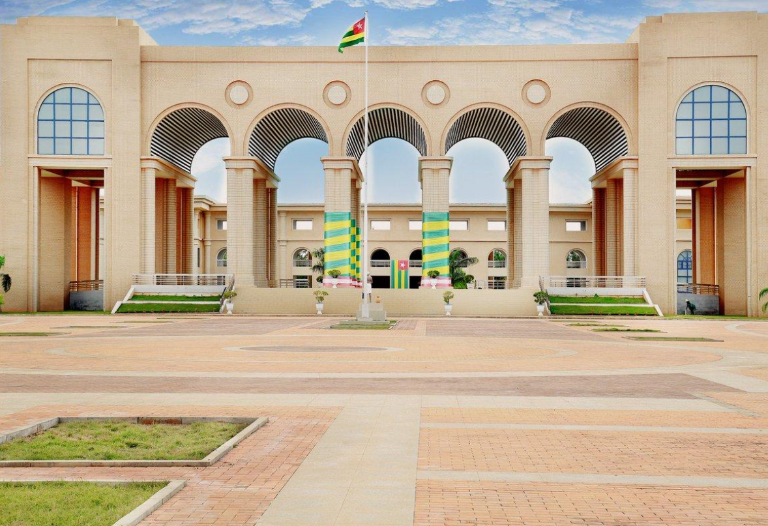

The government of Togo has unveiled a 2,684.1 billion FCFA (approximately 4.6 billion USD) budget proposal for 2027, framing it as a cornerstone for national security, economic transformation, and social cohesion. Yet beneath the headline figures lie critical questions: which sectors will truly benefit from the fiscal allocations? How will the spending be funded? And what mechanisms will ensure these resources translate into tangible outcomes for citizens?
Approved by the Council of Ministers on October 22, 2026, the draft finance law aligns with the government’s 2026–2031 roadmap. It emerges amid global economic uncertainty, geopolitical tensions, and tightening financing conditions. While the executive emphasizes fiscal discipline, the plan’s credibility hinges on two factors: revenue mobilization and the efficiency of public spending execution.
A shrinking budget: what’s really at stake?
The 2027 budget balances at 2,684.1 billion FCFA, reflecting a 2.5% decrease compared to the initial 2026 budget of 2,751.5 billion FCFA. However, adjustments to the 2026 collective budget—revised to 2,744.2 billion FCFA—shrink this gap to roughly 2.2%. While the exact percentage shift varies depending on the reference point, the overarching trend signals fiscal contraction. This raises a pivotal concern: which expenditures will survive the cuts, and which programs face delays, reductions, or restructuring?
A smaller budget could signify prudent rationalization—or it might signal a retreat in critical public interventions. Without a detailed breakdown of ministerial and programmatic allocations, the true impact remains unclear. The devil, as always, lies in the fine print.
490 Billion FCFA for investment: where will the money go?
To fund its roadmap priorities, the government has earmarked 490 billion FCFA for investments, distributed across three strategic pillars. The “Protect” axis commands the largest share at 227.2 billion FCFA (46.4% of the total), followed by “Transform” with 143.5 billion and “Unite” at 97 billion. Cross-cutting programs receive the remaining 22.4 billion FCFA.
The dominance of the “Protect” pillar reflects pressing security challenges in Togo and the broader sub-region. But sustainable security demands more than defense spending—it requires investment in education, youth employment, local public services, and economic resilience in vulnerable areas. Will the budget strike this balance?
Under “Transform,” funds target agricultural development, industrialization, and infrastructure. The critical test will be whether these allocations enable local processing of raw materials, improve market access for producers, and support small and medium-sized enterprises—key drivers of long-term growth.
Meanwhile, the “Unite” pillar’s 97 billion FCFA must deliver tangible gains in healthcare, education, clean water, and sanitation. The challenge? Ensuring these funds reach underserved communities and that their territorial distribution aligns with actual needs. Without clear benchmarks, these investments risk falling short of their promise.
Debt and financing: walking a tightrope
Balancing revenues and expenditures on paper doesn’t guarantee a deficit-free execution. Sustainability depends on projected fiscal and non-fiscal revenues, foreign aid, external financing, new borrowing, and debt servicing costs. For context, the revised 2026 budget anticipates a deficit of 247.6 billion FCFA (3.4% of GDP)—a figure that offers little insight into 2027’s fiscal health.
Authorities must clarify the upcoming year’s financing requirements, deficit trajectory, and the share of public revenue diverted to debt repayment. Rising borrowing costs in a less favorable financial climate could squeeze funds for investments and social services, forcing tough choices between present needs and future stability.
Domestic revenue mobilization presents another hurdle. Expanding the tax base, combating fraud, and reviewing unjustified exemptions could bolster state coffers. Yet these measures must avoid overburdening low-income households and small businesses. A fair, predictable, and transparent tax system is vital to balancing fiscal efficiency with economic vitality.
Social spending: will promises turn into action?
Social cohesion, access to essential services, and job creation rank high among 2027’s stated goals. But how will these ambitions materialize? The answers lie in specifics: How many classrooms will be built or renovated? What resources will support healthcare facilities, essential medicines, and medical staff? Which investments will improve water access? What programs will aid job-seeking youth and job-creating businesses?
The total budget figure offers no clarity on these points. Sector-specific allocations, physical targets tied to expenditures, and outcomes from past years will reveal the true picture. Moreover, a gap often exists between approved budgets and actual spending. Bureaucratic delays, public procurement challenges, or poor project preparation can stifle progress. Thus, the execution rate of the budget may prove as important as the numbers on paper.
Transparency and oversight: non-negotiable safeguards
The budget’s credibility ultimately depends on transparent execution. Regular disclosures on public contracts, payments, project progress, and deviations from forecasts would enable better scrutiny of public funds. Digitalization of public finances could enhance traceability—but only if paired with accessible data and robust controls.
Parliament, oversight institutions, civil society, and the media also play a crucial role in holding the government accountable. The parliamentary review of the draft finance law must therefore clarify economic assumptions, sectoral priorities, and financing risks. Above all, it should establish measurable goals and reliable monitoring mechanisms.
Beyond the numbers: the test of real impact
Togo’s 2027 budget of 2,684.1 billion FCFA provides a financial framework for national priorities. Yet the sheer size of the budget guarantees nothing on its own. The real challenges lie in the state’s ability to sustain revenue streams, manage debt, safeguard social spending, and convert planned investments into accessible services and infrastructure for citizens.
Ultimately, the 2027 budget will be judged not by the billions allocated in official documents, but by the results delivered: improved living conditions, access to public services, job creation, and a stronger national economy. The core question remains: beyond the figures and the rhetoric, what will each public franc actually achieve?