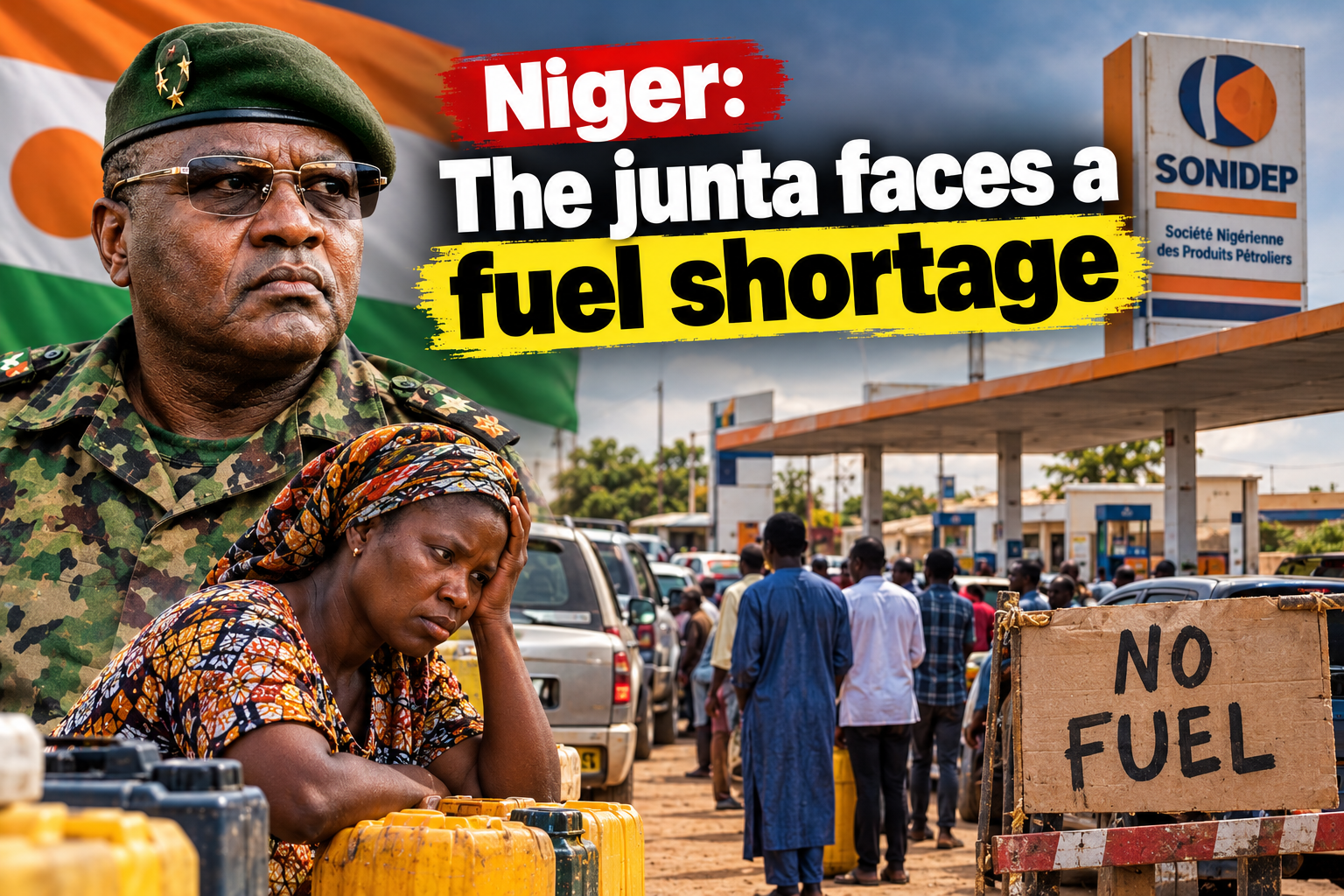

The paradox of abundance: how Niger’s oil wealth fails to translate into fuel availability
In Niamey, fuel shortages are no longer a distant concern they are disrupting daily life, choking economic momentum, and intensifying public frustration. This paradox begs a critical question: how can a nation with domestic oil production struggle to keep its fuel pumps operating?
The hidden mechanics of a fuel crisis
The disruption in Niamey’s fuel supply is not merely a logistical hiccup; it reveals deeper structural vulnerabilities within the entire fuel distribution chain. From extraction to final delivery, each stage production, refining, storage, transportation, and retail plays a pivotal role in ensuring consistent availability. Yet, despite Niger’s oil production, these processes often fail to meet domestic demand, exposing systemic inefficiencies.
Several factors contribute to this imbalance:
Undersized refining capacity: Domestic refining facilities may be insufficient to process oil into usable fuel, forcing reliance on imports.
Distribution bottlenecks: Inadequate infrastructure, including pipelines or storage facilities, can hinder the smooth flow of fuel from refineries to depots and stations.
Demand-supply mismatches: Spikes in consumption, seasonal fluctuations, or unforeseen disruptions can outpace supply, leading to scarcity.
Market speculation and hoarding: Anticipation of shortages may prompt opportunistic purchasing, exacerbating temporary gaps in availability.
Economic ripple effects across sectors
The impact of fuel shortages extends far beyond empty gas stations. Drivers, transporters, and small businesses bear the brunt as operational costs rise and schedules collapse. Taxi drivers face reduced earnings, merchants struggle to transport goods, and commuters endure longer, costlier journeys. For a population already grappling with economic hardship, these disruptions compound existing challenges, eroding trust in the system.
The cost of uncertainty
Fuel scarcity doesn’t just inconvenience it destabilizes. Businesses dependent on just-in-time logistics halt operations, while households allocate scarce resources to alternative transport methods. The resulting inflation in transportation costs disproportionately affects low-income families, tightening budgets and limiting economic mobility. Without clarity on supply timelines or mitigation strategies, uncertainty itself becomes a driving force behind public dissatisfaction.
Sovereignty redefined: when resources fail the people
The military-led government, which assumed power in July 2023, has framed its mandate around reclaiming national sovereignty. Yet sovereignty, for citizens, is measured not by declarations but by tangible access to essentials fuel among them. The inability to secure reliable fuel supplies raises pressing questions: Does resource ownership alone equate to economic independence? Can ambitions for self-sufficiency coexist with perpetual reliance on erratic supply chains?
The crisis underscores a fundamental disconnect: oil wealth without operational resilience offers little solace to a population seeking stability. For the junta, the challenge is twofold addressing immediate shortages while demonstrating a long-term commitment to structural reform. Transparency about stock levels, distribution challenges, and remediation plans is no longer optional; it is a cornerstone of public trust.
From crisis to solution: the path forward
Resolving Niger’s fuel shortages requires more than reactive measures it demands a systematic evaluation of the entire fuel ecosystem. Key priorities include:
Infrastructure investments: Expanding refining capacity and modernizing storage and transport networks to reduce bottlenecks.
Supply chain diversification: Reducing vulnerability to single-source imports by developing regional partnerships or increasing local processing.
Regulatory oversight: Strengthening market monitoring to curb speculative practices and ensure fair distribution during shortages.
Public communication: Providing regular, verified updates on supply status and projected timelines to manage expectations and curb panic purchasing.
While short-term fixes may alleviate immediate pain, long-term resilience hinges on addressing foundational gaps. The fuel crisis is not merely an operational failure it is a stress test for governance. The government’s response will determine whether oil wealth translates into tangible benefits for its people or remains a symbol of unfulfilled potential.
The hour of accountability
For Niger’s citizens, the scarcity of fuel is more than an economic inconvenience it is a litmus test of leadership. As patience wears thin, the junta faces increasing pressure to move beyond rhetoric and deliver concrete solutions. The paradox of abundance can only be resolved when the benefits of oil production are felt equally across society. Until then, the fuel pumps remain a barometer of progress and a reminder that sovereignty, in practice, is earned.
By Idriss MAMADOU — Journalist