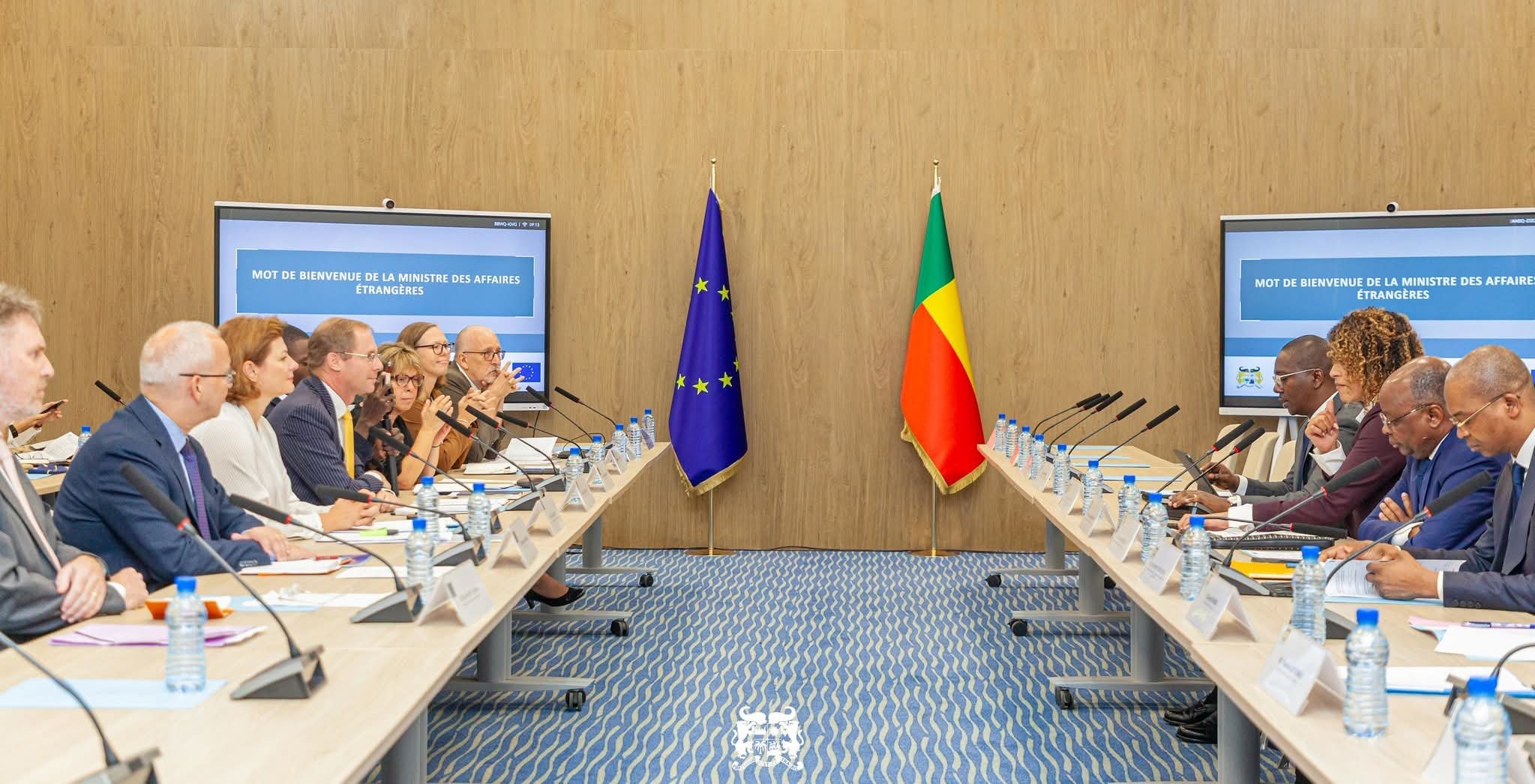

The economic heartbeat of West Africa, Cotonou, recently hosted a pivotal ministerial session that laid bare the intricate mechanics of the Republic of Bénin’s collaboration with the European Union (EU). Held on October 21, 2026, this high-level gathering brought together key decision-makers from both governments to dissect the evolution of their bilateral cooperation, spotlighting strategic adjustments aimed at amplifying tangible citizen impact across Bénin.
Diplomatic dialogues: aligning vision with measurable outcomes
The opening remarks set a clear tone: Bénin’s commitment to forging a sustainable partnership with the EU is not merely diplomatic rhetoric. The country’s foreign affairs minister underscored that every euro invested must translate into visible progress for local communities. This insistence on results-driven financing reflects a broader shift in how Bénin is positioning itself within international alliances, prioritizing projects that deliver economic dividends and social uplift.
The EU delegation reciprocated this approach, citing Bénin’s institutional resilience and ongoing structural reforms as decisive factors in their willingness to deepen collaboration. By emphasizing alignment with Bénin’s National Development Plan, both sides signaled a transition from transactional aid to a co-investment model, where shared objectives and mutual accountability take center stage.
Evaluating progress: what’s working, what’s next
The closed-door deliberations zeroed in on the existing strategic roadmap, dissecting its strengths and gaps. The discussions were far from ceremonial; they were forensic. Key sectors came under scrutiny:
- Sustainable development: How EU-backed initiatives are reshaping rural economies, with a focus on climate-resilient agriculture and renewable energy projects.
- Digital transformation: The acceleration of Bénin’s digital economy, including the expansion of broadband infrastructure and digital public services.
- Good governance: Efforts to strengthen transparency in public administration and combat corruption, aligning with EU benchmarks.
- Infrastructure expansion: Large-scale projects in transport, energy, and water supply designed to bridge regional disparities.
The ministers jointly acknowledged that while progress has been made, lagging areas—particularly youth unemployment and the informal sector’s integration into formal markets—require bolder interventions. The EU’s pledge to tailor future programs to these emerging priorities signals a pragmatic pivot, ensuring that cooperation adapts to Bénin’s shifting socioeconomic landscape.
Why Cotonou matters: a partnership built for resilience
This meeting was never just about reaffirming old ties. It was about recalibrating an alliance to face the volatile dynamics of West Africa. With neighboring countries grappling with instability, Bénin’s stability has become a strategic asset. The EU’s endorsement of Bénin’s reforms—particularly in security and economic policy—reframes their relationship as a cornerstone of regional stability.
Behind the polished speeches and signed memorandums, the real story lies in the unsung reforms: decentralized governance structures, streamlined business registration processes, and targeted vocational training programs. These behind-the-scenes changes are the bedrock of a partnership designed to endure, not just endure but thrive amid uncertainty.
Looking ahead: the road to equitable growth
The blueprint emerging from Cotonou is ambitious. It outlines a future where Bénin and the EU co-create solutions that transcend traditional donor-recipient models. The focus? Inclusive economic growth. This means:
- Scaling up youth employment programs, linking vocational training to market demands in sectors like agribusiness and tech.
- Bolstering women-led enterprises, with targeted funding and mentorship initiatives.
- Expanding social protection networks, particularly in health and education, to cushion vulnerable populations.
The message from Cotonou is unambiguous: this partnership is evolving into a cornerstone of Bénin’s development trajectory. By addressing root causes—structural inefficiencies, youth disenfranchisement, and regional fragility—both parties are laying the groundwork for a future where collaboration yields dividends far beyond economics: stability, dignity, and shared prosperity.