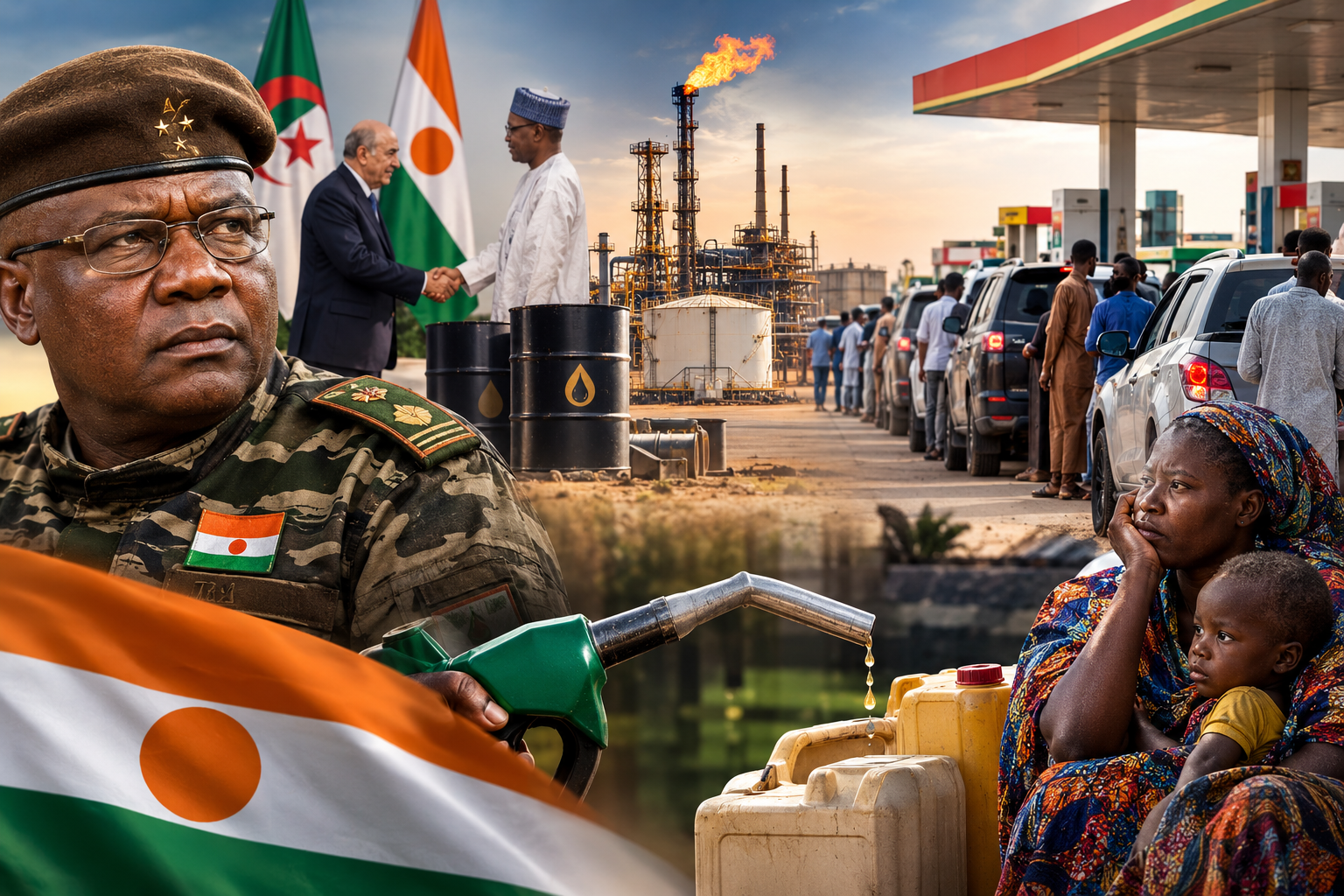

The recent security agreement between Algeria and Niger emerges against a backdrop of profound domestic vulnerability in Niamey. While the current administration champions strategic partnerships to assert national sovereignty, a deeper analysis reveals a critical structural disconnect: the systemic failures within the domestic energy supply chain. Understanding this fuel shortage requires looking beyond mere production metrics to examine the behind-the-scenes logistics, export prioritizations, and infrastructural deficits that leave a petroleum-producing nation struggling to power its own economy.
The anatomy of a domestic supply failure
The paradox of Niger’s energy landscape is stark. Despite possessing significant crude reserves and having developed extraction infrastructure, the internal distribution network remains deeply flawed. When fuel deliveries become erratic, the immediate consequences are visible on the streets: extensive queues at petrol stations, paralyzed public transport, and severe disruptions to local commerce. The burden falls disproportionately on everyday citizens, logistics operators, and small business owners who rely on a steady energy supply to maintain their livelihoods.
Tracing the crude: export priorities versus local needs
To understand the root causes of this crisis, one must investigate the actual trajectory of the extracted crude. The core issue extends far beyond extraction; it lies in the complex mechanisms of refining, storage, and distribution. Critical questions remain unanswered regarding the precise allocation of resources. How much of the extracted oil is earmarked for domestic consumption, and what volumes are diverted to international markets? The lack of transparent, data-backed explanations from the authorities regarding refining capacities and storage logistics leaves a significant void in public understanding.
The geopolitical dimension and foreign partnerships
This internal mismanagement is further complicated by the expanding footprint of foreign actors in strategic sectors. The growing influence of Russia across several military governments in the Sahel raises valid concerns about the underlying terms of these economic and security arrangements. Similarly, the newly forged security ties with Algeria must be scrutinized through this analytical lens. While regional defense cooperation addresses genuine security threats, it cannot serve as a substitute for robust domestic energy policies or mask the structural inefficiencies plaguing the national supply chain.
Redefining sovereignty through tangible energy results
Ultimately, the concept of national sovereignty must be evaluated through the lens of tangible outcomes rather than diplomatic milestones. If the leadership in Niamey genuinely prioritizes control over natural resources, this authority must translate into reliable market supply, stabilized pricing, and transparent revenue management. The persistent inability to meet domestic fuel demand exposes a fundamental gap between geopolitical posturing and practical governance.
Moving forward, the imperative for the government is to conduct a rigorous audit of the entire petroleum value chain. Clarifying the bottlenecks in distribution and proving that strategic decisions prioritize the national interest are essential steps. Until the structural roots of the supply shortage are addressed, the overarching narrative of economic independence will remain undermined by a simple, unresolved question: who truly benefits from the nation’s oil wealth, and when will the domestic population see the returns?